THE CLASSIC COLLECTION✦The Story of Francis CluddeCLASSIC FREE BOOKS
The Story of Francis Cludde
Stanley John Weyman
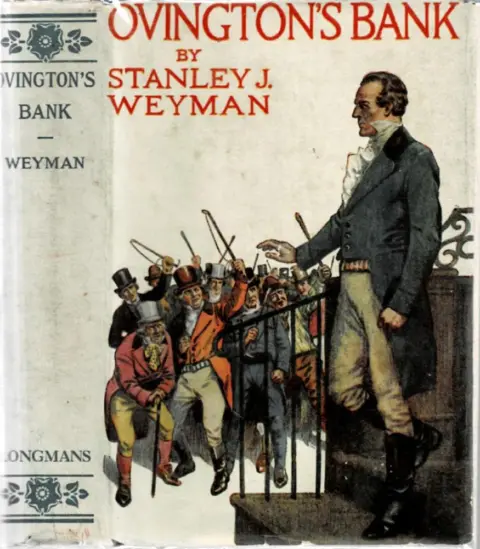
THE CLASSIC COLLECTION · 1922
"Ovington's Bank" by Stanley John Weyman is a novel published in 1922. Set during the British Panic of 1825, the story follows two English communities as a banking crisis threatens to destroy their way of life. Weyman explores the clash between traditional landed gentry and the rising business class, as customers' panic endangers a carefully run bank. This tale of honesty, love, and social transformation depicts how fear and self-interest can drive even solvent institutions toward ruin during financial turmoil.
Introduction adapted from the source catalogue; source summaries may be automatically generated.
Free to read · English · 162,553 words · No account needed
MAKE TIME FOR A GOOD BOOK
On by default. Untick to stop anonymous reading totals. Each page counts after 10 seconds in view. How this works.
Anonymous counting is on unless you have switched it off.
“No, but he will be to-morrow,” the young man rejoined. “They are all agog. They’ve got it that you can make a man’s fortune by a word, and of course they want their fortunes made.”
“Ah!” the other ejaculated drily. “But seriously, look about you, Arthur. Did you ever see a greater change in men’s faces—from what they were this time two years? Even the farmers!”
“Well, they are doing well.”
“Better, at any rate. Better, even they. Yes, Mr. Wolley,” to a stout man, much wrapped up, who put himself in the way, “follow us, please. Sir Charles is waiting. Better,” Ovington continued to his companion, as the man fell behind, “and prices rising, and demand—demand spreading in everything.”
“Including Stocks?”
“Including Stocks. I’ve some news for Sir Charles, that, if he has any doubts about joining us, will fix him. Well, here we are, and I’m glad to be at home. We’ll go in by the house door, Arthur, or Betty will be disappointed.”
The bank stood on Bride Hill, looking along the High Street. The position was excellent and the house good. Still, it was no more than a house, for in 1825 banks were not the institutions that they have since become; they had still for rivals the old stocking and the cracked teapot, and among banks, Ovington’s at Aldersbury was neither of long standing nor of more than local repute.
Mr. Ovington led the way into the house, and had barely removed his hat when a girl flew down the wide oak staircase and flung herself upon him. “Oh, father!” she cried. “Here at last! Aren’t you cold? Aren’t you starving?”
“Pretty well for that,” he replied, stroking her hair in a way that proved that, whatever he was to others, he had a soft spot for his daughter. “Pretty well for that, Betty.”
“Well, there’s a good fire! Come and warm yourself!”
“That’s what I can’t do, my dear,” he said, taking off his great coat. “Business first.”
“But I thought you had done all that in London?” pouting.
“Not all, but some. I shall be an hour, perhaps more.”
She shot a mutinous glance at Arthur. “Why can’t he do it? And Mr.
Rodd?”
“You think we are old enough, Betty?”
“Apprentices should be seen, and not heard!” she snapped.
Arthur’s position at the bank had been hardly understood at first, and in some fit of mischief, Betty, determined not to bow down to his pretensions, had christened him the “Apprentice.”
“I thought that that proverb applied to children,” he retorted.
Your reading position is saved on this browser. Take it to another device with a library code. Reading pages adapt to text, rather than matching a printed edition.
Stanley John Weyman
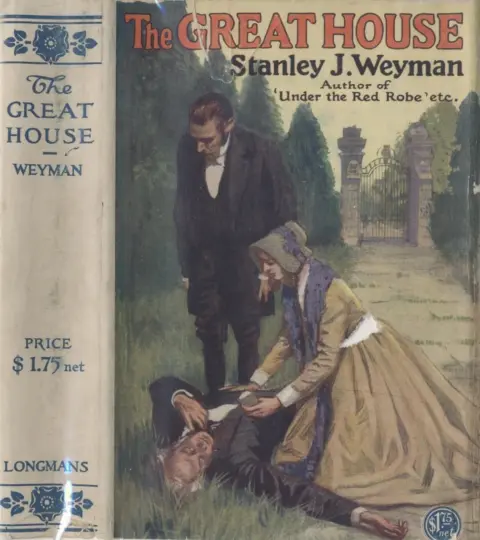
Stanley John Weyman
Stanley John Weyman
Stanley John Weyman
BEHIND THE BOOK
This eBook is for the use of anyone anywhere in the United States and most other parts of the world at no cost and with almost no restrictions whatsoever. You may copy it, give it away or re-use it under the terms of the Project Gutenberg License included with this eBook or online at www.gutenberg.org. If you are not located in the United States, you will have to check the laws of the country where you are located before using this eBook. Read the source licence.
The original source file, including credits and licence, is retained by this library. Request an original-format copy at no charge. Please include the book title and Project Gutenberg identifier #38990.
KEEP YOUR CURIOSITY GOING
Cécile Tormay

Moritz Busch
Coulson Kernahan
John L. Ransom

Maurice Baring
Frances Wright