THE CLASSIC COLLECTION✦An outlaw’s diary: the CommuneCLASSIC FREE BOOKS
An outlaw’s diary: the Commune
Cécile Tormay
THE CLASSIC COLLECTION · 1915
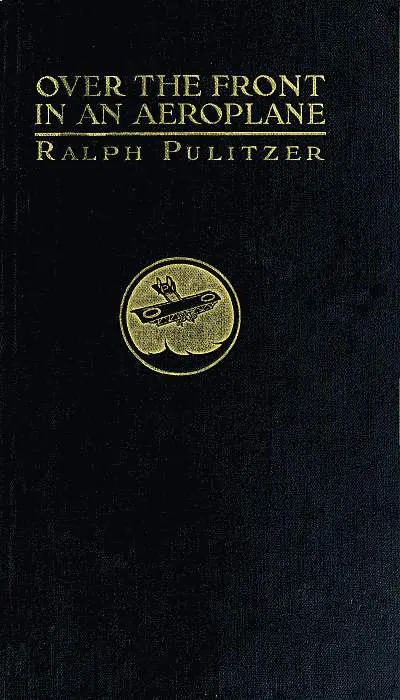
"Over the Front in an Aeroplane and Scenes Inside the French and Flemish Trenches" by Ralph Pulitzer is a historical account written in the early 20th century, specifically during World War I. The book provides an intimate glimpse into the experiences and observations of the author as he navigates the front lines of the war, offering detailed descriptions of air travel over battle zones and the conditions within the trenches. Pulitzer’s unique perspective as a civilian who managed to fly in a military aeroplane gives readers an unfiltered view of the war's reality, depicting the soldiers' bravery and the stark scenery of combat. At the start of this compelling narrative, the author recounts his extraordinary flight from Paris to the French front, detailing the preparations and the sensations of flying over the war-torn landscape. Pulitzer describes the breathtaking views of the countryside and the anticipation leading up to the experience, emphasizing his initial awe but quickly transitioning to the sobering reality of the conflict below. His observations become vivid as he notes the confusion of trenches and roads, the silence of a peaceful battlefield, and the insights shared with military personnel during his venture. This opening sets the tone for a journey filled with significant reflections on the war, positioning the author as an explorer of both the physical space above the front lines and the human experiences that define it.
Introduction adapted from the source catalogue; source summaries may be automatically generated.
Free to read · English · 30,282 words · No account needed
MAKE TIME FOR A GOOD BOOK
On by default. Untick to stop anonymous reading totals. Each page counts after 10 seconds in view. How this works.
Anonymous counting is on unless you have switched it off.
Can England as a nation continue with admiring acquiescence to watch the cream of her manhood spend itself in Flanders and the Dardanelles; continue with deprecating acquiescence to watch the skimmed milk of her manhood preserve itself at home for the sacred duty of fathering a future generation?
Can England acquiesce placidly in the professional, the business, the financial sacrifices generally which so many Englishmen are splendidly making, and acquiesce plaintively in the disgusting treason whose guilt was shared in varying measure by the gouging coal-owners and the striking coal-miners of Wales?
Can England set out to curb the drunkenness which in certain parts is crippling her ammunition production and then sink back into acquiescence in the temporizing compromise which taxed drunkenness instead of terminating it?
Can England, in fine, afford to preserve Personal Liberty at the slightest risk of imperilling National Liberty?
Perhaps England can. Perhaps England must.
So long as England fulfils and far exceeds her covenants with her allies it is not a question for them to answer. It is assuredly not a question to which any neutral visitor can with seemliness hazard a solution.
It is not even a question, in my opinion, which is apt to affect the ultimate outcome of this particular war.
But it is a question to which on some future day Macaulay's New Zealander will, with positiveness and propriety, be in a position to find the answer.
Transcriber's note:
Obvious typographical errors have been corrected. Printer's inconsistencies in the use of accents, hyphens, and punctuation have been retained. The original spelling has been used except where there was good reason to correct it. Any such changes are noted below.
The following misprints and misspellings have been corrected:
Page 3, "avions de reglage" changed to "avions de réglage". (their "avions de réglage," or "regulating aeroplanes.")
Page 4, "aviatiks" changed to "Aviatiks". (Aviatiks of the enemy)
Page 4, "fusilage" changed to "fuselage". (projected over the bow of
the fuselage)
Page 11, "pilot- spotted" changed to "pilot spotted". (puffs of smoke in the hazy distance the pilot spotted unerringly)
Page 33, "practise" changed to "practice". (And practice in this matter)
Page 57, "departs" changed to '"départs"'. (distant reports of the
"départs")
Page 86, "leant themselves" changed to "lent themselves". (and clay lent themselves to effects which)
Page 100, "scrupulously cleanly," changed to "scrupulously clean,". (I found them scrupulously clean, very patient)
Page 136, "drommelfeuer" changed to "trommelfeuer". (the famous "trommelfeuer" ... "drum-roll fire," as the Germans call it)
There is in the book the single use of the word "exterpreting" (page 78) for which no adequate definition has been found. It is not a spelling mistake. From the context it might be an amusing play on the word "interpreting."
Your reading position is saved on this browser. Take it to another device with a library code. Reading pages adapt to text, rather than matching a printed edition.
BEHIND THE BOOK
This eBook is for the use of anyone anywhere in the United States and most other parts of the world at no cost and with almost no restrictions whatsoever. You may copy it, give it away or re-use it under the terms of the Project Gutenberg License included with this eBook or online at www.gutenberg.org. If you are not located in the United States, you will have to check the laws of the country where you are located before using this eBook. Read the source licence.
The original source file, including credits and licence, is retained by this library. Request an original-format copy at no charge. Please include the book title and Project Gutenberg identifier #43649.
KEEP YOUR CURIOSITY GOING
Cécile Tormay

Moritz Busch
John L. Ransom
Frances Wright
Cécile Tormay

Mabel Potter Daggett