THE CLASSIC COLLECTION✦Letters to His ChildrenCLASSIC FREE BOOKS
Letters to His Children
Theodore Roosevelt
THE CLASSIC COLLECTION · 1908
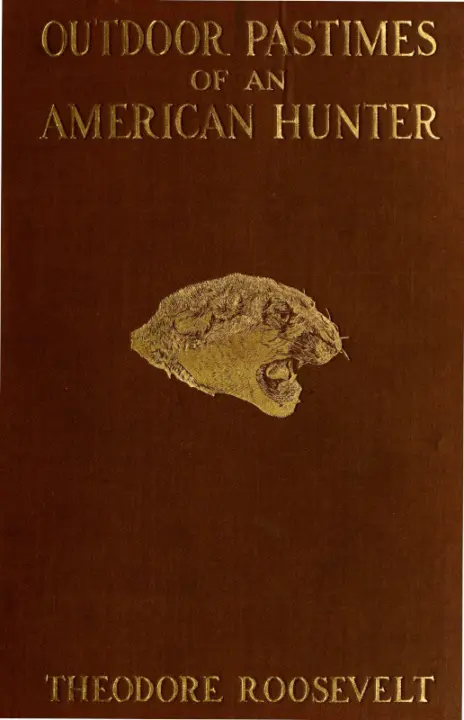
"Outdoor Pastimes of an American Hunter" by Theodore Roosevelt is a collection of personal accounts and observations regarding hunting and outdoor life written in the late 19th century. The book reflects Roosevelt's passion for nature and wildlife, showcasing his hunting experiences on various adventures, particularly focusing on cougars and other big game in the American wilderness. It serves as both a memoir and a commentary on the natural world, steeped in the author's vivid recollections and insights into the behavior of both the animals and the ecosystem. The opening of the book presents an engaging narrative of Roosevelt's winter cougar hunt in the harsh terrain of Northwest Colorado, accompanied by companions and expertly trained hounds. He recounts the challenges they faced from the cold weather and rugged environment while illustrating the unique bond between the hunters and their dogs, who play a vital role in the chase. Roosevelt takes the reader through the thrilling experiences of tracking and confronting cougars, weaving in descriptions of the majestic landscape and the importance of conservation for wildlife. This initial chapter sets the tone for the rest of the book, blending adventure with an appreciation for the wilderness.
Introduction adapted from the source catalogue; source summaries may be automatically generated.
Free to read · English · 122,861 words · No account needed
MAKE TIME FOR A GOOD BOOK
On by default. Untick to stop anonymous reading totals. Each page counts after 10 seconds in view. How this works.
Anonymous counting is on unless you have switched it off.
Shorty was always the first of the pack to attack dangerous game, and in attacking bear or cougar even Badge was much less reckless and more wary. In consequence, Shorty was seamed over with scars; most of them from bobcats, but one or two from cougars. He could speedily kill a bobcat single-handed; for these small lynxes are not really formidable fighters, although they will lacerate a dog quite severely. Shorty found a badger a much more difficult antagonist than a bobcat. A bobcat in a hole makes a hard fight, however. On this hunt we once got a bobcat under a big rock, and Jake’s Rowdy in trying to reach it got so badly mauled that he had to join the invalid class for several days.
The bobcat we killed this first day was a male, weighing twenty-five pounds. It was too late to try after the bear, especially as we had only ten or a dozen dogs out, while the bear’s tracks showed it to be a big one; and we rode back to camp.
Next morning we rode off early, taking with us all twenty-six hounds and the four terriers. We wished first to find whether the bear had gone out of the country in which we had seen him, and so rode up a valley and then scrambled laboriously up the mountain-side to the top of the snow-covered divide. Here the snow was three feet deep in places, and the horses plunged and floundered as we worked our way in single file through the drifts. But it had frozen hard the previous night, so that a bear could walk on the crust and leave very little sign. In consequence we came near passing over the place where the animal we were after had actually crossed out of the canyon-like ravine in which we had seen him and gone over the divide into another set of valleys. The trail was so faint that it puzzled us, as we could not be certain how fresh it was, and until this point could be cleared up we tried to keep the hounds from following it. Old Jim, however, slipped off to one side and speedily satisfied himself that the trail was fresh. Along it he went, giving tongue, and the other dogs were maddened by the sound, while Jim, under such circumstances, paid no heed whatever to any effort to make him come back. Accordingly, the other hounds were slipped after him, and down they ran into the valley, while we slid, floundered, and scrambled along the ridge crest parallel to them, until a couple of miles farther on we worked our way down to some great slopes covered with dwarf scrub-oak. At the edge of these slopes, where they fell off in abrupt descent to the stream at the bottom of the valley, we halted. Opposite us was a high and very rugged mountain-side covered with a growth of pinyon—never a close-growing tree—its precipitous flanks broken by ledges and scored by gullies and ravines. It was hard to follow the scent across such a mountain-side, and the dogs speedily became much scattered. We could hear them plainly, and now and then could see them, looking like ants as they ran up and down hill and along the ledges. Finally we heard some of them barking bayed. The volume of sound increased steadily as the straggling dogs joined those which had first reached the hunted animal. At about this time, to our astonishment, Badge, usually a stanch fighter, rejoined us, followed by one or two other hounds, who seemed to have had enough of the matter. Immediately afterward we saw the bear, half-way up the opposite mountain-side. The hounds were all around him, and occasionally bit at his hind quarters; but he had evidently no intention of climbing a tree. When we first saw him he was sitting up on a point of rock surrounded by the pack, his black fur showing to fine advantage. Then he moved off, threatening the dogs, and making what in Mississippi is called a walking bay. He was a sullen, powerful beast, and his leisurely gait showed how little he feared the pack, and how confident he was in his own burly strength. By this time the dogs had been after him for a couple of hours, and as there was no water on the mountain-side we feared they might be getting exhausted, and rode toward them as rapidly as we could. It was a hard climb up to where they were, and we had to lead the horses. Just as we came in sight of him, across a deep gully which ran down the sheer mountain-side, he broke bay and started off, threatening the foremost of the pack as they dared to approach him. They were all around him, and for a minute I could not fire; then as he passed under a pinyon I got a clear view of his great round stern and pulled trigger. The bullet broke both his hips, and he rolled down hill, the hounds yelling with excitement as they closed in on him. He could still play havoc with the pack, and there was need to kill him at once. I leaped and slid down my side of the gully as he rolled down his; at the bottom he stopped and raised himself on his fore quarters; and with another bullet I broke his back between the shoulders.
Your reading position is saved on this browser. Take it to another device with a library code. Reading pages adapt to text, rather than matching a printed edition.
Theodore Roosevelt
Theodore Roosevelt
Theodore Roosevelt

Theodore Roosevelt & Kermit Roosevelt
BEHIND THE BOOK
This eBook is for the use of anyone anywhere in the United States and most other parts of the world at no cost and with almost no restrictions whatsoever. You may copy it, give it away or re-use it under the terms of the Project Gutenberg License included with this eBook or online at www.gutenberg.org. If you are not located in the United States, you will have to check the laws of the country where you are located before using this eBook. Read the source licence.
The original source file, including credits and licence, is retained by this library. Request an original-format copy at no charge. Please include the book title and Project Gutenberg identifier #61935.
KEEP YOUR CURIOSITY GOING

Fanny Van de Grift Stevenson

Isabel Anderson
Charles King
Henry Vizetelly
Randall Parrish
James De Mille