THE CLASSIC COLLECTION✦Letters to His ChildrenCLASSIC FREE BOOKS
Letters to His Children
Theodore Roosevelt
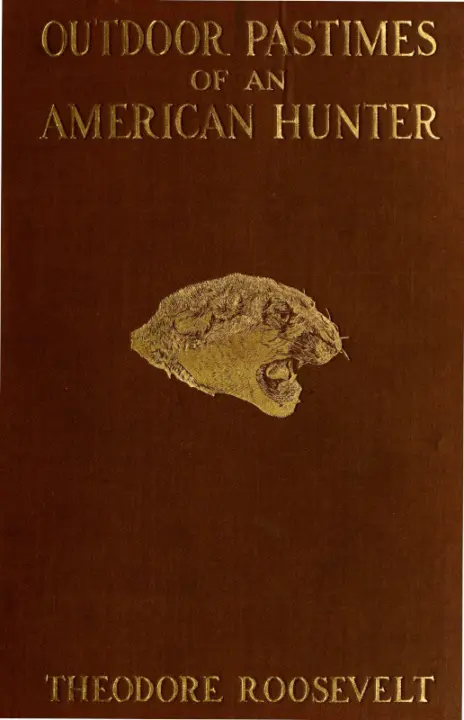
THE CLASSIC COLLECTION · 1908
"Outdoor Pastimes of an American Hunter" by Theodore Roosevelt is a collection of personal accounts and observations regarding hunting and outdoor life written in the late 19th century. The book reflects Roosevelt's passion for nature and wildlife, showcasing his hunting experiences on various adventures, particularly focusing on cougars and other big game in the American wilderness. It serves as both a memoir and a commentary on the natural world, steeped in the author's vivid recollections and insights into the behavior of both the animals and the ecosystem. The opening of the book presents an engaging narrative of Roosevelt's winter cougar hunt in the harsh terrain of Northwest Colorado, accompanied by companions and expertly trained hounds. He recounts the challenges they faced from the cold weather and rugged environment while illustrating the unique bond between the hunters and their dogs, who play a vital role in the chase. Roosevelt takes the reader through the thrilling experiences of tracking and confronting cougars, weaving in descriptions of the majestic landscape and the importance of conservation for wildlife. This initial chapter sets the tone for the rest of the book, blending adventure with an appreciation for the wilderness.
Introduction adapted from the source catalogue; source summaries may be automatically generated.
Free to read · English · 122,861 words · No account needed
MAKE TIME FOR A GOOD BOOK
On by default. Untick to stop anonymous reading totals. Each page counts after 10 seconds in view. How this works.
Anonymous counting is on unless you have switched it off.
After the death of my bear I had only a couple of days left. We spent them a long distance from camp, having to cross two bayous before we got to the hunting grounds. I missed a shot at a deer, seeing little more than the flicker of its white tail through the dense bushes; and the pack caught and killed a very lean two-year-old bear weighing eighty pounds. Near a beautiful pond called Panther Lake we found a deer-lick, the ground not merely bare but furrowed into hollows by the tongues of the countless generations of deer that had frequented the place. We also passed a huge mound, the only hillock in the entire district; it was the work of man, for it had been built in the unknown past by those unknown people whom we call moundbuilders. On the trip, all told, we killed and brought into camp three bears, six deer, a wildcat, a turkey, a possum, and a dozen squirrels; and we ate everything except the wildcat.
In the evenings we sat around the blazing camp-fires, and, as always on such occasions, each hunter told tales of his adventures and of the strange feats and habits of the beasts of the wilderness. There had been beaver all through this delta in the old days, and a very few are still left in out-of-the-way places. One Sunday morning we saw two wolves, I think young of the year, appear for a moment on the opposite side of the bayou, but they vanished before we could shoot. All of our party had had a good deal of experience with wolves. The Metcalfs had had many sheep killed by them, the method of killing being invariably by a single bite which tore open the throat while the wolf ran beside his victim. The wolves also killed young hogs, but were very cautious about meddling with an old sow; while one of the big half-wild boars that ranged free through the woods had no fear of any number of wolves. Their endurance and the extremely difficult nature of the country made it difficult to hunt them, and the hunters all bore them a grudge, because if a hound got lost in a region where wolves were at all plentiful they were almost sure to find and kill him before he got home. They were fond of preying on dogs, and at times would boldly kill the hounds right ahead of the hunters. In one instance, while the dogs were following a bear and were but a couple of hundred yards in front of the horsemen, a small party of wolves got in on them and killed two. One of the Osborns, having a valuable hound which was addicted to wandering in the woods, saved him from the wolves by putting a bell on him. The wolves evidently suspected a trap and would never go near the dog. On one occasion another of his hounds got loose with a chain on, and they found him a day or two afterward unharmed, his chain having become entangled in the branches of a bush. One or two wolves had evidently walked around and around the imprisoned dog, but the chain had awakened their suspicions and they had not pounced on him. They had killed a yearling heifer a short time before, on Osborn’s plantation, biting her in the hams. It has been my experience that fox-hounds as a rule are afraid of attacking a wolf; but all of my friends assured me that their dogs, if a sufficient number of them were together, would tackle a wolf without hesitation; the packs, however, were always composed, to the extent of at least half, of dogs which, though part hound, were part shepherd or bull or some other breed. Dr. Miller had hunted in Arkansas with a pack specially trained after the wolf. There were twenty-eight of them all told, and on this hunt they ran down and killed unassisted four full-grown wolves, although some of the hounds were badly cut. None of my companions had ever known of wolves actually molesting men, but Mr. Ichabod Osborn’s son-in-law had a queer adventure with wolves while riding alone through the woods one late afternoon. His horse acting nervously, he looked about and saw that five wolves were coming toward him. One was a bitch, the other four were males. They seemed to pay little heed to him, and he shot one of the males, which crawled off. The next minute the bitch ran straight toward him and was almost at his stirrup when he killed her. The other three wolves, instead of running away, jumped to and fro growling, with their hair bristling, and he killed two of them; whereupon the survivor at last made off. He brought the scalps of the three dead wolves home with him.
Your reading position is saved on this browser. Take it to another device with a library code. Reading pages adapt to text, rather than matching a printed edition.
Theodore Roosevelt
Theodore Roosevelt
Theodore Roosevelt

Theodore Roosevelt & Kermit Roosevelt
BEHIND THE BOOK
This eBook is for the use of anyone anywhere in the United States and most other parts of the world at no cost and with almost no restrictions whatsoever. You may copy it, give it away or re-use it under the terms of the Project Gutenberg License included with this eBook or online at www.gutenberg.org. If you are not located in the United States, you will have to check the laws of the country where you are located before using this eBook. Read the source licence.
The original source file, including credits and licence, is retained by this library. Request an original-format copy at no charge. Please include the book title and Project Gutenberg identifier #61935.
KEEP YOUR CURIOSITY GOING

Fanny Van de Grift Stevenson

Isabel Anderson
Charles King
Henry Vizetelly
Randall Parrish
James De Mille