THE CLASSIC COLLECTION✦Letters to His ChildrenCLASSIC FREE BOOKS
Letters to His Children
Theodore Roosevelt
THE CLASSIC COLLECTION · 1908
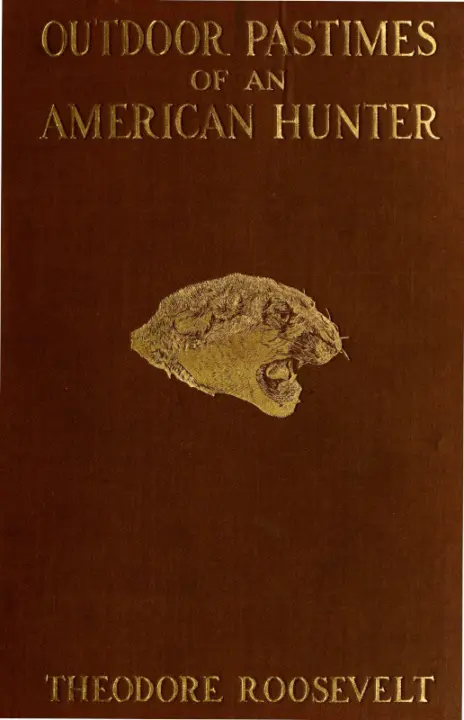
"Outdoor Pastimes of an American Hunter" by Theodore Roosevelt is a collection of personal accounts and observations regarding hunting and outdoor life written in the late 19th century. The book reflects Roosevelt's passion for nature and wildlife, showcasing his hunting experiences on various adventures, particularly focusing on cougars and other big game in the American wilderness. It serves as both a memoir and a commentary on the natural world, steeped in the author's vivid recollections and insights into the behavior of both the animals and the ecosystem. The opening of the book presents an engaging narrative of Roosevelt's winter cougar hunt in the harsh terrain of Northwest Colorado, accompanied by companions and expertly trained hounds. He recounts the challenges they faced from the cold weather and rugged environment while illustrating the unique bond between the hunters and their dogs, who play a vital role in the chase. Roosevelt takes the reader through the thrilling experiences of tracking and confronting cougars, weaving in descriptions of the majestic landscape and the importance of conservation for wildlife. This initial chapter sets the tone for the rest of the book, blending adventure with an appreciation for the wilderness.
Introduction adapted from the source catalogue; source summaries may be automatically generated.
Free to read · English · 122,861 words · No account needed
MAKE TIME FOR A GOOD BOOK
On by default. Untick to stop anonymous reading totals. Each page counts after 10 seconds in view. How this works.
Anonymous counting is on unless you have switched it off.
Neither the birds nor the flowers are as numerous on Long Island, or at any rate in my neighborhood, as they are, for instance, along the Hudson and near Washington. It is hard to say exactly why flowers and birds are at times so local in their distribution. For instance, the bobolinks hardly ever come around us at Sagamore Hill. Within a radius of three or four miles of the house I do not remember to have ever seen more than two or three couples breeding. Sharp-tailed finches are common in the marsh which lies back of our beach; but the closely allied seaside finches and the interesting and attractive little marsh wrens, both of which are common in various parts of Long Island, are not found near our home. Similarly, I know of but one place near our house where the bloodroot grows; the may-flowers are plentiful, but among hillsides to all appearance equally favored, are found on some, and not on others. For wealth of bloom, aside from the orchards, we must rely chiefly upon the great masses of laurel and the many groves of locusts. The bloom of the locust is as evanescent as it is fragrant. During the short time that the trees are in flower the whole air is heavy with the sweet scent. In the fall, in the days of the aster and the golden-rod, there is no such brilliant coloring on Long Island as farther north, for we miss from among the forest hues the flaming crimsons and scarlets of the northern maples.
Among Long Island singers the wood thrushes are the sweetest; they nest right around our house, and also in the more open woods of oak, hickory, and chestnut, where their serene, leisurely songs ring through the leafy arches all day long, but especially at daybreak and in the afternoons. Baltimore orioles, beautiful of voice and plumage, hang their nests in a young elm near a corner of the porch; robins, catbirds, valiant kingbirds, song-sparrows, chippies, bright colored thistle-finches, nest within a stone’s throw of the house, in the shrubbery or among the birches and maples; grasshopper sparrows, humble little creatures with insect-like voices, nest almost as close, in the open field, just beyond the line where the grass is kept cut; humming-birds visit the honeysuckles and trumpet-flowers; chimney swallows build in the chimneys; barn swallows nest in the stable and old barn, wrens in the bushes near by. Downy woodpeckers and many other birds make their homes in the old orchard; during the migrations it is alive with warblers. Towhees, thrashers, and Maryland yellow-throats build and sing in the hedges by the garden; bush sparrows and dainty little prairie warblers in the cedar-grown field beyond. Red-wing blackbirds haunt the wet places. Chickadees wander everywhere; the wood-pewees, red-eyed vireos, and black-and-white creepers keep to the tall timber, where the wary, thievish jays chatter, and the great-crested fly-catchers flit and scream. In the early spring, when the woods are still bare, when the hen-hawks cry as they soar high in the upper air, and the flickers call and drum on the dead trees, the strong, plaintive note of the meadow lark is one of the most noticeable and most attractive sounds. On the other hand, the cooing of the mourning doves is most noticeable in the still, hot summer days. In the thick tangles chats creep and flutter and jerk, and chuckle and whoop as they sing; I have heard them sing by night. The cedar birds offer the most absolute contrast to the chats, in voice, manner, and habits. They never hide, they are never fussy or noisy; they always behave as if they were so well-bred that it is impossible to resent the inroads the soft, quiet, pretty creatures make among the cherries. One flicker became possessed of a mania to dig its hole in one corner of the house, just under the roof. It hammered lustily at boards and shingles, and returned whenever driven away; until at last we were reluctantly forced to decree its death. Oven-birds are very plentiful, and it seems to me that their flight song is more frequently given after dusk than in daylight. It is sometimes given when the whippoorwills are calling. In late June evenings, especially by moonlight, but occasionally even when the night is dark, we hear this song from the foot of the hill where the woods begin. There seems to be one particular corner where year after year one or more oven-birds dwell which possess an especial fondness for this night-singing in the air. It is a pity the little eared owl is called screech-owl. Its tremulous, quavering cry is not a screech at all, and has an attraction of its own. These little owls come up to the house after dark, and are fond of sitting on the elk antlers over the gable. When the moon is up, by choosing one’s position, the little owl appears in sharp outline against the bright disk, seated on his many-tined perch.
Your reading position is saved on this browser. Take it to another device with a library code. Reading pages adapt to text, rather than matching a printed edition.
Theodore Roosevelt
Theodore Roosevelt
Theodore Roosevelt

Theodore Roosevelt & Kermit Roosevelt
BEHIND THE BOOK
This eBook is for the use of anyone anywhere in the United States and most other parts of the world at no cost and with almost no restrictions whatsoever. You may copy it, give it away or re-use it under the terms of the Project Gutenberg License included with this eBook or online at www.gutenberg.org. If you are not located in the United States, you will have to check the laws of the country where you are located before using this eBook. Read the source licence.
The original source file, including credits and licence, is retained by this library. Request an original-format copy at no charge. Please include the book title and Project Gutenberg identifier #61935.
KEEP YOUR CURIOSITY GOING

Fanny Van de Grift Stevenson

Isabel Anderson
Charles King
Henry Vizetelly
Randall Parrish
James De Mille