
Some Artists at the Fair
Francis Davis Millet & W. Hamilton (William Hamilton) Gibson & Will H. (Will Hicok) Low & John Ames Mitchell & Francis Hopkinson Smith
THE CLASSIC COLLECTION · 1895
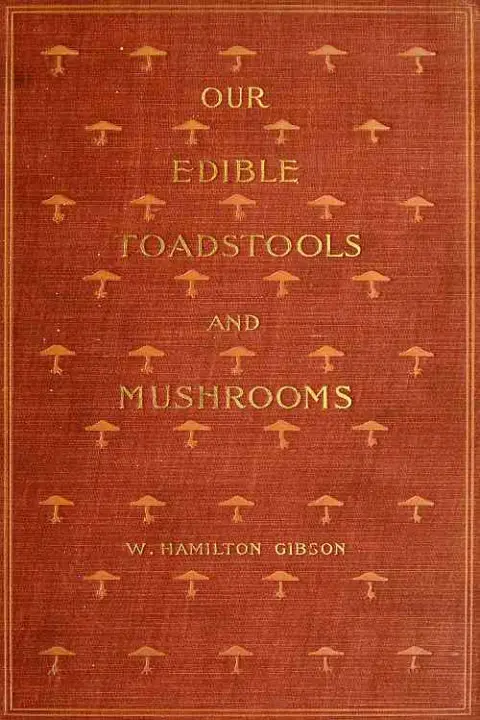
"Our Edible Toadstools and Mushrooms and How to Distinguish Them" by W. Hamilton Gibson is a practical guide on identifying edible fungi, likely written in the late 19th century. This publication focuses on educating the general public about thirty native food mushroom varieties and provides easy-to-follow rules for distinguishing these from their potentially poisonous counterparts. The book aims to promote the safe appreciation and gathering of mushrooms, addressing both the joy of foraging and the importance of caution. The opening of this work presents a thoughtful introduction to the author’s motivation for creating a user-friendly guide to mushrooms, responding to concerns about the widespread popularity and risks of mushroom consumption. Gibson discusses the challenges of conveying scientific knowledge on fungi to the general audience and highlights the specific dangers associated with poisonous species, particularly the Amanita genus. He emphasizes the need for practical knowledge in mushroom identification to prevent fatalities, while also underscoring the bountiful resources available in nature that could alleviate hunger if gathered mindfully. The author aims to empower readers with the skills to safely enjoy the culinary delights offered by certain mushrooms, while remaining vigilant against the dangers of misidentifying toxic varieties.
Introduction adapted from the source catalogue; source summaries may be automatically generated.
Free to read · English · 48,918 words · No account needed
MAKE TIME FOR A GOOD BOOK
On by default. Untick to stop anonymous reading totals. Each page counts after 10 seconds in view. How this works.
Anonymous counting is on unless you have switched it off.
Professor Peck has also published a series of papers on "Edible Mushrooms" in The Country Gentleman, of Albany, N. Y. A new work from him on this subject is in preparation.
5. Pacific Coast Fungi. By Dr. H. W. Harkness and Justin P. Moore.
1880. A catalogue.
6. The Deadly and Minor Poisons of Mushrooms. By Charles McIlvaine. Reprint from the Therapeutic Gazette. George S. Davis, Detroit, Mich. Quoted in present volume. Captain McIlvaine is also the author of several popular articles on the subject of esculent mushrooms which have appeared in various journals and magazines.
7. Fungi Caroliniani Exsiccati. Five Fasciculi, one hundred specimens in each. By H. W. Ravenel, of Aiken, S. C. John Russell, Charleston.
8. Bulletins of United States Department of Agriculture, Washington, D. C. By Thomas M. Taylor, Chief of the Division of Microscopy. Washington, D. C., 1893-94. Five issues, with many colored plates of various specimens, both edible and poisonous; also full directions for cultivation of the common mushroom.
9. Notes for Mushroom Eaters. By W. G. Farlow. Pamphlet. Illustrated. Garden & Forest Publishing Co., New York.
10. Illustrations of British Mycology. (Hand-painted.) By Mrs. T. J. Hussey. Reeve Brothers, London, 1847. An admirable work, the pioneer treatise in Great Britain; rare; reference copies only in prominent libraries.
11. Esculent Funguses of England. By Rev. Dr. C. D. Badham. With twenty colored plates. 8vo. L. Reeve & Co., London. 1870.
12. A Plain and Easy Account of the British Fungi; with Descriptions of the Esculent and Poisonous Species, Details of the Principles of Scientific Classification, and a Tabular Arrangement of Orders and Genera. By M. C. Cooke, M.A., LL.D. With twenty-four colored plates. R. Hardwick, Piccadilly, London, 1871. An excellent, inexpensive, and popular hand-book.
13. Outlines of British Fungology. Containing Characters of above a Thousand Species of Fungi, and a Complete List of all that have been described as Natives of the British Isles. By Rev. M. J. Berkeley, M.A., F.L.S. Lovell Reeve, Henrietta Street, Covent Garden, London, 1860. Beautifully illustrated with twenty-four lithographic hand-colored plates by W. Fitch, each plate presenting several species, and including a number of the esculent.
14. Mushrooms and Toadstools: How to Distinguish Easily the Differences between Edible and Poisonous Fungi. With two large sheets containing figures of twenty-nine edible and thirty-one poisonous species drawn the natural size, and colored from living specimens. By Worthington T. Smith, F.L.S. 2d edition, R. Hardwick, 192 Piccadilly, London, 1875.
15. A Selection of the Eatable Funguses of Great Britain. Edited by Robert Hogg, LL.D., and Geo. W. Johnson, F.R.H.S. Numerous excellent hand-colored plates.
Your reading position is saved on this browser. Take it to another device with a library code. Reading pages adapt to text, rather than matching a printed edition.
Francis Davis Millet & W. Hamilton (William Hamilton) Gibson & Will H. (Will Hicok) Low & John Ames Mitchell & Francis Hopkinson Smith
W. Hamilton (William Hamilton) Gibson
W. Hamilton (William Hamilton) Gibson
BEHIND THE BOOK
This eBook is for the use of anyone anywhere in the United States and most other parts of the world at no cost and with almost no restrictions whatsoever. You may copy it, give it away or re-use it under the terms of the Project Gutenberg License included with this eBook or online at www.gutenberg.org. If you are not located in the United States, you will have to check the laws of the country where you are located before using this eBook. Read the source licence.
The original source file, including credits and licence, is retained by this library. Request an original-format copy at no charge. Please include the book title and Project Gutenberg identifier #46514.
KEEP YOUR CURIOSITY GOING

Charles G. (Charles Griffith) Ross
Hannah Webster Foster

Emily Lawless
Edwin Hamlin Carr

Charles De Lano Hine
Andrew Ure