
Some Artists at the Fair
Francis Davis Millet & W. Hamilton (William Hamilton) Gibson & Will H. (Will Hicok) Low & John Ames Mitchell & Francis Hopkinson Smith
THE CLASSIC COLLECTION · 1895
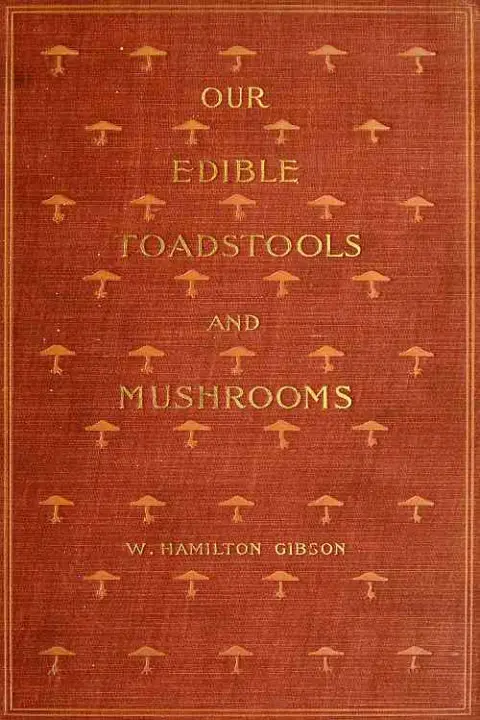
"Our Edible Toadstools and Mushrooms and How to Distinguish Them" by W. Hamilton Gibson is a practical guide on identifying edible fungi, likely written in the late 19th century. This publication focuses on educating the general public about thirty native food mushroom varieties and provides easy-to-follow rules for distinguishing these from their potentially poisonous counterparts. The book aims to promote the safe appreciation and gathering of mushrooms, addressing both the joy of foraging and the importance of caution. The opening of this work presents a thoughtful introduction to the author’s motivation for creating a user-friendly guide to mushrooms, responding to concerns about the widespread popularity and risks of mushroom consumption. Gibson discusses the challenges of conveying scientific knowledge on fungi to the general audience and highlights the specific dangers associated with poisonous species, particularly the Amanita genus. He emphasizes the need for practical knowledge in mushroom identification to prevent fatalities, while also underscoring the bountiful resources available in nature that could alleviate hunger if gathered mindfully. The author aims to empower readers with the skills to safely enjoy the culinary delights offered by certain mushrooms, while remaining vigilant against the dangers of misidentifying toxic varieties.
Introduction adapted from the source catalogue; source summaries may be automatically generated.
Free to read · English · 48,918 words · No account needed
MAKE TIME FOR A GOOD BOOK
On by default. Untick to stop anonymous reading totals. Each page counts after 10 seconds in view. How this works.
Anonymous counting is on unless you have switched it off.
Mushrooms thus treated seem to retain their aroma; in Procerus, Clavaria, Morel, Helvella, and "Fairy-ring" being intensified above that of their moist condition and most appetizing.
The desiccated specimens should be kept in a dry place, with good circulation of air, or enclosed in hermetically sealed tin boxes; in the latter case being occasionally examined to insure against mould by possible absorption of moisture.
When desired for use they are simply soaked in tepid water, which, by gradual absorption, causes the specimens occasionally to assume almost their original dimensions and juicy character, when they should be treated as recommended for the fresh mushrooms.
For the benefit of the vegetarian, or the curiously or experimentally inclined, I append a few suggestions apropos of a menu à la mode, in which the fungus might be employed with good effect as a rival to the familiar established prandial delights. Each selection is numbered with reference to its particular descriptive or suggestive paragraph in the preceding pages of the chapter.
A feast based upon these recommendations, re-enforced with appropriate adjuncts--the "mother"-born vinegar, the fungus-leavened loaf, the fungus-foaming beaker--might cumulatively prove a persuasive plea for the creed of vegetarianism.
Menu
Potages
Consommé de bœuf clair, 22
Potage à la purée d'huîtres, 1, 11, 13
Potage à la purée de bœuf, 22
Potage à la purée de volaille, 24
Poissons
Côtelettes de poisson--Sauce
aux champignons, 13
Escalope de poisson, 13
Hors-d'oeuvres
Croquettes de ris de veau, 24
Bouchées au poulet, 24
Relevée
Filet de bœuf aux champignons, 22, 23
Entrées
Omelette aux jambon, 30
Rognons d'agneau, 11
Pâté de biftecks, 22
Beignettes d'huîtres, 13, 23
Huîtres en curry, 23
Petits vols-au-vent d'huîtres
ou bouchées d'huîtres, 13, 23
Fricassée de poulet, 24
Entremets
Salad de Russula au mayonnaise, 31
Salad de Fistulina, 31
Salad de Clavaria, 31
Salad de volaille, 31
Dessert
Omelette soufflé au gelée, 30
Pouding soufflé, 30
Gelée de Hydnum, 30
Bibliography
1. Geological and Natural History Survey of North Carolina. Part III. Botany. Containing a catalogue of the indigenous and naturalized plants of the State. By Rev. M. A. Curtis, D.D., etc. Raleigh, 1867. (Out of print.)
2. Mushrooms of America. Edible and Poisonous. Edited by Julius A. Palmer, Jr. Numerous colored plates. Published by L. Prang & Co., Boston, 1885.
3. About Mushrooms. A Guide to the Study of Esculent and Poisonous Fungi. A collection of various articles upon the subject. By Julius A. Palmer. Lee & Shepard, Boston, 1894.
4. Boleti of the United States. A catalogue containing full descriptions of one hundred and eight species. (No illustrations.) By Professor Charles H. Peck, State Botanist, State Hall, Albany, N. Y. Annual Report of the State Botanist issued by the Board of Regents, Albany University.
Your reading position is saved on this browser. Take it to another device with a library code. Reading pages adapt to text, rather than matching a printed edition.
Francis Davis Millet & W. Hamilton (William Hamilton) Gibson & Will H. (Will Hicok) Low & John Ames Mitchell & Francis Hopkinson Smith
W. Hamilton (William Hamilton) Gibson
W. Hamilton (William Hamilton) Gibson
BEHIND THE BOOK
This eBook is for the use of anyone anywhere in the United States and most other parts of the world at no cost and with almost no restrictions whatsoever. You may copy it, give it away or re-use it under the terms of the Project Gutenberg License included with this eBook or online at www.gutenberg.org. If you are not located in the United States, you will have to check the laws of the country where you are located before using this eBook. Read the source licence.
The original source file, including credits and licence, is retained by this library. Request an original-format copy at no charge. Please include the book title and Project Gutenberg identifier #46514.
KEEP YOUR CURIOSITY GOING

Charles G. (Charles Griffith) Ross
Hannah Webster Foster

Emily Lawless
Edwin Hamlin Carr

Charles De Lano Hine
Andrew Ure