THE CLASSIC COLLECTION✦In a winter cityCLASSIC FREE BOOKS
In a winter city
Ouida
THE CLASSIC COLLECTION · 1880
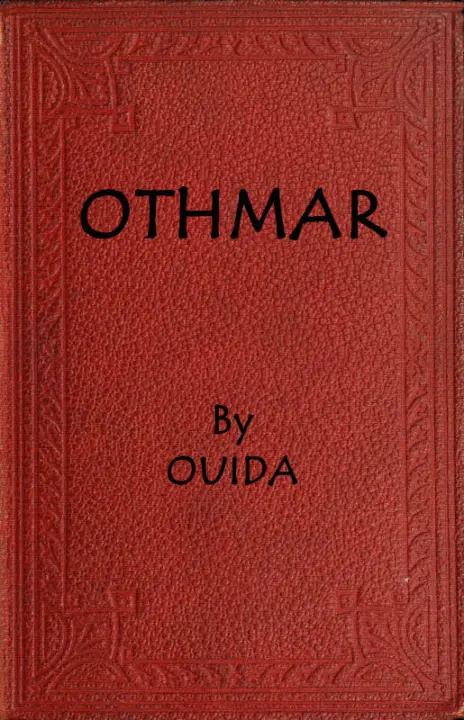
"Othmar" by Ouida is a novel written in the late 19th century. The narrative unfolds in a sumptuous setting, where the themes of love, intellect, and human emotion are explored through the lives and discussions of its characters. At the center of the story is Othmar and his nuanced relationship with a captivating woman, whose ideals and contemplations about love and happiness reveal the tensions of their world. The beginning of the novel introduces a "Court of Love," an enchanting gathering that reflects on the nature of love through intellectual debate. As the queen presides over the discussions, her witty remarks and the sharp exchanges among the courtiers highlight the paradoxes of love in a society caught between romance and realism. Surrounded by exquisite beauty and the lingering ghosts of past passions, the characters grapple with definitions of love, revealing their strengths and vulnerabilities, and setting the stage for deeper explorations of their fates. The opening successfully establishes a rich atmosphere and thought-provoking dialogue, piquing interest in the unfolding drama.
Introduction adapted from the source catalogue; source summaries may be automatically generated.
Free to read · English · 194,427 words · No account needed
MAKE TIME FOR A GOOD BOOK
On by default. Untick to stop anonymous reading totals. Each page counts after 10 seconds in view. How this works.
Anonymous counting is on unless you have switched it off.
But as the sweet rose-scent came towards him on the air, a consciousness of her presence came with it: he started violently and rose to his feet. He was very pale as he bowed low before her, then stood waiting for her to speak. She was silent some moments.
To her temper so imperious, so arrogant, so indifferent, to praise or blame, it was not without great effort that she could say what she had come to say.
A strong emotion moved her. She had never believed it possible for her conscience to pain her, for her heart to ache with self-reproach, as they did now.
'Make him happier.'
The childish words haunted her. After all, what had she ever given him in return for the supreme devotion of his life? A few hours of physical ecstasy; and years of indifference, mockery, and neglect.
'Make him happier.'
To her critical intelligence and satiated mind, happiness in such simple reading of the word could not exist; it needed faith, it needed ignorance, it needed youth; it is never possible to those whose passions demand what nothing mortal can satisfy. Yet some reparation she knew she might still give to him; some gentleness, some sympathy, some response. These children who had loved him so well should not have died wholly in vain.
She leaned towards him, and the fragrance of the roses in her breast swept with dreamy sweetness over him.
'I came to ask your pardon,' she said in a low voice. 'I wronged you, I
insulted you----'
He bowed low, and his lips, as they touched her hand, were very cold.
'Pardon is no word between you and me,' he said wearily. 'How could you doubt me? Had I ever lied to you, or to anyone?'
'No: I was wrong.'
Her proud mouth trembled.
'How much or how little shall I tell him?' she thought; 'men are such
children!'
He looked at her with hesitation; and a great and sudden joy touched
his life.
'Do you love me at all, then?' he said with wonder and with doubt.
She smiled a little: her old slight mysterious smile!
'I suppose so--since I doubted you. Love is always blind!'
Spottiswoode & Co., Printers, New-street Square, London.
Transcriber's Notes:
Italic text is denoted by underscores.
The oe ligature is represented in the text at [oe].
Table of Contents created by the transcriber and placed into the public
domain.
Minor punctuation and printer errors repaired.
Every effort has been made to replicate this text as faithfully as
possible, including obsolete and variant spellings and other
inconsistencies.
Your reading position is saved on this browser. Take it to another device with a library code. Reading pages adapt to text, rather than matching a printed edition.
BEHIND THE BOOK
This eBook is for the use of anyone anywhere in the United States and most other parts of the world at no cost and with almost no restrictions whatsoever. You may copy it, give it away or re-use it under the terms of the Project Gutenberg License included with this eBook or online at www.gutenberg.org. If you are not located in the United States, you will have to check the laws of the country where you are located before using this eBook. Read the source licence.
The original source file, including credits and licence, is retained by this library. Request an original-format copy at no charge. Please include the book title and Project Gutenberg identifier #51487.
KEEP YOUR CURIOSITY GOING
Coulson Kernahan

Maurice Baring
Frances Wright
Cécile Tormay

Frederic Jesup Stimson

W. H. P. (William Henry Pope) Jarvis