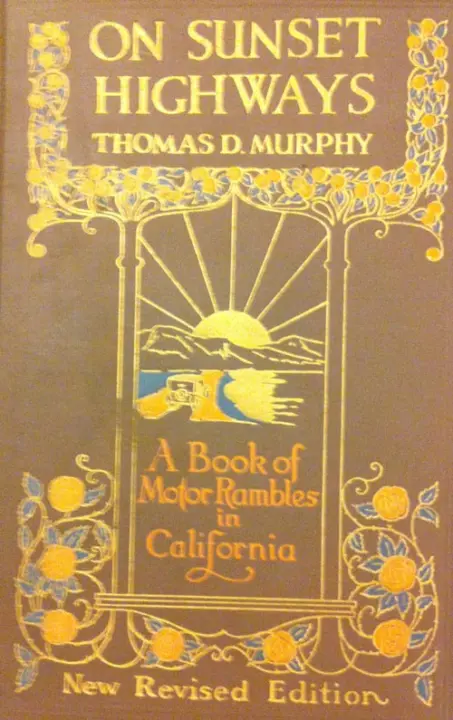
On Sunset Highways: A Book of Motor Rambles in California
Thos. D. (Thomas Dowler) Murphy
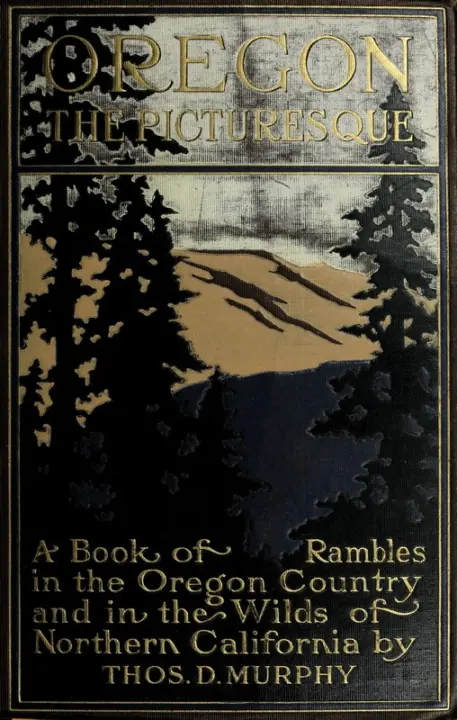
THE CLASSIC COLLECTION · 1917
"Oregon, the Picturesque" by Thos. D. Murphy is a travelogue written in the early 20th century. This book serves as a personal narrative of the author's journey through the less-explored regions of Oregon and Northern California, highlighting their stunning landscapes and historical significance. The work emphasizes the scenic beauty and charm of areas that have often been overlooked in previous literature, making it a valuable guide for adventurous travelers interested in discovering hidden gems. The opening of the book sets the stage for an ambitious road trip through Oregon and Northern California, describing the author’s eagerness to venture into unfamiliar and rugged terrain after having extensively explored Southern California. As the author details their preparations and the anticipated challenges of the journey, they express a mix of excitement and trepidation about the roads ahead, mentioning the poor conditions and potential obstacles. This portion provides insight into the allure of the untamed wilderness and foreshadows the captivating landscapes, historic landmarks, and personal anecdotes that are to follow, illustrating both the challenges and the rewards of motor touring in this picturesque region.
Introduction adapted from the source catalogue; source summaries may be automatically generated.
Free to read · English · 71,312 words · No account needed
MAKE TIME FOR A GOOD BOOK
On by default. Untick to stop anonymous reading totals. Each page counts after 10 seconds in view. How this works.
Anonymous counting is on unless you have switched it off.
There are two routes from Sacramento to Lake Tahoe which carry nine-tenths of the motor travel to that interesting region. Both traverse a picturesque mountain country with a spice of historic and romantic interest and most motor visitors, naturally enough, go by one route and return by the other. That we did not do so was the result of the miscarriage of our plans, due to a break-down of the car we had leased of a Los Angeles dealer for our first trip. This made it necessary to go part of the way by train and when repairs to the car were made, we returned by the route over which we had come. The following year, in our own car, we again visited Tahoe, going from San Francisco by the way of Sacramento and Placerville and continuing our journey northward from the lake.
In each instance we passed the night at Sacramento, which is the best starting point for the day’s run to Tahoe, being about one hundred and twenty miles distant by either route. We were sure of every comfort and convenience here--there are a dozen hotels ranging from good-enough to first-class--and our repeated visits had given us more and more of a liking for Sacramento. It is a clean, beautiful city, practically a seaport, so deep and broad is its mighty tide-water river, which carries a yearly commerce, incoming and outgoing, of an aggregate value of more than fifty million dollars. The surrounding country is very fertile, with greatly varied agricultural and fruit-growing resources which form the basis of the city’s prosperity and assure its future. Its streets and private and public buildings have a truly metropolitan appearance which in the east would indicate a city of much more than fifty or sixty thousand population. The Capitol building, a white marble structure of purely classic lines, stands in a beautiful semi-tropic park of about forty acres. This is beautified with endless varieties of shrubs and trees, among them palms of many species, for the climate is such that orange groves, olives and almonds flourish quite as vigorously as in Southern California. The oranges ripen here from six weeks to two months earlier than in the south, giving the growers the advantage of early markets, and the quality of the fruit is equal to the best. Surrounding the city are endless orchards of peach, pear, prune, apricot, cherry, and many other varieties of fruit trees; and there are extensive vineyards of both wine and table grapes. Dairying, stock-raising, gardening, as well as other branches of farming are carried on--very profitably, if one may judge by appearances. Manufacturing is also done on a considerable scale in the city and vicinity and gold mining in the county is an industry producing about two millions annually. All of which would seem to indicate that Sacramento has not yet reached the zenith of its growth and prosperity. It is favorably situated as to railroads, having a service of three transcontinental lines since the Santa Fe has leased right of way over the Western Pacific. The new state highway enters the city from north and south and a direct route has been opened to San Francisco by the completion of the great Yolo Trestle, shortening the distance by wagon road--thirty miles less than via Stockton and Altamont, formerly the standard route. This great engineering feat bridges the Yolo basin, which is flooded during several months of the year, with a solid concrete causeway twenty-one feet wide and over three miles long, carried on re-enforced concrete piles rising twenty feet above ground. It was completed in about eighteen months and cost a little under four hundred thousand dollars. We ran over it on our last trip to Sacramento and it seemed like a fairy tale indeed to be bowling along twenty feet above the formerly impassable marsh as safely and smoothly as upon an asphalted city boulevard. In addition to the state highway, Sacramento County already has many miles of good road of her own construction, but she is planning still larger things in the immediate future. A highway bond issue of two million dollars was authorized late in 1916 by a majority of nearly four to one, emphatically proving the enlightenment of the citizens of the county on the question of improved roads. The proceeds of this issue will improve practically all the main highways and make Sacramento County one of the favorite touring grounds of the state.
Your reading position is saved on this browser. Take it to another device with a library code. Reading pages adapt to text, rather than matching a printed edition.
Thos. D. (Thomas Dowler) Murphy
Thos. D. (Thomas Dowler) Murphy
BEHIND THE BOOK
This eBook is for the use of anyone anywhere in the United States and most other parts of the world at no cost and with almost no restrictions whatsoever. You may copy it, give it away or re-use it under the terms of the Project Gutenberg License included with this eBook or online at www.gutenberg.org. If you are not located in the United States, you will have to check the laws of the country where you are located before using this eBook. Read the source licence.
The original source file, including credits and licence, is retained by this library. Request an original-format copy at no charge. Please include the book title and Project Gutenberg identifier #60359.
KEEP YOUR CURIOSITY GOING
Wilfrid Scawen Blunt
Wilfrid Scawen Blunt

E. W. (Edgar Watson) Howe
Francis Greenleaf Allinson & Anne C. E. (Anne Crosby Emery) Allinson
Cyrenus Cole

John Martineau