THE CLASSIC COLLECTION✦The long wayCLASSIC FREE BOOKS
The long way
Mary Imlay Taylor
THE CLASSIC COLLECTION · 1896
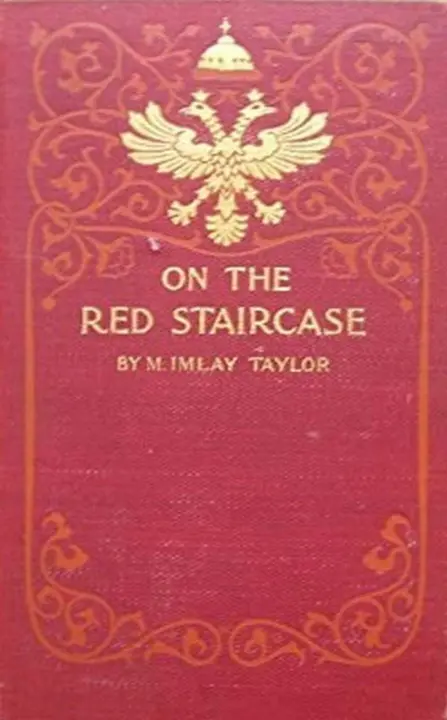
"On the Red Staircase" by Mary Imlay Taylor is a historical novel written in the late 19th century. Set against the turbulent backdrop of early Russian history, the narrative unfolds around the politically charged climate following the death of Czar Feodor. The story introduces various central figures including the Patriarch Joachim, who is overseeing the election of a new czar, the ambitious Czarevna Sophia, and Zénaïde, the young daughter of a recently murdered boyar, caught in a web of court intrigue and familial conflict. At the start of the novel, the reader is thrust into the Grand Square of the Kremlin, where a crowd has gathered for the election of a new ruler amidst cries for justice and shifting loyalties. The protagonist, a Frenchman named Philippe de Brousson, becomes entwined in the unfolding drama, witnessing the manipulations and power plays of the nobility, particularly focusing on the rise of Peter Alexeivitch against the backdrop of the milieux of the Streltsi and the Miloslavsky faction. Philippe's interest piqued by the beautiful Zénaïde and her perilous situation leads him to navigate the dangerous political landscape of Russia in search of justice and love, while ominous foreshadowing hints at the darker forces at play within the Kremlin.
Introduction adapted from the source catalogue; source summaries may be automatically generated.
Free to read · English · 69,509 words · No account needed
MAKE TIME FOR A GOOD BOOK
On by default. Untick to stop anonymous reading totals. Each page counts after 10 seconds in view. How this works.
Anonymous counting is on unless you have switched it off.
These reflections were interrupted by Pierrot, who asked which of two roads I intended to follow. I had already decided on the shorter one; but he objected, on the ground that he knew it to be in bad condition, and that our horses might meet with an accident. However, I was too anxious to be done with my distasteful errand to heed his precautions, and in a few moments we were riding on again, carefully, it is true, but yet at a fair rate of speed. We had advanced a considerable distance, when I thought that I heard a commotion of some kind in front, and, at the same time, there was the sound of a horse’s hoofs coming rapidly towards us. In the darkness, I could only discover an imperfect outline of a horse and rider as they approached me. I turned aside to make room, but the stranger reined in his horse as he came abreast of us. He uttered an exclamation in Russian which I did not catch, and I asked him what he had said.
“You cannot go on!” he exclaimed, in an excited tone; “there is a small riot on the road. Some of the Streltsi have got after one of their officers and taken him prisoner, and they will not let any one through the lines. I am going back to the city for help.”
“Will they murder him?” I asked, feeling that we ought to interfere.
“No; they are going to take him to their own quarters,” the stranger said, touching his horse with his spurs.
I called after him to know if there was any short cut to the other road, which I had despised. He replied that he did not know, but that there was a public house a few yards in front of me, where I could get all the information that I required. If it had not been for the czarevna’s packet, I should have been inclined to risk getting through the rioters; but I knew it would be a sorry matter to fall into their hands with that imperial missive on my person. I foresaw some difficulty and delay as it was, and cursing my luck, rode forward to the house indicated by the stranger. It was a long, low building surrounded by a high wall; there was no light at the front, but I saw one burning in the rear, inside the courtyard, and the gate was ajar. Tossing my reins to Pierrot, I dismounted, and approaching the gateway, looked into a large bare court, partially illumined by the light streaming from an open door opposite. I knocked with the hilt of my sword, but there was no sound but the restive plunge of one of my own horses; I looked back and saw Pierrot trying to quiet them. As there was no response, I pushed open the gate, which squeaked angrily, as if the hinges were rusted. Crossing the court, I was approaching the open door, when the light was suddenly extinguished. My surprise stayed my foot, for I was left in total darkness, and without having seen anyone in the place. In another moment I advanced to the doorway and struck the post with my fist. I heard the sound of feet moving within, and bending forward, strained my eyes to penetrate the darkness. As I did so, some one sprang on me from behind, and I was thrown heavily face downward on the step; before I could make any outcry, my head was muffled by my first assailant, while another person kept my arms pinioned. I made a violent effort to free myself, but was perfectly powerless in the hands of the ruffians, who did their work silently, although I thought that I could hear, even through my muffling, the sound of a number of feet. I remembered, at that moment, with regret that I had not heeded Pierrot’s cautions, and still hoped that he might take alarm and come to my assistance; but the height of the wall precluded all possibility of seeing into the court, even in the daylight, and in that pitch darkness only an owl could have discovered anything. My mysterious assailants evidently had some well-defined plan in their minds; for without consultation, or even speaking, they proceeded to lift me, none too gently, and carried me into the house. However, they did not stop there; but passing on, I heard a heavy door unbarred, and from the change of atmosphere, was sure that I was out of doors again. Then I became conscious of being lifted into a carriage, and could indistinctly hear the horses prancing as we started off at a rate that argued a better road than that by which I had approached the ill-fated spot. The cords which bound my arms and legs hurt not a little, and, muffled as I was, I found it even difficult to breathe. My thoughts were too confused to reason out the cause or probable results of my unfortunate predicament, but I was greatly alarmed for the safety of the czarevna’s packet. Even if their object was robbery alone, they would still be sure to discover the papers, and would doubtless make use of them; but from the first, I fancied that the packet was the cause of my trouble, and yet was at loss to understand how it could have been suspected that I was the bearer of Sophia’s messages. Suddenly I remembered Homyak at the door of the czarevna’s apartment, and knew myself for a blockhead. Von Gaden had openly expressed his antipathy to the miserable dwarf, and I knew him to be identified with Vladimir Ramodanofsky, an active adherent of the Naryshkins. My carelessness had been my own undoing, and I now suspected that the story of the riotous Streltsi on the road was a fable, and that I had been led into a snare as easily as the veriest simpleton in the world. Poor Pierrot! I fancied his distress, and only hoped that his fate might not be worse than my own. Meanwhile, the packet still remained upon my person, and I lay helpless in the bottom of the carriage. On, on, we sped! What could be our destination? The cords cut more and more about my limbs, and my breath came with an effort. I felt that a few moments more of this would strangle me. I endeavored to gain some liberty by contortions of my whole body; but after a few spasmodic movements, I received a sharp kick in the ribs from one of my captors, and found it expedient to lie still. The sensation of smothering was horrible, the oppression on the chest, the pain at the heart; and every movement was torture. Reaching at last the limit of endurance, I lost consciousness, and knew nothing more until I came to myself, on the floor of a small room, my eyes straining up at the low ceiling, and the morning light streaming in at a window opposite.
Your reading position is saved on this browser. Take it to another device with a library code. Reading pages adapt to text, rather than matching a printed edition.
Mary Imlay Taylor

Mary Imlay Taylor

Mary Imlay Taylor

Mary Imlay Taylor
BEHIND THE BOOK
This eBook is for the use of anyone anywhere in the United States and most other parts of the world at no cost and with almost no restrictions whatsoever. You may copy it, give it away or re-use it under the terms of the Project Gutenberg License included with this eBook or online at www.gutenberg.org. If you are not located in the United States, you will have to check the laws of the country where you are located before using this eBook. Read the source licence.
The original source file, including credits and licence, is retained by this library. Request an original-format copy at no charge. Please include the book title and Project Gutenberg identifier #70502.
KEEP YOUR CURIOSITY GOING
Cécile Tormay

Moritz Busch
Coulson Kernahan
John L. Ransom

Maurice Baring
Frances Wright