THE CLASSIC COLLECTION✦The long wayCLASSIC FREE BOOKS
The long way
Mary Imlay Taylor
THE CLASSIC COLLECTION · 1896
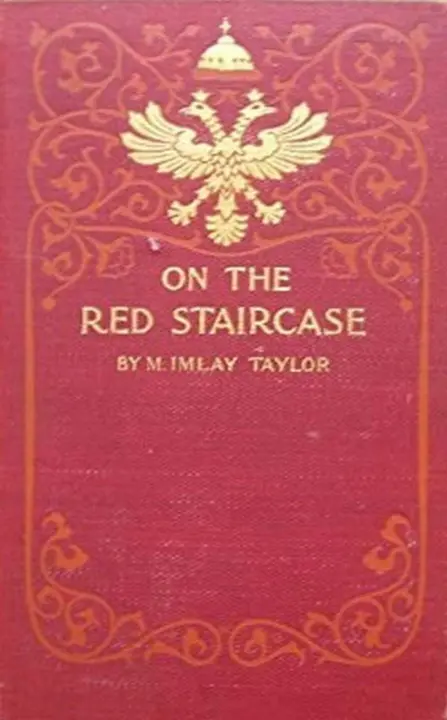
"On the Red Staircase" by Mary Imlay Taylor is a historical novel written in the late 19th century. Set against the turbulent backdrop of early Russian history, the narrative unfolds around the politically charged climate following the death of Czar Feodor. The story introduces various central figures including the Patriarch Joachim, who is overseeing the election of a new czar, the ambitious Czarevna Sophia, and Zénaïde, the young daughter of a recently murdered boyar, caught in a web of court intrigue and familial conflict. At the start of the novel, the reader is thrust into the Grand Square of the Kremlin, where a crowd has gathered for the election of a new ruler amidst cries for justice and shifting loyalties. The protagonist, a Frenchman named Philippe de Brousson, becomes entwined in the unfolding drama, witnessing the manipulations and power plays of the nobility, particularly focusing on the rise of Peter Alexeivitch against the backdrop of the milieux of the Streltsi and the Miloslavsky faction. Philippe's interest piqued by the beautiful Zénaïde and her perilous situation leads him to navigate the dangerous political landscape of Russia in search of justice and love, while ominous foreshadowing hints at the darker forces at play within the Kremlin.
Introduction adapted from the source catalogue; source summaries may be automatically generated.
Free to read · English · 69,509 words · No account needed
MAKE TIME FOR A GOOD BOOK
On by default. Untick to stop anonymous reading totals. Each page counts after 10 seconds in view. How this works.
Anonymous counting is on unless you have switched it off.
UNDER Zénaïde’s startled and half-frightened gaze, I felt myself a fool. My ardent knight-errantry dwindled, and I stood revealed, a rash intruder on the privacy of a Russian household.
Zénaïde was the first to recover her self-possession; she had divined my nationality, for she addressed me in French.
“Monsieur has made some strange error,” she said in a dignified way, “and stumbled upon the private quarter of the house. His errand is with my uncle, no doubt.”
I was at loss to explain my blundering ardor.
“Mademoiselle,” I stammered, feeling my face burn, “I had cause to think you were in need of assistance--I--pardon me, I do but increase my awkwardness.”
She looked at me strangely, a new emotion dyeing her cheek with
scarlet.
“Monsieur is kind,” she said a little haughtily; “I am indebted to my uncle’s friend, I presume, monsieur--”
She paused, and her eyes sought mine with a keen interrogation. I stood erect; something in her tone stung me.
“I am not your uncle’s friend, Mademoiselle Ramodanofsky,” I said a little defiantly; “I am a stranger to him, a French gentleman, Philippe de Brousson.”
There was a startled cry from the farther side of the room, where the other woman had remained; she came across now, staring at me strangely.
“Philippe de Brousson!” she cried in a high French voice. “It is Philippe, little Philippe!”
It was my turn to stare in blank astonishment. She was a tall angular woman, with near-sighted eyes, and gray curls dancing on her temples. I did not know her, but it was evident that she recognized me with ecstasy. Zénaïde was looking at her with a reflection of my amazement.
“Mademoiselle Eudoxie,” she said warningly, “you are very short-sighted; you may have made another mistake.”
The name struck me at once as familiar, and I looked at the woman with a sudden vague recollection.
“You know me, Monsieur Philippe?” she said, regarding me with a smile on her quaint thin face; “you remember old Eudoxie Varien, who taught you and little Marie, the saints rest her soul!”
It was the governess who had watched over my little sister and me in the old château, the Tour de Brousson. I remembered her very well now, and grasped her hand warmly, a thousand memories of childhood and my dead sister thronging into my mind.
“If we had met at any other moment, Mademoiselle Eudoxie,” I said, “I should have known you at once.”
The tears were shining in the good woman’s eyes, and with a sudden impulse, she stood on tip-toe and kissed my cheek.
Your reading position is saved on this browser. Take it to another device with a library code. Reading pages adapt to text, rather than matching a printed edition.
Mary Imlay Taylor

Mary Imlay Taylor

Mary Imlay Taylor

Mary Imlay Taylor
BEHIND THE BOOK
This eBook is for the use of anyone anywhere in the United States and most other parts of the world at no cost and with almost no restrictions whatsoever. You may copy it, give it away or re-use it under the terms of the Project Gutenberg License included with this eBook or online at www.gutenberg.org. If you are not located in the United States, you will have to check the laws of the country where you are located before using this eBook. Read the source licence.
The original source file, including credits and licence, is retained by this library. Request an original-format copy at no charge. Please include the book title and Project Gutenberg identifier #70502.
KEEP YOUR CURIOSITY GOING
Cécile Tormay

Moritz Busch
Coulson Kernahan
John L. Ransom

Maurice Baring
Frances Wright