THE CLASSIC COLLECTION✦The long wayCLASSIC FREE BOOKS
The long way
Mary Imlay Taylor
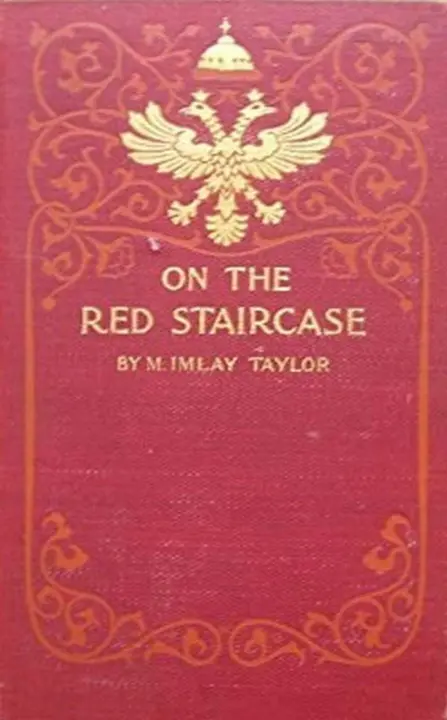
THE CLASSIC COLLECTION · 1896
"On the Red Staircase" by Mary Imlay Taylor is a historical novel written in the late 19th century. Set against the turbulent backdrop of early Russian history, the narrative unfolds around the politically charged climate following the death of Czar Feodor. The story introduces various central figures including the Patriarch Joachim, who is overseeing the election of a new czar, the ambitious Czarevna Sophia, and Zénaïde, the young daughter of a recently murdered boyar, caught in a web of court intrigue and familial conflict. At the start of the novel, the reader is thrust into the Grand Square of the Kremlin, where a crowd has gathered for the election of a new ruler amidst cries for justice and shifting loyalties. The protagonist, a Frenchman named Philippe de Brousson, becomes entwined in the unfolding drama, witnessing the manipulations and power plays of the nobility, particularly focusing on the rise of Peter Alexeivitch against the backdrop of the milieux of the Streltsi and the Miloslavsky faction. Philippe's interest piqued by the beautiful Zénaïde and her perilous situation leads him to navigate the dangerous political landscape of Russia in search of justice and love, while ominous foreshadowing hints at the darker forces at play within the Kremlin.
Introduction adapted from the source catalogue; source summaries may be automatically generated.
Free to read · English · 69,509 words · No account needed
MAKE TIME FOR A GOOD BOOK
On by default. Untick to stop anonymous reading totals. Each page counts after 10 seconds in view. How this works.
Anonymous counting is on unless you have switched it off.
“Why tell me this now?” I cried, “when I am helpless, and there is no refuge but the hope that her father will act more discreetly than I have done.”
“Don’t blame yourself, Philippe,” mademoiselle said gently; “we cannot always foresee and prevent every evil. It is true that it would have been better to have left me to my fate, and pressed on in search of the young girl.”
She spoke sadly, and there was an implied reproach in her words which smote me. I took her hand and pressed it warmly.
“You forget, mademoiselle,” I said, “that your safety is dear to Zénaïde and to me. Do you think that Philippe de Brousson forgets old friends?”
The tears came into the excellent woman’s eyes.
“Ah, Philippe,” she said sorrowfully, “I am one of the unfortunates of this world who usually get only the crumbs from the rich man’s table, and it touches me to be remembered. But you were ever true-hearted. I cannot look at you, broad-shouldered, bronzed man that you are, without seeing the little fair-haired boy playing among the roses in the garden of the château.”
“Keep the memory fresh, mademoiselle,” I said lightly; “think of me
ever at my best.”
She went back to her room, and for a little while I was left to my reflections, and then she came again to the door.
“I hear a noise of some kind,” she said, with some excitement in her voice. “It comes from the streets, and is like the sound of some great disturbance. What can it be?”
Her first words had raised the hope that our rescuers were at hand; and, even failing that, I was eager to catch every murmur from the outside world. We both went to the narrow window, and listened. It was now dark, and we could not even see the wall, which served to dull the sounds coming to us on the night wind; it was a deep, low murmur, like the growling of a tempest, far off, but unmistakable. We listened intently; both of us had the same thought.
“It must be a riot,” mademoiselle exclaimed, a thrill of excitement in
her voice.
It was the twenty-fourth of May, 1682, and we were listening to the first rumblings of the storm that was to break on the morrow upon the Kremlin, and in a few hours work a mighty change.
“That is the sound of a multitude,” I remarked as we stood there, so anxious and so helpless. “I know that trouble has been brewing for weeks, and it may culminate to-night.”
“Holy Virgin!” ejaculated mademoiselle, “what will become of my poor
lamb?”
Your reading position is saved on this browser. Take it to another device with a library code. Reading pages adapt to text, rather than matching a printed edition.
Mary Imlay Taylor

Mary Imlay Taylor

Mary Imlay Taylor

Mary Imlay Taylor
BEHIND THE BOOK
This eBook is for the use of anyone anywhere in the United States and most other parts of the world at no cost and with almost no restrictions whatsoever. You may copy it, give it away or re-use it under the terms of the Project Gutenberg License included with this eBook or online at www.gutenberg.org. If you are not located in the United States, you will have to check the laws of the country where you are located before using this eBook. Read the source licence.
The original source file, including credits and licence, is retained by this library. Request an original-format copy at no charge. Please include the book title and Project Gutenberg identifier #70502.
KEEP YOUR CURIOSITY GOING
Cécile Tormay

Moritz Busch
Coulson Kernahan
John L. Ransom

Maurice Baring
Frances Wright