THE CLASSIC COLLECTION✦The long wayCLASSIC FREE BOOKS
The long way
Mary Imlay Taylor
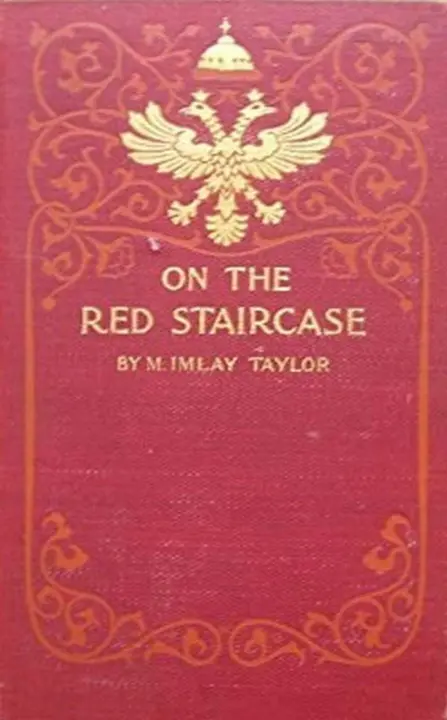
THE CLASSIC COLLECTION · 1896
"On the Red Staircase" by Mary Imlay Taylor is a historical novel written in the late 19th century. Set against the turbulent backdrop of early Russian history, the narrative unfolds around the politically charged climate following the death of Czar Feodor. The story introduces various central figures including the Patriarch Joachim, who is overseeing the election of a new czar, the ambitious Czarevna Sophia, and Zénaïde, the young daughter of a recently murdered boyar, caught in a web of court intrigue and familial conflict. At the start of the novel, the reader is thrust into the Grand Square of the Kremlin, where a crowd has gathered for the election of a new ruler amidst cries for justice and shifting loyalties. The protagonist, a Frenchman named Philippe de Brousson, becomes entwined in the unfolding drama, witnessing the manipulations and power plays of the nobility, particularly focusing on the rise of Peter Alexeivitch against the backdrop of the milieux of the Streltsi and the Miloslavsky faction. Philippe's interest piqued by the beautiful Zénaïde and her perilous situation leads him to navigate the dangerous political landscape of Russia in search of justice and love, while ominous foreshadowing hints at the darker forces at play within the Kremlin.
Introduction adapted from the source catalogue; source summaries may be automatically generated.
Free to read · English · 69,509 words · No account needed
MAKE TIME FOR A GOOD BOOK
On by default. Untick to stop anonymous reading totals. Each page counts after 10 seconds in view. How this works.
Anonymous counting is on unless you have switched it off.
“I am a stranger here,” I said, purposing to draw him out, “and know little of these matters.”
He turned a keen glance on me, seeming to search my face.
“You are a Frenchman,” he said, addressing me in excellent French, which was the more astonishing because so unusual, especially in his rank in life. Without waiting for my reply, he directed my attention to the balcony. “The patriarch is going to bear the glad tidings to the Czarina Natalia,” he remarked grimly, “and, I presume, to anoint the young czarevitch[1] with all haste; but it takes more than holy oil to make an emperor in these days.”
[Footnote 1: The czar’s son and heir. So also, Alexeivitch is the son
of Alexis.]
We were less pressed now, for the crowd was surging away towards the palace, shouting as it went. I examined my new acquaintance with curiosity. If his face had been less rugged and fierce it would have been handsome on the side that had escaped the disfiguring scar. It was a remarkable face: a keen eye, a large straight nose, a strong mouth, and an expression of relentless resolution,--a face that had had a past as dark, as cold, as grim as that close-shut mouth. My curiosity was excited.
“A regent will have to be appointed,” I remarked, “during the minority
of the czar.”
He smiled grimly. “And who do you suppose it will be?” he asked, with a
keen glance.
“Custom points to the czarina,” I replied with a little hesitation.
“And the Chancellor Matveief,” he added.
I assumed surprise.
“Matveief is an exile,” I exclaimed hastily.
The Russian laughed. “The czarina is his dutiful and indebted ward,” he said. “He is no longer in Archangel but at Lukh, and a summons can reach him the easier. When a guardian has set you on a throne, you cannot be ungrateful. Why, man, where are your senses? What is all this shouting about? It is the Naryshkins. I forget, though, you are a foreigner.”
“A poor gentleman,” I said at once; “a soldier of the king of France.”
The Russian’s glance was following the crowd; whatever his thoughts, they were not pleasant, for his expression was gloomy and cynical.
“You have witnessed a singular event in our history,” he said sternly; “you have seen the Moscovite rabble elect a czar. The younger son setting aside the first-born!”
“The Czarevitch Ivan is said to be indifferent to the high office,” I replied, in a low tone; “he is blind.”
Your reading position is saved on this browser. Take it to another device with a library code. Reading pages adapt to text, rather than matching a printed edition.
Mary Imlay Taylor

Mary Imlay Taylor

Mary Imlay Taylor

Mary Imlay Taylor
BEHIND THE BOOK
This eBook is for the use of anyone anywhere in the United States and most other parts of the world at no cost and with almost no restrictions whatsoever. You may copy it, give it away or re-use it under the terms of the Project Gutenberg License included with this eBook or online at www.gutenberg.org. If you are not located in the United States, you will have to check the laws of the country where you are located before using this eBook. Read the source licence.
The original source file, including credits and licence, is retained by this library. Request an original-format copy at no charge. Please include the book title and Project Gutenberg identifier #70502.
KEEP YOUR CURIOSITY GOING
Cécile Tormay

Moritz Busch
Coulson Kernahan
John L. Ransom

Maurice Baring
Frances Wright