THE CLASSIC COLLECTION✦Building the pacific railwayCLASSIC FREE BOOKS
Building the pacific railway
Edwin L. (Edwin Legrand) Sabin
THE CLASSIC COLLECTION · 1913
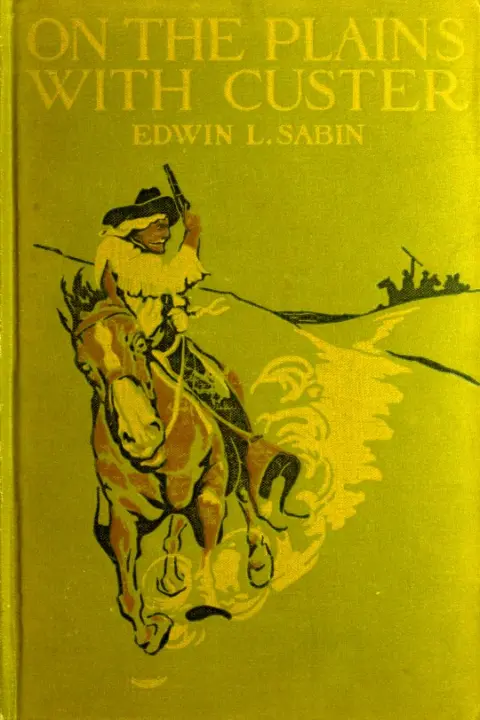
"On the Plains with Custer" by Edwin L. Sabin is a historical account written in the early 20th century. The work centers around the life and experiences of the young bugler Ned Fletcher during the tumultuous years of the late 1860s and the 1870s when General George Armstrong Custer and the Seventh Cavalry played critical roles in the westward expansion of white civilization and the conflicts with Native American tribes. The narrative offers insights into both the military and everyday life on the American plains during a period of significant historical change. The opening of the book introduces us to Ned Fletcher, a young boy who has escaped from captivity with the Sioux and is navigating the vast and lonely Kansas prairie alone in search of safety and his lost sister. As he wanders, he encounters a herd of buffalo being chased by a horseman, who is revealed to be the famous General Custer. The interaction between Ned and Custer leads to a sense of hope for the boy, who expresses a desire to join the army and find his sister. The early chapters set the tone for an adventure filled with the realities of frontier life, the challenges faced by young soldiers, and the complex relations between white settlers and Native Americans, establishing the groundwork for Ned's journey alongside Custer and the Seventh Cavalry.
Introduction adapted from the source catalogue; source summaries may be automatically generated.
Free to read · English · 68,963 words · No account needed
MAKE TIME FOR A GOOD BOOK
On by default. Untick to stop anonymous reading totals. Each page counts after 10 seconds in view. How this works.
Anonymous counting is on unless you have switched it off.
“It’s a hoss! A dead hoss, gentle-men,” pronounced Comstock, before they were more than half way. The general did not pause to level his glasses again; Comstock’s word was enough.
Sure enough, a horse it was; a white horse, lying stiff and bloody in the trail, with a bullet-hole through its head.
“A cavalry horse,” exclaimed the general, quickly. “There’s the U. S. on its shoulder, and saddle marks on its back.”
“It’s out of the Second Cavalry, too, general,” added Major Elliot. “When I was at Sedgwick I noticed a full company mounted on white horses.”
“Do you see any Indian sign, Comstock?—As to who did this? Or whether there’s been a fight?” demanded the general.
Scout Comstock and the Delawares examined the carcass, and the ground around-about, for token of arrow or cartridge-shells or pony tracks; but they could find nothing. The horse had been shot and stripped; that was all.
“Then there’s the chance, isn’t there,” proposed Major Elliot, “that the animal may have dropped out, and that they shot him and took his saddle and bridle to prevent the Indians making use of him?”
“We must hope so,” answered the general.
Yes, they all hoped so; but presently, on the march, Comstock spoke, from where he was skirting the wagon-trail.
“There’s somethin’ wrong, sure, gen’ral. Now we’re diskivverin’ signs that talk. This here party we’re follerin’ has quickened up an’ spread out more irregular, so they’re on both sides the trail, as well as in it.”
“And there’s another dead horse, isn’t it?” directed Major Elliot.
Yes, a second dead white horse awaited, just ahead; shot in the trail, and stripped, like the first.
“Pony tracks, too, gentle-men,” announced Comstock, the moment that he scanned the ground about. “It’s Injuns. I knowed it. An’ the very wust place for attack, too. Nothin’ but level ground, whar they kin circle an’ shoot an’ t’other party can’t find shelter, to make a stand. Shod hosses are movin’ at a full gallop, now; so are ponies. This lootenint an’ his men are ridin’ hard for kivver. That’s plain.”
“Would they make it, do you think?”
“Wall,” said Comstock, again dubious, “it’s doubtful. Tryin’ to run away from a big party of Injuns, in open country, is dangerous matter—specially if you depend on speed alone. I take it this lootenint was ridin’ an’ not fightin’; an’ fust thing he’ll know he’ll be surrounded, with his hosses all tuckered out.”
Your reading position is saved on this browser. Take it to another device with a library code. Reading pages adapt to text, rather than matching a printed edition.
Edwin L. (Edwin Legrand) Sabin

Edwin L. (Edwin Legrand) Sabin

Edwin L. (Edwin Legrand) Sabin

Edwin L. (Edwin Legrand) Sabin
BEHIND THE BOOK
This eBook is for the use of anyone anywhere in the United States and most other parts of the world at no cost and with almost no restrictions whatsoever. You may copy it, give it away or re-use it under the terms of the Project Gutenberg License included with this eBook or online at www.gutenberg.org. If you are not located in the United States, you will have to check the laws of the country where you are located before using this eBook. Read the source licence.
The original source file, including credits and licence, is retained by this library. Request an original-format copy at no charge. Please include the book title and Project Gutenberg identifier #60157.
KEEP YOUR CURIOSITY GOING
Cécile Tormay

Moritz Busch
Coulson Kernahan
John L. Ransom

Maurice Baring
Frances Wright