THE CLASSIC COLLECTION✦Building the pacific railwayCLASSIC FREE BOOKS
Building the pacific railway
Edwin L. (Edwin Legrand) Sabin
THE CLASSIC COLLECTION · 1913
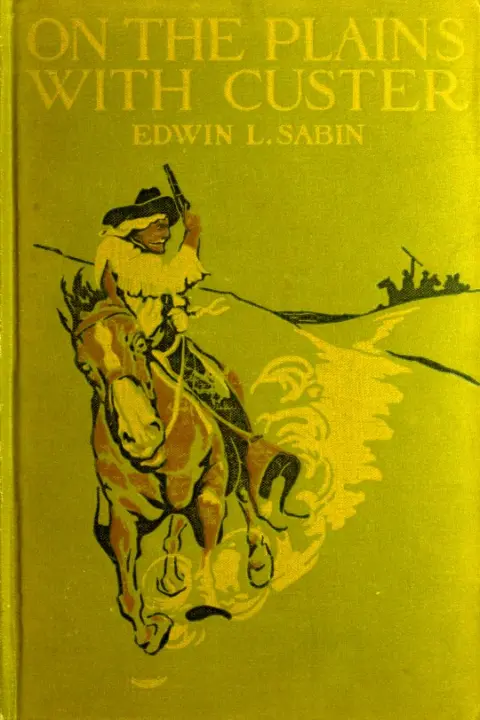
"On the Plains with Custer" by Edwin L. Sabin is a historical account written in the early 20th century. The work centers around the life and experiences of the young bugler Ned Fletcher during the tumultuous years of the late 1860s and the 1870s when General George Armstrong Custer and the Seventh Cavalry played critical roles in the westward expansion of white civilization and the conflicts with Native American tribes. The narrative offers insights into both the military and everyday life on the American plains during a period of significant historical change. The opening of the book introduces us to Ned Fletcher, a young boy who has escaped from captivity with the Sioux and is navigating the vast and lonely Kansas prairie alone in search of safety and his lost sister. As he wanders, he encounters a herd of buffalo being chased by a horseman, who is revealed to be the famous General Custer. The interaction between Ned and Custer leads to a sense of hope for the boy, who expresses a desire to join the army and find his sister. The early chapters set the tone for an adventure filled with the realities of frontier life, the challenges faced by young soldiers, and the complex relations between white settlers and Native Americans, establishing the groundwork for Ned's journey alongside Custer and the Seventh Cavalry.
Introduction adapted from the source catalogue; source summaries may be automatically generated.
Free to read · English · 68,963 words · No account needed
MAKE TIME FOR A GOOD BOOK
On by default. Untick to stop anonymous reading totals. Each page counts after 10 seconds in view. How this works.
Anonymous counting is on unless you have switched it off.
General Custer, blue-eyed, golden-locked, bronze-faced, slender but wiry, stood on the veranda of his house, tugging at his gauntlets as he watched the bustle. Mrs. Custer stole out, with the pretty Diana (suspiciously red-eyed, Ned imagined) and pressed beside him. He placed his arm about her. From the door behind peered the black face, turbaned with a red bandanna, of Eliza.
“To horse,” bade the adjutant, of Ned.
Ned sounded “To Horse.” Out from the stables jostled the troopers, leading their horses to form the company lines.
The general stooped hastily and kissed Mrs. Custer. Down the steps he clanked, his slouch hat at a cavalier angle, his officer’s cloak, yellow lined, floating and beneath it showing his crimson tie. He took the reins from the negro boy and vaulted upon Phil Sheridan.
Adjutant Moylan mounted, and Ned swung aboard his special horse Buckie, at a trot to follow across the parade-ground.
The companies were formed and waiting, each man at the head of his horse. The infantry drums and bugles also had been sounding; all the tents had been struck, and the lines of blue and white were standing at a carry, in a “right dress.”
“Prepare to mount!” shouted General Custer, drawing sabre.
“Prepare to mount!” repeated the company commanders.
Every trooper turned, put left boot into stirrup, and hand upon mane
and saddle, waited.
“Mount!”
With one motion the blue blouses upheaved, and were in the saddle. A few horses plunged, but they were held in line. The wagon teamsters were in their seats, their lines taut, their whips poised. On the steps or porches of all the officers’ quarters women were waving and trying to smile (and some were succeeding and some were not); outside the post could be heard the commands of the infantry and artillery officers.
“Sound the advance,” bade the general, curtly.
As Ned did so, he was answered by the bugles of the infantry, in
similar call.
“Fours right—march!” The new band rode bravely to the front. Whirling his horse, the general, followed by his bugler, trotted briskly to take the lead. All the companies, forming fours, fell in one behind another, the swallow-tail cavalry guidons of white and red fluttering gaily in the breeze.
The new band blared in a tune. No “Garryowen” this time, but “The Girl I Left Behind Me.”
The hour was sad I left the maid,
A ling’ring farewell taking;
Her sighs and tears my steps delayed—
I thought her heart was breaking.
In hurried words her name I blessed,
I breathed the vows that bind me,
And to my heart in anguish pressed
The girl I left behind me.
Your reading position is saved on this browser. Take it to another device with a library code. Reading pages adapt to text, rather than matching a printed edition.
Edwin L. (Edwin Legrand) Sabin

Edwin L. (Edwin Legrand) Sabin

Edwin L. (Edwin Legrand) Sabin

Edwin L. (Edwin Legrand) Sabin
BEHIND THE BOOK
This eBook is for the use of anyone anywhere in the United States and most other parts of the world at no cost and with almost no restrictions whatsoever. You may copy it, give it away or re-use it under the terms of the Project Gutenberg License included with this eBook or online at www.gutenberg.org. If you are not located in the United States, you will have to check the laws of the country where you are located before using this eBook. Read the source licence.
The original source file, including credits and licence, is retained by this library. Request an original-format copy at no charge. Please include the book title and Project Gutenberg identifier #60157.
KEEP YOUR CURIOSITY GOING
Cécile Tormay

Moritz Busch
Coulson Kernahan
John L. Ransom

Maurice Baring
Frances Wright