THE CLASSIC COLLECTION✦Building the pacific railwayCLASSIC FREE BOOKS
Building the pacific railway
Edwin L. (Edwin Legrand) Sabin
THE CLASSIC COLLECTION · 1913
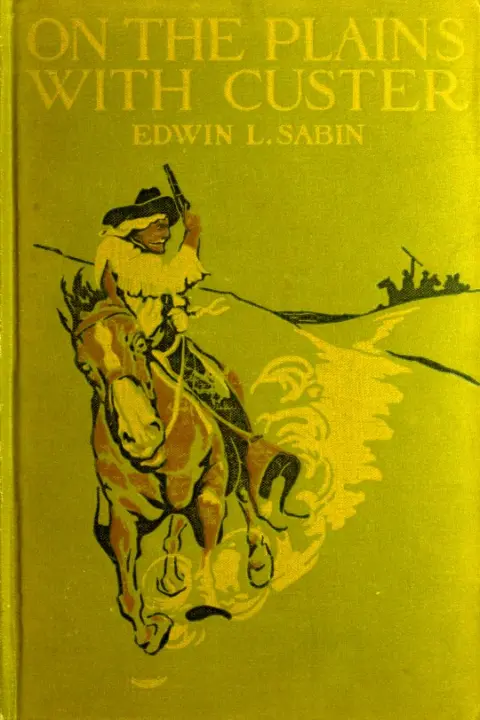
"On the Plains with Custer" by Edwin L. Sabin is a historical account written in the early 20th century. The work centers around the life and experiences of the young bugler Ned Fletcher during the tumultuous years of the late 1860s and the 1870s when General George Armstrong Custer and the Seventh Cavalry played critical roles in the westward expansion of white civilization and the conflicts with Native American tribes. The narrative offers insights into both the military and everyday life on the American plains during a period of significant historical change. The opening of the book introduces us to Ned Fletcher, a young boy who has escaped from captivity with the Sioux and is navigating the vast and lonely Kansas prairie alone in search of safety and his lost sister. As he wanders, he encounters a herd of buffalo being chased by a horseman, who is revealed to be the famous General Custer. The interaction between Ned and Custer leads to a sense of hope for the boy, who expresses a desire to join the army and find his sister. The early chapters set the tone for an adventure filled with the realities of frontier life, the challenges faced by young soldiers, and the complex relations between white settlers and Native Americans, establishing the groundwork for Ned's journey alongside Custer and the Seventh Cavalry.
Introduction adapted from the source catalogue; source summaries may be automatically generated.
Free to read · English · 68,963 words · No account needed
MAKE TIME FOR A GOOD BOOK
On by default. Untick to stop anonymous reading totals. Each page counts after 10 seconds in view. How this works.
Anonymous counting is on unless you have switched it off.
Gallop, gallop, up the back trail, with the rounded slopes, sagey and hot, girding the long, long way. Where was Captain Benteen? Where was the pack-train? Ah, here came somebody—a rider also galloping hard. Out whipped Ned’s revolver; but soon the speck resolved into a man in white-man’s garb. Looked like a soldier. It was “Bos!” “Bos” Custer, forage-master.
He saw Ned, and waved. Ned drew rein barely for a moment, as they met.
“Where you been?”
“Back to get a fresh horse.”
“Where’s Captain Benteen? Seen him?”
“Just left him. Straight on. Keep the trail. A fight, isn’t it?”
“You bet.” And Ned was away, in the one direction; “Bos” galloped on to join his big brother. Five of the Custer family were to be together in that battle: three brothers, a brother-in-law, and a nephew.
Ned kept watch ahead for any token of the Benteen column. Hurrah! There they were—a long mass of dusty blue, moving at a trot, down the trail, Captain Benteen and his aide leading. The pack-train was not in sight. On galloped Ned (revolver stowed again in holster), and met Captain Benteen, who had been watching his approach.
“A dispatch from headquarters, sir,” panted Ned, holding it out.
As he rode, Captain Benteen rapidly read it. Ned held himself prepared at a word to whirl and carry the order on to the packs. But as the captain read, the spattering of shots in the distance before suddenly swelled to a continuous clamor. The captain raised his head, listening, gazing. Louder, and louder, rang the gun-fire, as if the battle was approaching. The Indians were being driven this way? What——? But the captain’s order rang smartly.
“B’tall-yun, draw—pistols! Gallop—march!”
With a cheer they lunged ahead, pistols held high, eyes alert, ready to meet the fleeing Sioux and turn them back again.
The valley widened; in this direction had ridden the Major Reno battalion, recalled Ned, as he, too, galloped, pistol high.
“Right and left into line—march!” shouted Captain Benteen, to cover the ground with battle front.
Then, as all were galloping, forming the line, the draw opened upon a wide cross valley, and there was the battle field—a brushy, broken arena, cut by the willow-bordered crooked stream, hazy with smoke of burning grass and powder through which echoed shot and shout and chant, and through which dimly could be seen horsemen careering in all directions, as if attacking a common object in their midst. Upon a bluff to the right was another battle—soldiers above, Indians below.
The gallop quickly ceased. Now where to go, or what to do, first?
Your reading position is saved on this browser. Take it to another device with a library code. Reading pages adapt to text, rather than matching a printed edition.
Edwin L. (Edwin Legrand) Sabin

Edwin L. (Edwin Legrand) Sabin

Edwin L. (Edwin Legrand) Sabin

Edwin L. (Edwin Legrand) Sabin
BEHIND THE BOOK
This eBook is for the use of anyone anywhere in the United States and most other parts of the world at no cost and with almost no restrictions whatsoever. You may copy it, give it away or re-use it under the terms of the Project Gutenberg License included with this eBook or online at www.gutenberg.org. If you are not located in the United States, you will have to check the laws of the country where you are located before using this eBook. Read the source licence.
The original source file, including credits and licence, is retained by this library. Request an original-format copy at no charge. Please include the book title and Project Gutenberg identifier #60157.
KEEP YOUR CURIOSITY GOING
Cécile Tormay

Moritz Busch
Coulson Kernahan
John L. Ransom

Maurice Baring
Frances Wright