THE CLASSIC COLLECTION✦Building the pacific railwayCLASSIC FREE BOOKS
Building the pacific railway
Edwin L. (Edwin Legrand) Sabin
THE CLASSIC COLLECTION · 1913
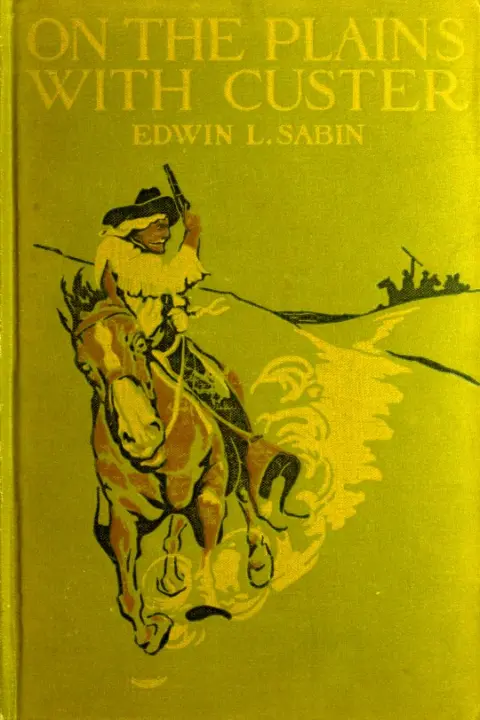
"On the Plains with Custer" by Edwin L. Sabin is a historical account written in the early 20th century. The work centers around the life and experiences of the young bugler Ned Fletcher during the tumultuous years of the late 1860s and the 1870s when General George Armstrong Custer and the Seventh Cavalry played critical roles in the westward expansion of white civilization and the conflicts with Native American tribes. The narrative offers insights into both the military and everyday life on the American plains during a period of significant historical change. The opening of the book introduces us to Ned Fletcher, a young boy who has escaped from captivity with the Sioux and is navigating the vast and lonely Kansas prairie alone in search of safety and his lost sister. As he wanders, he encounters a herd of buffalo being chased by a horseman, who is revealed to be the famous General Custer. The interaction between Ned and Custer leads to a sense of hope for the boy, who expresses a desire to join the army and find his sister. The early chapters set the tone for an adventure filled with the realities of frontier life, the challenges faced by young soldiers, and the complex relations between white settlers and Native Americans, establishing the groundwork for Ned's journey alongside Custer and the Seventh Cavalry.
Introduction adapted from the source catalogue; source summaries may be automatically generated.
Free to read · English · 68,963 words · No account needed
MAKE TIME FOR A GOOD BOOK
On by default. Untick to stop anonymous reading totals. Each page counts after 10 seconds in view. How this works.
Anonymous counting is on unless you have switched it off.
Bugler Odell attempted to salute, to pull his horse down to a trot, and to raise his bugle to his mouth—all in a moment. But the horse shook its head and champed and tugged, and the bugle, swinging between the man rider and the boy rider, wedged fast. Odell muttered several angry, chagrined remarks.
“I’ll blow it,” offered Ned, friendly. “Shall I?”
“You!” grunted Trooper Odell. “It’s the rally, by the bugle, the general wants. If you’ll hold this hoss a second, now——” and red and flustered he hauled hard.
“I’ll blow it. I can,” repeated Ned, eagerly, anxious to show his mettle and to help the embarrassed Odell.
As the obstinate horse pranced the bugle swung free again, jerked fairly around so that Ned needed only to reach and grab it. He promptly applied it to his lips (while clutching tight with his one hand and his two shins), and blew the rally the best that he could. Clear and passably regular pealed the high notes.
“Good enough, b’gorry!” muttered Odell. “But what’ll the general say? Give me that horn.”
The moment that the last note died away the general had wheeled his
horse, to gaze.
“Who blew that call?” he shouted.
“I did,” announced Ned, bravely. “Mr. Odell was managing his horse, and he didn’t say I might but I did.”
“The boy took the horn before I could stop him, sir,” explained the flurried Odell. “I’ll blow it now, sir. This pesky hoss——” and Bugler Odell jerked savagely at the bit, pulling his mount to its haunches.
“He blew it mighty well, then,” declared General Custer. “Try it again, boy. Put more force behind it, so those soldiers yonder’ll hear. We’re sounding the rally for them to come; see?”
Tremendously Ned blew—glueing his lips and puffing his cheeks and popping his eyes. Far pealed the notes, across the brown prairie. And now the specks must have heard, for by twos and threes they were coming, ever growing larger, and turning into mounted men.
The general jogged easily, with Bugler Odell and Ned close behind him.
“Where did you learn the bugle?” he demanded.
“From my father,” answered Ned, proudly. “He knew all the army calls.”
“He did, did he? Where’d he learn them?”
“In the war. He was a bugler.”
“What regiment?”
“Sixth Michigan Cavalry.”
Your reading position is saved on this browser. Take it to another device with a library code. Reading pages adapt to text, rather than matching a printed edition.
Edwin L. (Edwin Legrand) Sabin

Edwin L. (Edwin Legrand) Sabin

Edwin L. (Edwin Legrand) Sabin

Edwin L. (Edwin Legrand) Sabin
BEHIND THE BOOK
This eBook is for the use of anyone anywhere in the United States and most other parts of the world at no cost and with almost no restrictions whatsoever. You may copy it, give it away or re-use it under the terms of the Project Gutenberg License included with this eBook or online at www.gutenberg.org. If you are not located in the United States, you will have to check the laws of the country where you are located before using this eBook. Read the source licence.
The original source file, including credits and licence, is retained by this library. Request an original-format copy at no charge. Please include the book title and Project Gutenberg identifier #60157.
KEEP YOUR CURIOSITY GOING
Cécile Tormay

Moritz Busch
Coulson Kernahan
John L. Ransom

Maurice Baring
Frances Wright