THE CLASSIC COLLECTION✦Building the pacific railwayCLASSIC FREE BOOKS
Building the pacific railway
Edwin L. (Edwin Legrand) Sabin
THE CLASSIC COLLECTION · 1913
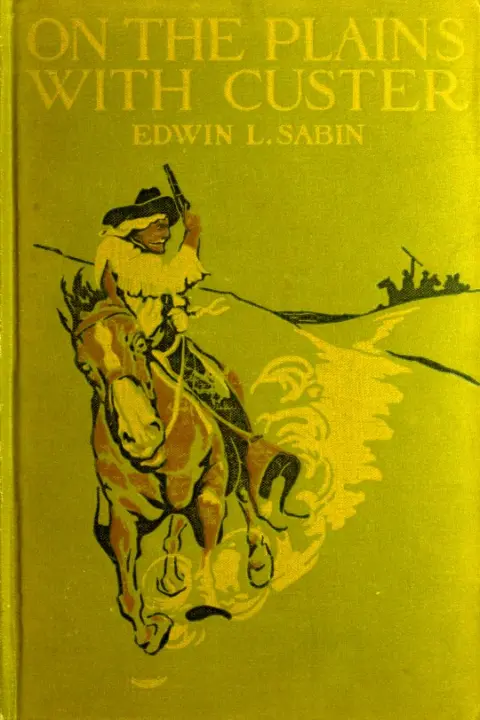
"On the Plains with Custer" by Edwin L. Sabin is a historical account written in the early 20th century. The work centers around the life and experiences of the young bugler Ned Fletcher during the tumultuous years of the late 1860s and the 1870s when General George Armstrong Custer and the Seventh Cavalry played critical roles in the westward expansion of white civilization and the conflicts with Native American tribes. The narrative offers insights into both the military and everyday life on the American plains during a period of significant historical change. The opening of the book introduces us to Ned Fletcher, a young boy who has escaped from captivity with the Sioux and is navigating the vast and lonely Kansas prairie alone in search of safety and his lost sister. As he wanders, he encounters a herd of buffalo being chased by a horseman, who is revealed to be the famous General Custer. The interaction between Ned and Custer leads to a sense of hope for the boy, who expresses a desire to join the army and find his sister. The early chapters set the tone for an adventure filled with the realities of frontier life, the challenges faced by young soldiers, and the complex relations between white settlers and Native Americans, establishing the groundwork for Ned's journey alongside Custer and the Seventh Cavalry.
Introduction adapted from the source catalogue; source summaries may be automatically generated.
Free to read · English · 68,963 words · No account needed
MAKE TIME FOR A GOOD BOOK
On by default. Untick to stop anonymous reading totals. Each page counts after 10 seconds in view. How this works.
Anonymous counting is on unless you have switched it off.
Now was it after midnight; the moon was floating high. At once set out, under cover of the ridge, with troops G, H and M, about 200 men, Major Joel Elliot, on wide circuit to take station whence he might charge the village from below; set out in the other direction, with B and F troops, Colonel William Thompson, to take similar position above.
“The attack will be made promptly at daylight, gentlemen,” were the general’s last instructions. “The band will play Garryowen, and at the first note you will charge from whatever position you are in.”
The veteran Colonel Myers and his “right center” column might remain, until time to take their posts also, not so far away, on the right.
The fourth or “center” column was commanded by the general himself; but of the four companies, A, C, D and K, Captain Hamilton commanded the one squadron, Colonel West the other. And there were Lieutenant (Colonel) “Queen’s Own” Cook’s sharpshooters.
Ah, but it was cold up here, behind the ridge. The time was two o’clock, and four hours must pass before daylight. Nobody might make a fire, and orders forbade stamping of the feet or walking up and down, because such a creaking of the snow might give alarm to the village.
The men, huddled in their overcoats, stood or crouched, each holding to the lines of his horse. The officers gathered in little knots, and sitting or standing, talked low.
The general’s group was the largest: Adjutant Moylan, Lieutenant Tom Custer, Captain Hamilton, Colonel West, and others.
“It’s been a long Thanksgiving day, and a fast instead of a feast,”
said Colonel West.
“Oh, we’ll have our celebration later,” quoth Lieutenant Tom. “You know
the verse:
“For gold the merchant plows the main,
The farmer plows the manor;
But glory is the soldier’s prize,
The soldier’s wealth is honor.”
“How about it, Hamilton? Are you glad you came?” asked Lieutenant
Moylan.
“Perfectly. The only person I’m sorry for is poor Mathey.”
“He’s liable to miss a rousing good fight.”
“And one in which some of us are likely to get hurt. Those Indians will fight like demons, to defend their families and property.”
“Well, as for me, gentlemen, you know how I feel,” spoke young Captain Hamilton, earnestly. “I want the soldier’s death. When my hour comes, I hope that I shall be shot through the heart, in battle.”
Your reading position is saved on this browser. Take it to another device with a library code. Reading pages adapt to text, rather than matching a printed edition.
Edwin L. (Edwin Legrand) Sabin

Edwin L. (Edwin Legrand) Sabin

Edwin L. (Edwin Legrand) Sabin

Edwin L. (Edwin Legrand) Sabin
BEHIND THE BOOK
This eBook is for the use of anyone anywhere in the United States and most other parts of the world at no cost and with almost no restrictions whatsoever. You may copy it, give it away or re-use it under the terms of the Project Gutenberg License included with this eBook or online at www.gutenberg.org. If you are not located in the United States, you will have to check the laws of the country where you are located before using this eBook. Read the source licence.
The original source file, including credits and licence, is retained by this library. Request an original-format copy at no charge. Please include the book title and Project Gutenberg identifier #60157.
KEEP YOUR CURIOSITY GOING
Cécile Tormay

Moritz Busch
Coulson Kernahan
John L. Ransom

Maurice Baring
Frances Wright