THE CLASSIC COLLECTION✦A dead man’s diaryCLASSIC FREE BOOKS
A dead man’s diary
Coulson Kernahan
THE CLASSIC COLLECTION · 1916
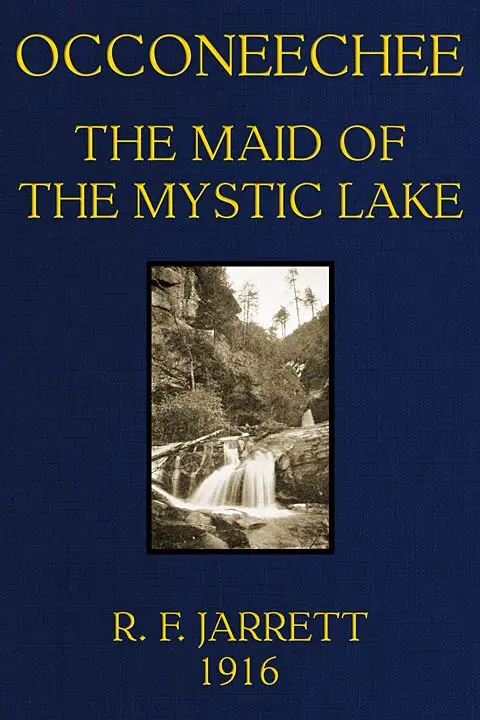
"Occoneechee, the Maid of the Mystic Lake" by Robert Frank Jarrett is a poetic novel written in the early 20th century. The narrative centers around Occoneechee, a young Cherokee maiden, her father Junaluska, and the warrior Whippoorwill. It delves into themes of love, loss, and the rich heritage of the Cherokee people, intertwining the deep connection they have with nature and their struggles against encroaching forces. The opening portion of the work introduces the reader to the historical and cultural context of the Cherokee Nation through a blend of prose and poetry. It sets the stage with the depiction of the haunting beauty of the Appalachian landscape and the profound sadness enveloping the Cherokee as they face displacement and loss. The chapter explores the connections between Occoneechee and her father, highlighting their familial bond and the legacy of legends that have shaped their lives amidst the dramatic backdrop of their diminishing world. It also foreshadows Occoneechee's longing for her lost love, Whippoorwill, setting in motion a quest filled with both natural beauty and human tragedy.
Introduction adapted from the source catalogue; source summaries may be automatically generated.
Free to read · English · 56,749 words · No account needed
MAKE TIME FOR A GOOD BOOK
On by default. Untick to stop anonymous reading totals. Each page counts after 10 seconds in view. How this works.
Anonymous counting is on unless you have switched it off.
agida`ta--see eda`ta.
agidutu--see edu`tu.
Agi'li--"He is rising," possibly a contraction of an old personal name. Agin`-agi'li, "Rising-fawn." Major George Lawrey, cousin of Sequoya, and assistant chief of the Cherokee Nation about 1840. Stanley incorrectly makes it "Keeth-la, or Dog" for gi'li`.
agin`si--see eni`si.
agi`si--female, applied usually to quadrupeds.
Agis`-e`gwa--"Great Female," possibly "Great Doe." A being, probably an animal god invoked in the sacred formulas.
agitsi`--see etsi`.
Agitsta'ti`yi--"where they stayed up all night," from tsigitsun`tihu, "I stay up all night." A place in the Great Smoky range about the head of Noland creek, in Swain County, N. C.
Aguaquiri--see Guaquili.
Ahalu`na--"Ambush," Ahalunun`yi, "Ambush place," or Uni`halu`na, "where they ambushed," from akalu`ga, "I am watching." Soco gap, at the head of Soco creek, on the line between Swain and Haywood counties, N. C. The name is also applied to the lookout station for deer hunters.
ahanu`lahi--"he is bearded," from ahanu`lahu, a beard.
Ahu`lude`gi--"He throws away the drum" (habitual), from ahu`li, drum, and akwade`gu, "I am throwing it away" (round object). The Cherokee name of John Jolly, a noted chief and adopted father of Samuel Houston, about 1800.
ahyeli`ski--a mocker or mimic.
akta`--eye; plural, dikta`.
akta`ti--a telescope or field glass. The name denotes something with which to examine or look into closely, from akta`, eye.
akwandu`li--a song form for akwidu`li (-hu,) "I want it."
Akwan'ki--see Anakwan`ki.
Akwe'ti`yi--a location on Tuckasegee river, in Jackson county, North Carolina; the meaning of the name is lost.
Alarka--see Yalagi.
aliga`--the red-horse fish (Moxostoma).
Alkini`--the last woman known to be of Natchez decent and peculiarity among the East Cherokee; died about 1890. The name has no apparent meaning.
ama`--water; in the Lower dialect, awa`; cf. a`ma salt.
amaye`hi--"dwelling in the water," from ama` (ama`yi, "in the water") and ehu`, "I dwell," "I live."
Amaye'l-e`gwa--"Great island," from amaye'li, island (from ama`, water, and aye'li, "in the middle") and e`gwa, great. A former Cherokee settlement on Little Tennessee river, at Big island, a short distance below the mouth of Tellico, in Monroe county, Tenn. Timberlake writes it Mialaquo, while Bartram spells it Nilaque. Not to be confounded with Long-Island town below Chattanooga.
Amaye'li-gunahi`ta--"Long-island," from amaye'li, island, and gunahi`ta, long. A former Cherokee settlement, known to the whites as Long-Island town, at the Long-island in Tennessee river, on the Tennessee-Georgia line. It was one of the Chickamauga towns (see Tsikama`gi).
ama`yine`hi--"dwellers in the water," plural of amaye`hi.
Your reading position is saved on this browser. Take it to another device with a library code. Reading pages adapt to text, rather than matching a printed edition.
BEHIND THE BOOK
This eBook is for the use of anyone anywhere in the United States and most other parts of the world at no cost and with almost no restrictions whatsoever. You may copy it, give it away or re-use it under the terms of the Project Gutenberg License included with this eBook or online at www.gutenberg.org. If you are not located in the United States, you will have to check the laws of the country where you are located before using this eBook. Read the source licence.
The original source file, including credits and licence, is retained by this library. Request an original-format copy at no charge. Please include the book title and Project Gutenberg identifier #53375.
KEEP YOUR CURIOSITY GOING
Coulson Kernahan

Maurice Baring
Frances Wright
Cécile Tormay
Francis Greenleaf Allinson & Anne C. E. (Anne Crosby Emery) Allinson

Frederic Jesup Stimson