THE CLASSIC COLLECTION✦A dead man’s diaryCLASSIC FREE BOOKS
A dead man’s diary
Coulson Kernahan
THE CLASSIC COLLECTION · 1916
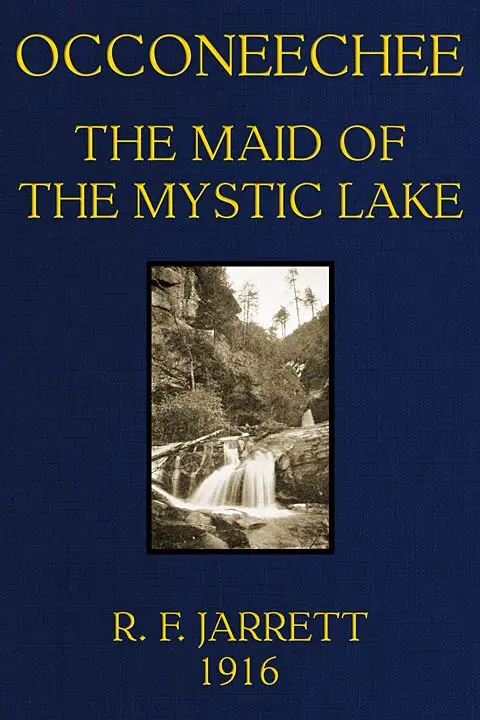
"Occoneechee, the Maid of the Mystic Lake" by Robert Frank Jarrett is a poetic novel written in the early 20th century. The narrative centers around Occoneechee, a young Cherokee maiden, her father Junaluska, and the warrior Whippoorwill. It delves into themes of love, loss, and the rich heritage of the Cherokee people, intertwining the deep connection they have with nature and their struggles against encroaching forces. The opening portion of the work introduces the reader to the historical and cultural context of the Cherokee Nation through a blend of prose and poetry. It sets the stage with the depiction of the haunting beauty of the Appalachian landscape and the profound sadness enveloping the Cherokee as they face displacement and loss. The chapter explores the connections between Occoneechee and her father, highlighting their familial bond and the legacy of legends that have shaped their lives amidst the dramatic backdrop of their diminishing world. It also foreshadows Occoneechee's longing for her lost love, Whippoorwill, setting in motion a quest filled with both natural beauty and human tragedy.
Introduction adapted from the source catalogue; source summaries may be automatically generated.
Free to read · English · 56,749 words · No account needed
MAKE TIME FOR A GOOD BOOK
On by default. Untick to stop anonymous reading totals. Each page counts after 10 seconds in view. How this works.
Anonymous counting is on unless you have switched it off.
"I know not how the truth may be,
I tell the tale as 'twas told to me."
A brief history of the Cherokee Nation or tribe.
This history has been gleaned from the works of Ethnology by James Mooney and from word of mouth, as related to the author during the past thirty years.
In the beginning of historical events, we hear of man in his paradisaical home, located somewhere within the boundaries known as ancient Egypt or Chaldea. His home was far away and his former history shrouded in the darkness of countless centuries of the past, and when we contemplate the remoteness of his ancestry, we become lost in the midst of our own research.
When historical light began to flash from the Orient, we find man emerging with some degree of civilization from a barbaric state into the advanced degrees of civilized and enlightened tribes.
When the maritime navigator, full of visions and dreams, dared to sail for those hitherto undiscovered shores, now known as America, there lived within the realm a wandering, happy, yet untutored, race of men whom we afterwards called Indians, who dwelt in great numbers along the whole distance from Penobscot Bay south to the everglades of Florida.
Among the more noted tribes were the Abnaki, Mohawk, Mohican, Huron, Iroquois, Munsi, Erie, Seneca, Susquehanna, Mamrahoac, Powhatan, Monacan, Nollaway, Tuscarora, Pamlico, Catawba, Santee, Uchee, Yamasee, Creek, Choctaw, Seminole, Showano and Cherokee, but of all of these it is left for us to speak alone of the valiant Cherokee, the most noble of all Red Men, who inhabited that picturesque country in the Appalachian chain of mountains in East Tennessee, Western North Carolina, Northern Georgia, South Carolina and Alabama, and part of Virginia, Kentucky and West Virginia.
These are the people of whom little has been said and less written than most of the children of men. Yet of all of the native Americans the Cherokee tribe was the most noble, humane and intelligent.
Somewhere in the annals of the Aborigines of America, the Cherokee separated from the great Northern tribe, the Iroquois, and by preference inhabited the hills of the Appalachian range, and here we find them early in the dawn of American history, occupying a country which affords ample environment for the artist, the poet and the painter. Had Homer seen and Michelangelo traveled among the towering hills of the happiest land of earth, the song and the chisel, instead of being draped with the vail of blood, would have inspired the world to look forward to the time when there will be no death serenely sitting upon the throne of war.
Your reading position is saved on this browser. Take it to another device with a library code. Reading pages adapt to text, rather than matching a printed edition.
BEHIND THE BOOK
This eBook is for the use of anyone anywhere in the United States and most other parts of the world at no cost and with almost no restrictions whatsoever. You may copy it, give it away or re-use it under the terms of the Project Gutenberg License included with this eBook or online at www.gutenberg.org. If you are not located in the United States, you will have to check the laws of the country where you are located before using this eBook. Read the source licence.
The original source file, including credits and licence, is retained by this library. Request an original-format copy at no charge. Please include the book title and Project Gutenberg identifier #53375.
KEEP YOUR CURIOSITY GOING
Coulson Kernahan

Maurice Baring
Frances Wright
Cécile Tormay
Francis Greenleaf Allinson & Anne C. E. (Anne Crosby Emery) Allinson

Frederic Jesup Stimson