THE CLASSIC COLLECTION✦A dead man’s diaryCLASSIC FREE BOOKS
A dead man’s diary
Coulson Kernahan
THE CLASSIC COLLECTION · 1916
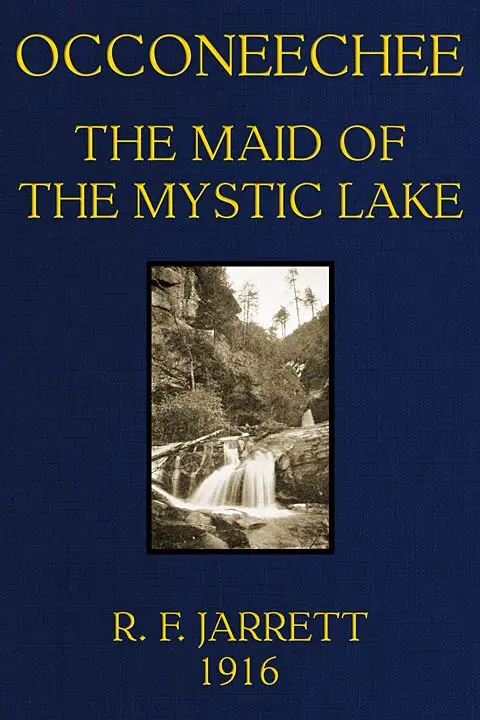
"Occoneechee, the Maid of the Mystic Lake" by Robert Frank Jarrett is a poetic novel written in the early 20th century. The narrative centers around Occoneechee, a young Cherokee maiden, her father Junaluska, and the warrior Whippoorwill. It delves into themes of love, loss, and the rich heritage of the Cherokee people, intertwining the deep connection they have with nature and their struggles against encroaching forces. The opening portion of the work introduces the reader to the historical and cultural context of the Cherokee Nation through a blend of prose and poetry. It sets the stage with the depiction of the haunting beauty of the Appalachian landscape and the profound sadness enveloping the Cherokee as they face displacement and loss. The chapter explores the connections between Occoneechee and her father, highlighting their familial bond and the legacy of legends that have shaped their lives amidst the dramatic backdrop of their diminishing world. It also foreshadows Occoneechee's longing for her lost love, Whippoorwill, setting in motion a quest filled with both natural beauty and human tragedy.
Introduction adapted from the source catalogue; source summaries may be automatically generated.
Free to read · English · 56,749 words · No account needed
MAKE TIME FOR A GOOD BOOK
On by default. Untick to stop anonymous reading totals. Each page counts after 10 seconds in view. How this works.
Anonymous counting is on unless you have switched it off.
Tsule`hisanun`hi--"Resurrected One," from di`gwale`hisanun`hi, "I was resurrected." literally, "I was down and have risen." Tsa`lagi`, Tsule`hisanunhi, the Cherokee title of the newspaper known to the whites as the Cherokee Phoenix. The Cherokee title was devised by Worcester and Boudinot as suggesting the idea of the phoenix of classic fable. The Indian name of the recent "Cherokee Advocate" is Tsa`lagi Asdeli`ski.
Tsul kalu`--"Slanting-eyes," literally "he has them slanting" (or leaning up against something); the prefix ts makes it a plural form, and the name is understood to refer to the eyes, although the word eye (akta`, plural dikta`) is not a part of it. Cf. Ata`-gulkalu. A mythic giant and ruler of the game. The name has been corrupted to Jutaculla and Tuli-cula. Jutaculla rock and Jutaculla old fields about the head of Tuckasegee river, in Jackson, North Carolina, take their name from him.
Tsulkalu` tsunegun`yi--see Tsunegun`yi.
tsulie`na--the nuthatch (Sitta carolinensis); the word signifies literally "deaf" (a plural form referring to the ear, gule`) although no reason is given for such a name.
tsulu--kingfisher. Cf. tsula.
Tsulunwe`i--(abbreviated Tsulun`we or Tsula`wi, possibly connected with tsulu, kingfisher)--Chilhowee creek, a north tributary of Little Tennessee river, in Blount county, Tennessee.
Tsundanilti`yi--"where they demanded the debt from him"; a place on Little Santeetal river, west of Robbinsville, in Graham county, North Carolina. The creek also is commonly known by the same name.
Tsundige`wi--"Closed anuses," literally "they have them closed," understood to refer to the anus; from dige`wi, plural of ge`wi, closed, stopped up, blind; cf. Tsulkalu`; also Gulisge`wi, "Blind, or closed, ears," an old personal name.
Tsun`digwun`tski (contracted from tsun`digwuntsugi, "they have them forked," referring to the peculiar forked tail; cf. Tsulkalu`)--a migratory bird which once appeared for a short time upon the East Cherokee reservation, apparently, from the description, the scissortail or swallow-tailed fly-catcher (Milvulus forficatus).
Tsunegun`yi (sometimes called Tsulkalu` Tsunegun`yi)--Tennessee Bald, at the extreme head of Tuckasegee river, on the east line of Jackson county, North Carolina. The name seems to mean "there where it is white," from ts, a prefix indicating distance, une`ga, white, and yi, locative.
Tsunil` kalu--the plural form for Tsul kalu, q. v., a traditional
giant tribe in the west.
tsunis`tsahi--"(those) having topnots or crests," from ustsahu`, "having a topknot," ustsahi`, "he has a topknot" (habitually).
Tsuniya`tiga--"Naked People"; literally "They are naked there," from uya`tiga, naked (singular), with the prefix ts, indicating distance. A traditional western tribe.
Your reading position is saved on this browser. Take it to another device with a library code. Reading pages adapt to text, rather than matching a printed edition.
BEHIND THE BOOK
This eBook is for the use of anyone anywhere in the United States and most other parts of the world at no cost and with almost no restrictions whatsoever. You may copy it, give it away or re-use it under the terms of the Project Gutenberg License included with this eBook or online at www.gutenberg.org. If you are not located in the United States, you will have to check the laws of the country where you are located before using this eBook. Read the source licence.
The original source file, including credits and licence, is retained by this library. Request an original-format copy at no charge. Please include the book title and Project Gutenberg identifier #53375.
KEEP YOUR CURIOSITY GOING
Coulson Kernahan

Maurice Baring
Frances Wright
Cécile Tormay
Francis Greenleaf Allinson & Anne C. E. (Anne Crosby Emery) Allinson

Frederic Jesup Stimson