THE CLASSIC COLLECTION✦A dead man’s diaryCLASSIC FREE BOOKS
A dead man’s diary
Coulson Kernahan
THE CLASSIC COLLECTION · 1916
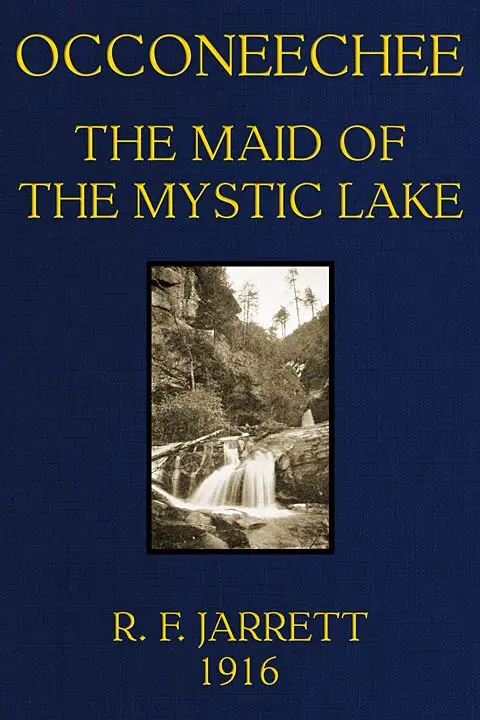
"Occoneechee, the Maid of the Mystic Lake" by Robert Frank Jarrett is a poetic novel written in the early 20th century. The narrative centers around Occoneechee, a young Cherokee maiden, her father Junaluska, and the warrior Whippoorwill. It delves into themes of love, loss, and the rich heritage of the Cherokee people, intertwining the deep connection they have with nature and their struggles against encroaching forces. The opening portion of the work introduces the reader to the historical and cultural context of the Cherokee Nation through a blend of prose and poetry. It sets the stage with the depiction of the haunting beauty of the Appalachian landscape and the profound sadness enveloping the Cherokee as they face displacement and loss. The chapter explores the connections between Occoneechee and her father, highlighting their familial bond and the legacy of legends that have shaped their lives amidst the dramatic backdrop of their diminishing world. It also foreshadows Occoneechee's longing for her lost love, Whippoorwill, setting in motion a quest filled with both natural beauty and human tragedy.
Introduction adapted from the source catalogue; source summaries may be automatically generated.
Free to read · English · 56,749 words · No account needed
MAKE TIME FOR A GOOD BOOK
On by default. Untick to stop anonymous reading totals. Each page counts after 10 seconds in view. How this works.
Anonymous counting is on unless you have switched it off.
Nunne`hi (also Gunne`hi; singular Naye`hi)--a race of invisible spirit people. The name is derived from the verb e`hu`, "I dwell, I live," e`hi`, "I dwell habitually," and may be rendered "dwellers anywhere," or "those who live anywhere," but implies having always been there, i. e., "Immortals." It has been spelled Nanehi and Nuhnayie by different writers. The singular form Naye`hi occurs also as a personal name, about equivalent to Eda`hi, "One who goes about."
Nuniyu`sti--"potato-like," from nu`na, potato, and iyu`sti, like. A flowering vine with tuberous root somewhat resembling the potato.
Nunyu`--rock, stone.
Nunyu`-gunwam`ski--"Rock that talks," from nunyu`, rock, and tsiwa`nihu, "I am talking." A rock from which Talking-rock creek of Coosawatee river, in Georgia, derives its name.
Nun`yunu`wi--contracted from Nunyu-unu`wi. "Stone-clad," from nunyu, rock, and agwaun`wu, "I am clothed or covered." A mythic monster, invulnerable by reason of his stony skin. The name is also applied sometimes to the stinging ant, dasuntali atatsunski, q. v. It has also been spelled Nayunuwi.
Nunyu`-tlu guni (or Nunyu-tsu gun`i)--"Tree-rock," a notable rock on Hiwassee river, just within the N. C. line.
Nunyu`-twi`ska--"Slick rock," from nunyu`, rock, and twiska, smooth, slick; the form remains unchanged for the locative. 1. Slick-rock creek, entering Little Tennessee river just within the west line of Graham county, N. C. 2. A place at the extreme head of Brasstown creek of Hiwassee river, in Towns county, Ga.
Ocoee--see Uwaga`hi.
Oconaluftee--see Egwanul ti.
Oconee--see Ukwu`nu.
Oconostota--see Agansta`ta.
Old Tassel--see Utsi`dsata`.
Ooltewah--see Ultiwa`i.
Oostinaleh--see U`stana`li.
Oothealoga--see Uy`gila`gi.
Otacite, Otassite--see Outacity.
Otari, Otariyatiqui--mentioned as a place, apparently on the Cherokee frontier, visited by Pardo in 1567. Otari seems to be the Cherokee atari or atali, mountain, but the rest of the word is doubtful.
Ottare--see a`tali.
Owasta--given as the name of a Cherokee chief in 1684; the form cannot
be identified.
Ougillogy--see Uy`gila`gi.
Outacity--given in documents as the name or title of a prominent Cherokee chief about 1720. It appears also as Otacite, Ottassite, Outassatah, Wootassite and Wrosetasatow (!), but the form cannot be identified, although it seems to contain the personal name suffix diha`, "killer." Timberlake says: "There are some other honorary titles among them, conferred in reward of great actions; the first of which is Outacity or "Man-killer," and the second Colona or "The Raven."
Outassatah--see Outacity.
Owassa--see Ayuhwa`si.
Paint-town--see Ani`-Wa`dihi`.
Path-killer--see Nuna`hi-dihi`.
Phoenix, Cherokee--see Tsule`hisanun`hi.
Pigeon River--see Wayi.
Pine Indians--see Ani`-Na'tsi.
Pinelog--see Na ts-asun`tlunyi.
Your reading position is saved on this browser. Take it to another device with a library code. Reading pages adapt to text, rather than matching a printed edition.
BEHIND THE BOOK
This eBook is for the use of anyone anywhere in the United States and most other parts of the world at no cost and with almost no restrictions whatsoever. You may copy it, give it away or re-use it under the terms of the Project Gutenberg License included with this eBook or online at www.gutenberg.org. If you are not located in the United States, you will have to check the laws of the country where you are located before using this eBook. Read the source licence.
The original source file, including credits and licence, is retained by this library. Request an original-format copy at no charge. Please include the book title and Project Gutenberg identifier #53375.
KEEP YOUR CURIOSITY GOING
Coulson Kernahan

Maurice Baring
Frances Wright
Cécile Tormay
Francis Greenleaf Allinson & Anne C. E. (Anne Crosby Emery) Allinson

Frederic Jesup Stimson