
Childhood in literature and art, with some observations on literature for children
Horace Elisha Scudder
THE CLASSIC COLLECTION · 1881
"Noah Webster" by Horace Elisha Scudder is a historical account written in the late 19th century. The book explores the life and contributions of Noah Webster, a pivotal figure in American education and lexicography, particularly noted for his efforts in creating an American spelling system and dictionary. Scudder's work delves into Webster's early life, his educational endeavors, and the profound influence he had on the American language and identity. The opening of the biography sets the stage by detailing Noah Webster's early life in West Hartford, Connecticut, where he was born into a family with deep roots in the community. The narrative describes the simplicity and hardships of rural life during the mid-18th century, which shaped his character and intellect. Scudder highlights Webster's education, from his time at the village school to his studies at Yale, and frames these experiences within the context of the American Revolution, suggesting that his formative years were characterized by a blend of scholarly pursuits and active participation in significant historical events. The groundwork laid in this opening chapter foreshadows Webster's later achievements in education and linguistics, providing readers with insights into how his upbringing and education influenced his lifelong mission to develop a distinctly American language.
Introduction adapted from the source catalogue; source summaries may be automatically generated.
Free to read · English · 56,953 words · No account needed
MAKE TIME FOR A GOOD BOOK
On by default. Untick to stop anonymous reading totals. Each page counts after 10 seconds in view. How this works.
Anonymous counting is on unless you have switched it off.
This appeal to the pride of the young nation is a curious instance of the growing consciousness of Americanism which was more rampant in Webster than in any of his contemporaries. The passages which I have been quoting intimate the deference which Webster displayed toward the people. He was one of the first to carry a spirit of democracy into letters. Intense Federalist as he was, his Federalism agreed with a stout anti-aristocratic spirit; and throughout his work one may detect a confidence in the common sense of the people which was as firm as Franklin's, and was used, in his enthusiasm, to determine questions in language and literature never before brought to such a test. Unquestionably a main source of Webster's strength and success lay in this democratic instinct; it was not patriotism alone, it was the spirit which hailed the new democracy, and in its very contempt of precedent and historic authority disclosed its rude self-reliance.
This temper had a more favorable field for its exhibition in the third part of "A Grammatical Institute" which bore the sub-title: "An American Selection of Lessons in Reading and Speaking; calculated to improve the Minds and refine the Taste of Youth, and also to instruct them in the Geography, History, and Politics of the United States. To which are prefixed Rules in Elocution, and Directions for expressing the Principal Passions of the Mind." This laboriously emphatic title-page bears the motto from Mirabeau: "Begin with the infant in his cradle; let the first word he lisps be Washington." In strict accordance with this patriotic sentiment, the compiler gives a series of lessons which would not be inappropriate to any girl or boy who in infancy had performed the feat of lisping the easy-going name which Mirabeau himself probably had some difficulty in conquering. "In the choice of pieces," says Webster in his preface, "I have been attentive to the political interests of America. I consider it as a capital fault in all our schools that the books generally used contain subjects wholly uninteresting to our youth; while the writings that marked the Revolution, which are perhaps not inferior to the orations of Cicero and Demosthenes, and which are calculated to impress interesting truths upon young minds, lie neglected and forgotten. Several of those masterly addresses of Congress, written at the commencement of the late Revolution, contain such noble sentiments of liberty and patriotism that I cannot help wishing to transfuse them into the breasts of the rising generation." Accordingly, he makes abundant room in his book for orations by Hancock, Warren, Livingston, and Joel Barlow, and for poetry by Freneau, Dwight, Barlow, and Livingston again, all kept in countenance by Cicero, Publius Scipio, Shakespeare, and Pope, while a tribute is paid to "Mr. Andrus of Yale College, since deceased," by the insertion of "A Dialogue written in the year 1776." To plump from Joel Barlow at the North Church in Hartford, July 4, 1787, to a portion of Cicero's oration against Verres, probably produced no severe shock, since both orations were intended as exercises in speaking, and the former by its structure was removed to about the same chronological distance from the young speaker as the latter. It would be a curious inquiry how far writers of historical addresses in America have from the beginning been affected by the necessity which a regard for ancient models laid upon them of fitting the facts of our Revolutionary War to oratorical periods, and how far popular conceptions of the beginning of our national life have been formed by the "pieces" which young Americans have been called upon to speak. The Roman was the most distinguished predecessor by name of this new republic, and enthusiastic patriots went to it for literary furniture as freely as their ancestors in New England applied to the Jewish theocracy. In the contemporary ephemeral literature of the time there is a faint survival of the older forms, but a more energetic reproduction of Roman symbols, taken sometimes directly from Latin literature and history, sometimes indirectly from the chill Augustan renaissance of the English eighteenth-century literature. The interior manners of the two periods are well contrasted in two sets of letters, the earlier passing between John and Margaret Winthrop, the later between John and Abigail Adams. The Scriptural allusions which crowd the Winthrop letters have not wholly disappeared in the Adams letters, but they are more formally introduced as fragmentary bits of wisdom, and appear side by side with quotations from Pliny and Rollin's "Ancient History;" Mrs. Adams signs herself Portia; the vessels which carry the letters are the Apollo, the Juno, and the Minerva; and classical allusions constitute a good share of such playfulness as may be found.
Your reading position is saved on this browser. Take it to another device with a library code. Reading pages adapt to text, rather than matching a printed edition.
Horace Elisha Scudder
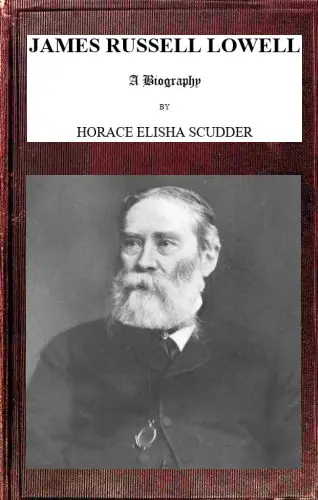
Horace Elisha Scudder
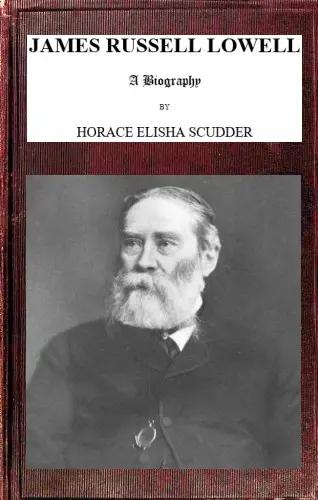
Horace Elisha Scudder
Horace Elisha Scudder
BEHIND THE BOOK
This eBook is for the use of anyone anywhere in the United States and most other parts of the world at no cost and with almost no restrictions whatsoever. You may copy it, give it away or re-use it under the terms of the Project Gutenberg License included with this eBook or online at www.gutenberg.org. If you are not located in the United States, you will have to check the laws of the country where you are located before using this eBook. Read the source licence.
The original source file, including credits and licence, is retained by this library. Request an original-format copy at no charge. Please include the book title and Project Gutenberg identifier #31238.
KEEP YOUR CURIOSITY GOING
Cécile Tormay

Moritz Busch
John L. Ransom
Frances Wright
Cécile Tormay

Mabel Potter Daggett