
Childhood in literature and art, with some observations on literature for children
Horace Elisha Scudder
THE CLASSIC COLLECTION · 1881
"Noah Webster" by Horace Elisha Scudder is a historical account written in the late 19th century. The book explores the life and contributions of Noah Webster, a pivotal figure in American education and lexicography, particularly noted for his efforts in creating an American spelling system and dictionary. Scudder's work delves into Webster's early life, his educational endeavors, and the profound influence he had on the American language and identity. The opening of the biography sets the stage by detailing Noah Webster's early life in West Hartford, Connecticut, where he was born into a family with deep roots in the community. The narrative describes the simplicity and hardships of rural life during the mid-18th century, which shaped his character and intellect. Scudder highlights Webster's education, from his time at the village school to his studies at Yale, and frames these experiences within the context of the American Revolution, suggesting that his formative years were characterized by a blend of scholarly pursuits and active participation in significant historical events. The groundwork laid in this opening chapter foreshadows Webster's later achievements in education and linguistics, providing readers with insights into how his upbringing and education influenced his lifelong mission to develop a distinctly American language.
Introduction adapted from the source catalogue; source summaries may be automatically generated.
Free to read · English · 56,953 words · No account needed
MAKE TIME FOR A GOOD BOOK
On by default. Untick to stop anonymous reading totals. Each page counts after 10 seconds in view. How this works.
Anonymous counting is on unless you have switched it off.
Adams, John and Abigail, letters of, compared with those of John and
Margaret Winthrop, 49.
Adams, J. Q., 22.
Adams, Samuel,
a pet aversion of the Hartford wits, 99, 100.
"Address to the President of the United States, on the subject
of his Address," by N. W., 144.
Advertisement of school at Sharon, 10.
Agricultural life as determining social conditions, 13; its comprehensive character in New England, 14.
Alexandrian Library, N. W.'s views on its destruction, 4.
Almanac, the, as light literature, 24.
America, condition of literature in, in 1800, 105, 110.
American, an average, as drawn by N. W., 150.
"American Dictionary of the English language, An," first promised, 235;
published, 236;
the earlier and later editions compared, as to orthography, 245-254;
as to pronunciation, 255-257;
as to etymology, 258, 259;
as to definitions, 260;
as to vocabulary, 261-263;
its Americanism, 264-274;
N. W.'s property in the present edition, 275.
Americanism, appeal to, 45;
in politics, 147;
in national morals, 163;
in literature, 241;
N. W.'s estimate of it, 282;
of what it consists, 283-292.
"American Magazine, The," character of, 77;
established by N. W., 78.
"American Spelling Book," by N. W., 38;
cautions in, 39;
first publication of, 69;
contracts concerning, 70;
sales of, 71;
Timothy Pickering on, 72;
the Macon issue, 74.
Ames's Almanac, 25, 26.
Amherst, N. W.'s removal to, 186.
Andrus, Mr., who wrote a dialogue, 48.
Barlow, Joel, N. W.'s classmate, 4;
a classic author, 48;
memorializes Congress on copyright laws, 50;
his poetry lightly esteemed by N. W., 281.
Beers, Isaac, entertains Washington, 6.
Belknap, Jeremy, difficulties of, in securing publication of his
history, 69;
measures taken for same, 75;
his opinion of N. W., 79;
his dealings with him, 80-94.
Bible, N. W.'s edition of, 168-181.
"Boston Argus" mocked, 100.
Boston, literary resources in, 22.
Boy that stole Apples, The, 40.
Bradford, William, an ancestor of N. W.'s, 3.
Buckminster, Tutor, 5.
Bushnell, Horace, upon Sunday in his boyhood, 31; on grasping the handle of one's being, 182.
Cabinet, relative importance of officers in, 136.
Cambridge, England, N. W.'s dispassionate opinion of, 238.
Canfield, John, 54.
Cicero against Verres, 48.
Citizens, training of, in New England, 19.
Clark, L. Gaylord, letter to, from N. W., 112.
Classic writers, respect felt for, in New England, 147.
Clergyman, the position of the, in New England society, 16;
his prominence among college graduates, 17;
his ideal character, 31.
"Collection of Essays and Fugitiv writings on Moral, Historical, Political, and Literary subjects, A," 187.
"Columbian, The," an early magazine of short life, 80, 81, 82, 88.
"Compendious Dictionary of the English Language, A," 216.
Congress, on copyright laws, 55, 56, 62-67.
Connecticut Academy of Arts and Sciences, 161.
Connecticut, legislature of, in connection with copyright laws, 56; discontents in, written about by N. W., 112.
Connecticut Valley, the, a strong-hold of Puritanism, 12.
Constitution, origin of the, 116;
an examination of its leading principles, 129.
Your reading position is saved on this browser. Take it to another device with a library code. Reading pages adapt to text, rather than matching a printed edition.
Horace Elisha Scudder
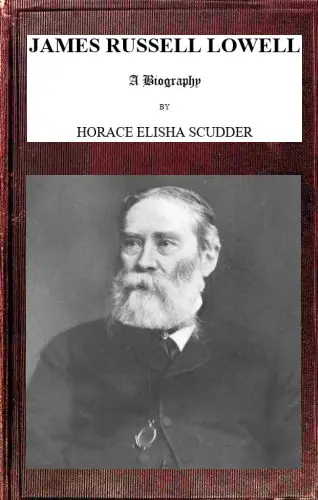
Horace Elisha Scudder
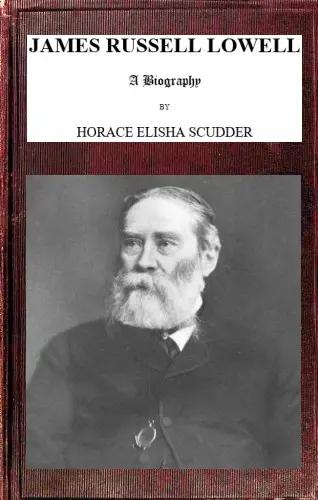
Horace Elisha Scudder
Horace Elisha Scudder
BEHIND THE BOOK
This eBook is for the use of anyone anywhere in the United States and most other parts of the world at no cost and with almost no restrictions whatsoever. You may copy it, give it away or re-use it under the terms of the Project Gutenberg License included with this eBook or online at www.gutenberg.org. If you are not located in the United States, you will have to check the laws of the country where you are located before using this eBook. Read the source licence.
The original source file, including credits and licence, is retained by this library. Request an original-format copy at no charge. Please include the book title and Project Gutenberg identifier #31238.
KEEP YOUR CURIOSITY GOING
Cécile Tormay

Moritz Busch
John L. Ransom
Frances Wright
Cécile Tormay

Mabel Potter Daggett