
Childhood in literature and art, with some observations on literature for children
Horace Elisha Scudder
THE CLASSIC COLLECTION · 1881
"Noah Webster" by Horace Elisha Scudder is a historical account written in the late 19th century. The book explores the life and contributions of Noah Webster, a pivotal figure in American education and lexicography, particularly noted for his efforts in creating an American spelling system and dictionary. Scudder's work delves into Webster's early life, his educational endeavors, and the profound influence he had on the American language and identity. The opening of the biography sets the stage by detailing Noah Webster's early life in West Hartford, Connecticut, where he was born into a family with deep roots in the community. The narrative describes the simplicity and hardships of rural life during the mid-18th century, which shaped his character and intellect. Scudder highlights Webster's education, from his time at the village school to his studies at Yale, and frames these experiences within the context of the American Revolution, suggesting that his formative years were characterized by a blend of scholarly pursuits and active participation in significant historical events. The groundwork laid in this opening chapter foreshadows Webster's later achievements in education and linguistics, providing readers with insights into how his upbringing and education influenced his lifelong mission to develop a distinctly American language.
Introduction adapted from the source catalogue; source summaries may be automatically generated.
Free to read · English · 56,953 words · No account needed
MAKE TIME FOR A GOOD BOOK
On by default. Untick to stop anonymous reading totals. Each page counts after 10 seconds in view. How this works.
Anonymous counting is on unless you have switched it off.
"Tackle, v. t. To harness; as to tackle a horse into a gig, sleigh, coach, or wagon. [A legitimate and common use of the word in America.] 2. To seize; to lay hold of; as, a wrestler tackles his antagonist. This is a common popular use of the word in New England, though not elegant. But it retains the primitive idea, to put on, to fall or throw on." The former of these definitions is followed in the latest Webster by the brief parentheses [Prov. Eng. Colloq. U. S.].
"Roiling, ppr. Rendering turbid; or exciting the passion of anger. [NOTE: This word is as legitimate as any in the language.]
"Memorialist, n. One who writes a memorial. Spectator. 2. One who presents a memorial to a legislative or other body, or to a person. U. States.
"Emporium. A place of merchandize; a town or city of trade; particularly, a city or town of extensive commerce, or in which an extensive commerce centers, or to which sellers and buyers resort from different countries: such are London, Amsterdam, and Hamburg. New York will be an emporium.
"Emptyings, n. The lees of beer, cider, etc.
"Fall, n. The fall of the leaf; the season when leaves fall from
trees; the autumn.
"Avails, n., plu. Profits or proceeds. It is used in New England for the proceeds of goods sold, or for rents, issues, or profits.
"Ball, n. An entertainment of dancing; originally and peculiarly at the invitation and expense of an individual; but the word is used in America for a dance at the expense of the attendant.
"Beadle. An officer in a university whose chief business is to walk with a mace, before the masters, in a public procession; or, as in America, before the president, trustees, faculty, and students of a college in a procession, at public commencements.
"Commemoration, n. The act of calling to remembrance, by some solemnity; the act of honoring the memory of some person or event, by solemn celebration. The feast of shells at Plymouth, in Massachusetts, is an annual commemoration of the first landing of our ancestors in 1620.
"Calculate, v. i. To make a computation; as, we calculate better for ourselves than for others. In popular use, this word is often equivalent to intend or purpose, that is, to make arrangements and form a plan; as, a man calculates to go a journey. This use of the word springs from the practice of computing or estimating the various circumstances which concur to influence the mind in forming its determinations.
"Shaver, n. A boy or young man. This word is still in common use in New England. It must be numbered among our original words.
Your reading position is saved on this browser. Take it to another device with a library code. Reading pages adapt to text, rather than matching a printed edition.
Horace Elisha Scudder
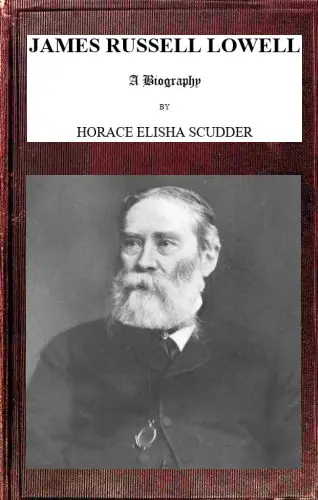
Horace Elisha Scudder
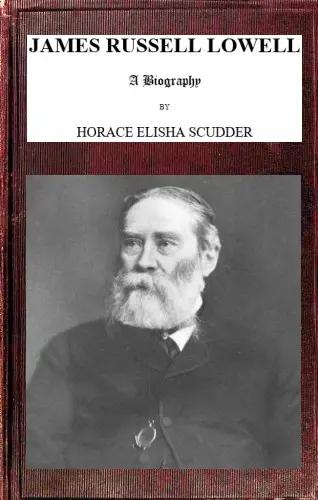
Horace Elisha Scudder
Horace Elisha Scudder
BEHIND THE BOOK
This eBook is for the use of anyone anywhere in the United States and most other parts of the world at no cost and with almost no restrictions whatsoever. You may copy it, give it away or re-use it under the terms of the Project Gutenberg License included with this eBook or online at www.gutenberg.org. If you are not located in the United States, you will have to check the laws of the country where you are located before using this eBook. Read the source licence.
The original source file, including credits and licence, is retained by this library. Request an original-format copy at no charge. Please include the book title and Project Gutenberg identifier #31238.
KEEP YOUR CURIOSITY GOING
Cécile Tormay

Moritz Busch
John L. Ransom
Frances Wright
Cécile Tormay

Mabel Potter Daggett