
Childhood in literature and art, with some observations on literature for children
Horace Elisha Scudder
THE CLASSIC COLLECTION · 1881
"Noah Webster" by Horace Elisha Scudder is a historical account written in the late 19th century. The book explores the life and contributions of Noah Webster, a pivotal figure in American education and lexicography, particularly noted for his efforts in creating an American spelling system and dictionary. Scudder's work delves into Webster's early life, his educational endeavors, and the profound influence he had on the American language and identity. The opening of the biography sets the stage by detailing Noah Webster's early life in West Hartford, Connecticut, where he was born into a family with deep roots in the community. The narrative describes the simplicity and hardships of rural life during the mid-18th century, which shaped his character and intellect. Scudder highlights Webster's education, from his time at the village school to his studies at Yale, and frames these experiences within the context of the American Revolution, suggesting that his formative years were characterized by a blend of scholarly pursuits and active participation in significant historical events. The groundwork laid in this opening chapter foreshadows Webster's later achievements in education and linguistics, providing readers with insights into how his upbringing and education influenced his lifelong mission to develop a distinctly American language.
Introduction adapted from the source catalogue; source summaries may be automatically generated.
Free to read · English · 56,953 words · No account needed
MAKE TIME FOR A GOOD BOOK
On by default. Untick to stop anonymous reading totals. Each page counts after 10 seconds in view. How this works.
Anonymous counting is on unless you have switched it off.
He was satisfied that he should work to better advantage in England. He went accordingly to Cambridge in the early fall of 1824, and remained there until the following May, using the resources of the University, and making such connections as he could, though he found rather barren sympathy from English scholars, and small encouragement from English publishers. His training and studies, moreover, were not such as to place him in very cordial relationship with Englishmen, and his attitude toward the scholastic deposit of an old nation may be guessed from a passage in one of his letters home, in which he writes: "The colleges are mostly old stone buildings, which look very heavy, cold, and gloomy to an American accustomed to the new public buildings in our country."
There is something in the whole undertaking, and in the mode of its execution, which makes one by turns wonder at the splendid will and undaunted perseverance of this Yankee teacher, and feel a well-bred annoyance at his blindness to the incongruous position which he occupied. One is disposed to laugh sardonically over this self-taught dictionary-maker, encamped at Cambridge, coolly pursuing his work of an American Dictionary of the English Language in the midst of all that traditional scholarship. But Webster's own consciousness was of the gravity of his work. "When I finished my copy," he writes in a letter to Dr. Thomas Miner, "I was sitting at my table in Cambridge, England, January, 1825. When I arrived at the last word I was seized with a tremor that made it difficult to proceed. I, however, summoned up strength to finish the work, and then, walking about the room, I soon recovered." This may be a faint echo of Gibbon's celebrated passage, but it is inherently truthful, and marks the effect upon him of a sustained purpose, brought, after a score of years, to completion. The Dictionary was published three years after his return to America, and passed through one revision at Mr. Webster's hands in 1840. He was still at work upon it when he died, in 1843. It is fair to look to the preface of a great work, especially of one which seems to admit little personality, for an account of the motives and aims of the workman. In following the lines of Webster's preface we discover the principles which we have already noted stated anew and with increasing confidence. He gives reasons why it had become necessary that an English dictionary should be revised to meet the exigencies of American as distinct from English life, and he says finally: "One consideration, however, which is dictated by my own feelings, but which I trust will meet with approbation in correspondent feelings in my fellow-citizens, ought not to be passed in silence; it is this: 'The chief glory of a nation,' says Dr. Johnson, 'arises from its authors.' With this opinion deeply impressed on my mind, I have the same ambition which actuated that great man when he expressed a wish to give celebrity to Bacon, to Hooker, to Milton, and to Boyle. I do not, indeed, expect to add celebrity to the names of Franklin, Washington, Adams, Jay, Madison, Marshall, Ramsay, Dwight, Smith, Trumbull, Hamilton, Belknap, Ames, Mason, Kent, Hare, Silliman, Cleaveland, Walsh, Irving, and many other Americans distinguished by their writings or by their science; but it is with pride and satisfaction that I can place them, as authorities, on the same page with those of Boyle, Hooker, Milton, Dryden, Addison, Ray, Milner, Cowper, Thomson, Davy, and Jameson. A life devoted to reading and to an investigation of the origin and principles of our vernacular language, and especially a particular examination of the best English writers, with a view to a comparison of their style and phraseology with those of the best American writers and with our colloquial usage, enables me to affirm, with confidence, that the genuine English idiom is as well preserved by the unmixed English of this country as it is by the best English writers. Examples to prove this fact will be found in the Introduction to this work. It is true that many of our writers have neglected to cultivate taste and the embellishments of style, but even these have written the language in its genuine idiom. In this respect Franklin and Washington, whose language is their hereditary mother-tongue, unsophisticated by modern grammar, present as pure models of genuine English as Addison and Swift. But I may go further, and affirm with truth that our country has produced some of the best models of composition. The style of President Smith, of the authors of the Federalist, of Mr. Ames, of Dr. Mason, of Mr. Harper, of Chancellor Kent, [the prose]" happily bracketed reservation! "of Mr. Barlow, of Dr. Channing, of Washington Irving, of the legal decisions of the Supreme Court of the United States, of the reports of legal decisions in some of the particular States, and many other writings, in purity, in elegance, and in technical precision, is equalled only by that of the best British authors, and surpassed by that of no English compositions of a similar kind.
Your reading position is saved on this browser. Take it to another device with a library code. Reading pages adapt to text, rather than matching a printed edition.
Horace Elisha Scudder
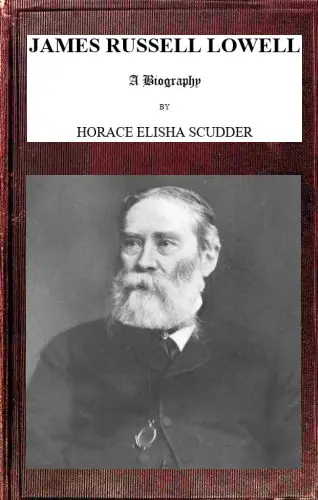
Horace Elisha Scudder
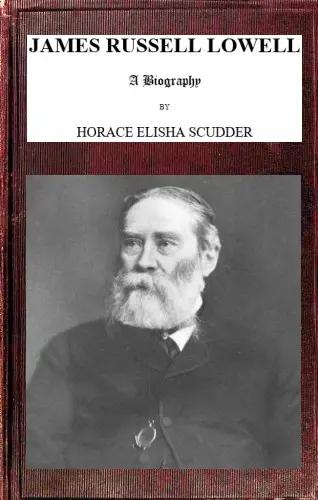
Horace Elisha Scudder
Horace Elisha Scudder
BEHIND THE BOOK
This eBook is for the use of anyone anywhere in the United States and most other parts of the world at no cost and with almost no restrictions whatsoever. You may copy it, give it away or re-use it under the terms of the Project Gutenberg License included with this eBook or online at www.gutenberg.org. If you are not located in the United States, you will have to check the laws of the country where you are located before using this eBook. Read the source licence.
The original source file, including credits and licence, is retained by this library. Request an original-format copy at no charge. Please include the book title and Project Gutenberg identifier #31238.
KEEP YOUR CURIOSITY GOING
Cécile Tormay

Moritz Busch
John L. Ransom
Frances Wright
Cécile Tormay

Mabel Potter Daggett