THE CLASSIC COLLECTION✦A Brief Account of the Rise and Progress of the People Called QuakersCLASSIC FREE BOOKS
A Brief Account of the Rise and Progress of the People Called Quakers
William Penn
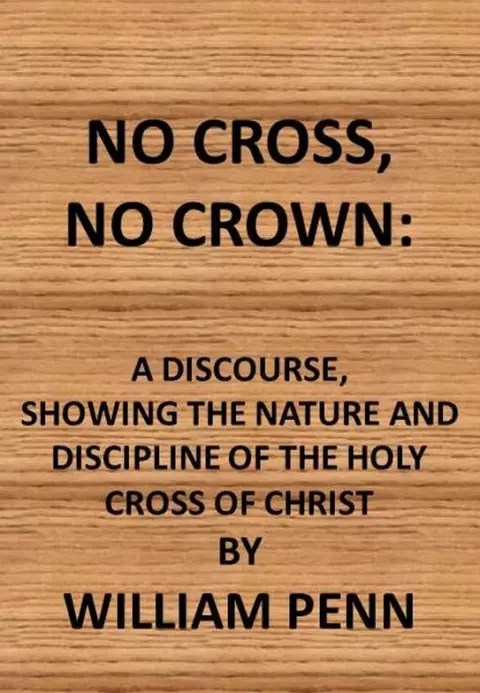
THE CLASSIC COLLECTION · 1682
"No Cross, No Crown: A Discourse Shewing the Nature and Discipline of the Holy Cross of Christ" by William Penn is a religious treatise written in the mid-19th century. This work explores the Christian concept of self-denial and emphasizes the necessity of bearing the cross as part of true discipleship. It reflects on the importance of inner transformation and spiritual obedience, contrasting genuine faith with the superficial Christianity prevalent in society. The opening of the discourse establishes the author’s deep concern for the spiritual condition of Christians who neglect the essential tenets of their faith. Penn calls upon his readers to introspectively examine their lives, discussing the consequences of living in sin and the indifference towards personal commitment to Christ. He emphasizes that embracing the cross—a symbol of suffering and self-denial—is the only path to achieving true salvation and the eternal crown promised by God. Highly reflective and earnest, the beginning of the treatise sets the stage for an exploration of the struggle between worldly desires and the spiritual journey towards righteousness.
Introduction adapted from the source catalogue; source summaries may be automatically generated.
Free to read · English · 121,105 words · No account needed
MAKE TIME FOR A GOOD BOOK
On by default. Untick to stop anonymous reading totals. Each page counts after 10 seconds in view. How this works.
Anonymous counting is on unless you have switched it off.
VIII. But without the preparation and consecration of this power, no man is fit to come before God; else it were matter of less holiness and reverence to worship God under the gospel, than it was in the times of the law, when all sacrifices were sprinkled before offered; the people consecrated that offered them, before they presented themselves before the Lord. (Numb. viii., xix.; 2 Chron. xxix. 36; xxx. 16, 17.) If the touching of a dead or unclean beast then made people unfit for temple or sacrifice, yea, society with the clean, till first sprinkled and sanctified, how can we think so meanly of the worship that is instituted by Christ in gospel times, as that it should admit of unprepared and unsanctified offerings? Or, allow that those, who either in thoughts, words, or deeds, do daily touch that which is morally unclean, can, without coming to the blood of Jesus, that sprinkles the conscience from dead works, acceptably worship the pure God: it is a downright contradiction to good sense: the unclean cannot acceptably worship that which is holy; the impure that which is perfect. There is a holy intercourse and communion betwixt Christ and his followers; but none at all betwixt Christ and Belial; between him and those that disobey his commandments, and live not the life of his blessed cross and self-denial. (2 Cor. vi. 15, 16.)
IX. But as sin, so formality cannot worship God; no, though the manner were of his own ordination. Which made the prophet, personating one in a great strait, cry out, "Wherewith shall I come before the Lord, and bow myself before the high God? shall I come before him with burnt offerings, with calves of a year old? will the Lord be pleased with thousands of rams, or with ten thousands of rivers of oil? shall I give my first-born for my transgression, the fruit of my body for the sin of my soul? He hath showed, thee, O man, what is good; and what doth the Lord require of thee, but to do justly, to love mercy, and to walk humbly with thy God?" (Micah, vi. 6-8.) The royal prophet, sensible of this, calls thus also upon God; "O Lord, open thou my lips, and my mouth shall show forth thy praise." (Psalm li. 15-17.) He did not dare open his own lips, he knew that could not praise God; and why? "for thou desirest not sacrifice, else would I give it:" if my formal offerings would serve, thou shouldst not want them; thou delightest not in burnt-offerings. "The sacrifices of God are a broken spirit; a broken and a contrite heart, O God, thou wilt not despise:" and why? because this is God's work, the effect of his power; and his own works praise him. To the same purpose doth God himself speak by the mouth of Isaiah, in opposition to the formalities and lip-worship of the degenerate Jews: "Thus saith the Lord, the heaven is my throne, and the earth is my footstool, where is the house that ye build to me? and where is the place of my rest? For all these things hath my hand made. But to this man will I look, even to him that is poor, and of a contrite spirit, and trembleth at my word." (Isaiah, lxvi. 1, 2.) O behold the true worshipper! one of God's preparing, circumcised in heart and ear, that resists not the Holy Spirit, as those lofty professing Jews did. Was this so then, even in the time of the law, which was the dispensation of external and shadowy performances: and can we now expect acceptance without the preparation of the Spirit of the Lord in these gospel times, which are the proper times for the effusion of the Spirit? By no means: God is what he was; and none else are his true worshippers, but such as worship him in his own spirit: these he tenders as the apple of his eye; the rest do but mock him, and he despises them. Hear what follows to that people, for it is the state and portion of Christendom at this day; "He that killeth an ox, is as if he slew a man; he that sacrificeth a lamb, as if he cut off a dog's neck; he that offereth an oblation, as if he offered swine's blood; he that burneth incense, as if he blessed an idol. Yea, they have chosen their own ways, and their soul delighteth in their abominations." (Isaiah, lxvi. 3.) Let none say, we offer not these kinds of oblations, for that is not the matter; God was not offended with the offerings, but offerers. These were the legal forms of sacrifice by God appointed; but they not presenting them in that frame of spirit, and under that right disposition of soul that was required, God declares his abhorrence, and that with great aggravation; and elsewhere, by the same prophet, forbids them to bring any more vain oblations before him; "incense," saith God, "is an abomination to me: your sabbaths and calling of assemblies I cannot away with; it is iniquity, even the solemn meeting." And "when you spread forth your hands, I will hide mine eyes from you; when you make many prayers, I will not hear you." (Isaiah, i. 13-18.) A most terrible renunciation of their worship; and why? Because their hearts were polluted; they loved not the Lord with their whole hearts, but broke his law, and rebelled against his Spirit, and did not that which was right in his sight. The cause is plain, by the amendment He requires; "Wash ye," says the Lord, "make you clean, put away the evil of your doings from before mine eyes: cease to do evil, learn to do well: seek judgment, relieve the oppressed, judge the fatherless, plead for the widow." Upon these terms, and nothing short, He bids them come to Him, and tells them, that "though their sins be as scarlet, they shall be white as snow; and though they be as crimson, they shall be white as wool."
Your reading position is saved on this browser. Take it to another device with a library code. Reading pages adapt to text, rather than matching a printed edition.
BEHIND THE BOOK
This eBook is for the use of anyone anywhere in the United States and most other parts of the world at no cost and with almost no restrictions whatsoever. You may copy it, give it away or re-use it under the terms of the Project Gutenberg License included with this eBook or online at www.gutenberg.org. If you are not located in the United States, you will have to check the laws of the country where you are located before using this eBook. Read the source licence.
The original source file, including credits and licence, is retained by this library. Request an original-format copy at no charge. Please include the book title and Project Gutenberg identifier #44895.
KEEP YOUR CURIOSITY GOING

David Patterson (Spirit) Hatch

David Patterson (Spirit) Hatch

David Patterson (Spirit) Hatch

Edwin Abbott Abbott

Richard Watson
T. G. (Theophilus Gould) Steward