THE CLASSIC COLLECTION✦A Brief Account of the Rise and Progress of the People Called QuakersCLASSIC FREE BOOKS
A Brief Account of the Rise and Progress of the People Called Quakers
William Penn
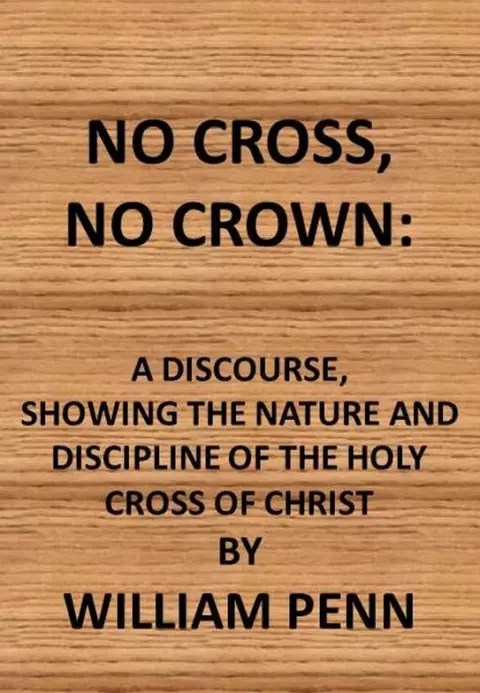
THE CLASSIC COLLECTION · 1682
"No Cross, No Crown: A Discourse Shewing the Nature and Discipline of the Holy Cross of Christ" by William Penn is a religious treatise written in the mid-19th century. This work explores the Christian concept of self-denial and emphasizes the necessity of bearing the cross as part of true discipleship. It reflects on the importance of inner transformation and spiritual obedience, contrasting genuine faith with the superficial Christianity prevalent in society. The opening of the discourse establishes the author’s deep concern for the spiritual condition of Christians who neglect the essential tenets of their faith. Penn calls upon his readers to introspectively examine their lives, discussing the consequences of living in sin and the indifference towards personal commitment to Christ. He emphasizes that embracing the cross—a symbol of suffering and self-denial—is the only path to achieving true salvation and the eternal crown promised by God. Highly reflective and earnest, the beginning of the treatise sets the stage for an exploration of the struggle between worldly desires and the spiritual journey towards righteousness.
Introduction adapted from the source catalogue; source summaries may be automatically generated.
Free to read · English · 121,105 words · No account needed
MAKE TIME FOR A GOOD BOOK
On by default. Untick to stop anonymous reading totals. Each page counts after 10 seconds in view. How this works.
Anonymous counting is on unless you have switched it off.
III. Cornelia, also a noble Roman matron, and sister to Scipio, was esteemed the most famous and honourable personage of her time, not more for the greatness of her birth, than her exceeding temperance. And history particularly mentions this, as one great instance of her virtue, for which she was so much admired, to wit, that she never was accustomed to wear rich apparel, but such apparel as was very plain and grave; rather making her children, whom her instructions and example had made virtuous, her greatest ornament: a good pattern for the vain and wanton dames of the age.
IV. Pompeia Plautina, wife to Julianus the emperor, commended for her compassion to the poor, used the power her virtue had given her with her husband, to put him upon all the just and tender things that became his charge, and to dissuade him from whatsoever seemed harsh to the people: particularly she diverted him from a great tax his flatterers advised him to lay upon the people.
V. Plotina, the wife of Trajan, "a woman," saith a certain author, "adorned with piety, chastity, and all the virtues that a woman is capable of." There are two instances; one of her piety, the other of her chastity; the first is this: when her husband was proclaimed emperor, she mounted the capitol after the choice, where, in a religious manner, she said, "Oh, that I may live under all this honour, with the same virtue and content, that I enjoyed before I had it." The second is this: her husband being once exiled, she caused her hair to be cut short, as the men wore it, that with less notice and danger she might be the companion of his banishment.
VI. Thus may the voluptuous women of the times read their reproof in the character of a brave Heathen, and learn, that solid happiness consists in a neglect of wealth and greatness, and a contempt of all corporeal pleasures, as more befitting beasts than immortal spirits: and which are loved by none but such, as not knowing the excellency of heavenly things, are both inventing and delighting, like brutes, in that which perisheth: giving the preference to poor mortality, and spending their lives to gratify the lusts of a little dirty flesh and blood, that shall never enter into the kingdom of heaven; by all which their minds become darkened, and so insensible of more celestial glories, that they do not only refuse to inquire after them, but infamously scoff and despise those that do, as a foolish and mad people: to that strange degree of darkness and impudence this age has got. But if the exceeding temperance, chastity, virtue, industry, and contentedness of very Heathens, with the plain and necessary enjoyments God has been pleased to vouchsafe to the sons and daughters of men, as sufficient to their wants and conveniency, that they may be the more at leisure to answer the great end of their being born, will not suffice, but that they will exceed the bounds, precepts, and examples, both of Heathens and Christians; anguish and tribulation will overtake them, when they shall have an eternity to think upon, with gnashing teeth, what to all eternity they can never remedy; these dismal wages are decreed for them, who so far affront God, heaven, and eternal felicity, as to neglect their salvation from sin here and wrath to come, for the enjoyment of a few fading pleasures. For such to think, notwithstanding their lives of sense and pleasure, wherein their minds become slaves to their bodies, that they shall be everlastingly happy, is an addition to their evils: since it is a great abuse to the holy God, that men and women should believe Him an eternal companion for their carnal and sensual minds: for "As the tree falls, so it lies; and as death leaves men, judgment finds them;" and there is no repentance in the grave. Therefore, I beseech you, to whom this comes, to retire: withdraw a while: let not the body see all, taste all, enjoy all; but let the soul see too, taste and enjoy those heavenly comforts and refreshments proper to that eternal world, of which she is an inhabitant, and where she must ever abide in a state of peace or plagues, when this visible one shall be dissolved.
Your reading position is saved on this browser. Take it to another device with a library code. Reading pages adapt to text, rather than matching a printed edition.
BEHIND THE BOOK
This eBook is for the use of anyone anywhere in the United States and most other parts of the world at no cost and with almost no restrictions whatsoever. You may copy it, give it away or re-use it under the terms of the Project Gutenberg License included with this eBook or online at www.gutenberg.org. If you are not located in the United States, you will have to check the laws of the country where you are located before using this eBook. Read the source licence.
The original source file, including credits and licence, is retained by this library. Request an original-format copy at no charge. Please include the book title and Project Gutenberg identifier #44895.
KEEP YOUR CURIOSITY GOING

David Patterson (Spirit) Hatch

David Patterson (Spirit) Hatch

David Patterson (Spirit) Hatch

Edwin Abbott Abbott

Richard Watson
T. G. (Theophilus Gould) Steward