THE CLASSIC COLLECTION✦A Brief Account of the Rise and Progress of the People Called QuakersCLASSIC FREE BOOKS
A Brief Account of the Rise and Progress of the People Called Quakers
William Penn
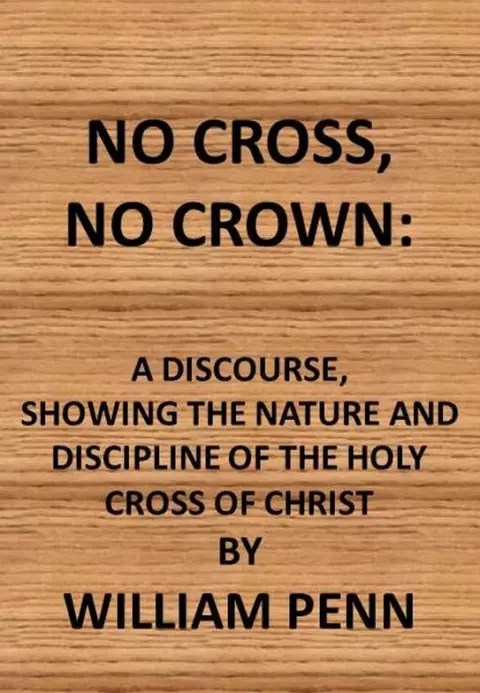
THE CLASSIC COLLECTION · 1682
"No Cross, No Crown: A Discourse Shewing the Nature and Discipline of the Holy Cross of Christ" by William Penn is a religious treatise written in the mid-19th century. This work explores the Christian concept of self-denial and emphasizes the necessity of bearing the cross as part of true discipleship. It reflects on the importance of inner transformation and spiritual obedience, contrasting genuine faith with the superficial Christianity prevalent in society. The opening of the discourse establishes the author’s deep concern for the spiritual condition of Christians who neglect the essential tenets of their faith. Penn calls upon his readers to introspectively examine their lives, discussing the consequences of living in sin and the indifference towards personal commitment to Christ. He emphasizes that embracing the cross—a symbol of suffering and self-denial—is the only path to achieving true salvation and the eternal crown promised by God. Highly reflective and earnest, the beginning of the treatise sets the stage for an exploration of the struggle between worldly desires and the spiritual journey towards righteousness.
Introduction adapted from the source catalogue; source summaries may be automatically generated.
Free to read · English · 121,105 words · No account needed
MAKE TIME FOR A GOOD BOOK
On by default. Untick to stop anonymous reading totals. Each page counts after 10 seconds in view. How this works.
Anonymous counting is on unless you have switched it off.
III. Solon, esteemed as Thales, one of the seven sages of Greece, a noble philosopher, and a lawgiver to the Athenians, was so humble that he refused to be prince of that people, and voluntarily banished himself when Pisastratus usurped the government there;[5] resolving never to outlive the laws and freedom of his country. He would say, that to make a government last the magistrates must obey the laws, and the people the magistrates. It was his judgment, that riches brought luxury, and luxury brought tyranny. Being asked by Croesus, king of Lydia, when seated on his throne richly clothed and magnificently attended, if he had ever seen anything more glorious; he answered, cocks, peacocks, and pheasants; by how much their beauty is natural. These undervaluing expressions of wise Solon, meeting so pat upon the pride and luxury of Croesus, they parted; the one desirous of toys and vanities, the other an example and instructor of true nobility and virtue, that contemned the king's effeminacy. Another time Croesus asked him who was the happiest man in the world; expecting he would have said Croesus,[6] because the most famous for wealth in those parts: he answered, "Tellus, who, though poor, yet was an honest and good man, and contented with what he had: who, after he had served the commonwealth faithfully, and seen his children and grandchildren virtuously educated, died for his country in a good old age, and was carried by his children to his grave." This much displeased Croesus, but he dissembled it. Whilst Solon recommended the happiness of Tellus, Croesus, moved, demanded to whom he assigned the next place; making no question but himself should be named, "Cleobis," saith he, "and Bito, brethren that loved well, had a competency, were of great health and strength; most tender and obedient to their mother, religious of life, who after sacrificing in the temple fell asleep and waked no more." Hereat Croesus growing angry, "Strange!" saith he, "doth our happiness seem so despicable that thou wilt not rank us equal with private persons?" Solon answered, "Dost thou inquire of us about human affairs? Knowest thou not that Divine Providence is severe, and often full of alteration? Do not we in process of time see many things we would not? Aye, and suffer many things we would not? Count man's life at seventy years, which makes[7] twenty-six thousand two hundred and fifty and odd days, there is scarcely one day like another: so that every one, O Croesus! is attended with crosses. Thou appearest to me very rich, and king over many people; but the question thou askest I cannot resolve till I hear thou hast ended thy days happily: for he that hath much wealth is not happier than he that gets his bread from day to day, unless Providence continue those good things, and that he dieth well. Solon, after his discourse, not flattering Croesus, was dismissed, and accounted unwise that he neglected the present good out of regard to the future. Æsop, that wrote the fables, being then at Sardis, sent for thither by Croesus, and much in favour with him, was grieved to see Solon so unthankfully dismissed, and said to him, "Solon, we must either tell kings nothing at all or what may please them:" "No," saith Solon, "either nothing at all, or what is best for them." However it was not long ere Croesus was of another mind; for being taken prisoner by Cyrus, the founder of the Persian monarchy, and by his command fettered and put on a pile of wood to be burned, Croesus sighed deeply,[8] and cried, "O Solon! Solon!" Cyrus bid the interpreter ask on whom he called. He was silent; at last pressing him, answered, "Upon him who I desire above all wealth, would have spoken with all tyrants." This not understood, upon further importunity he told them, "Solon, an Athenian, who long since," says he, "came to me, and seeing my wealth, despised it; besides, what he told me is come to pass; nor did his counsel belong to me alone, but to all mankind, especially those that think themselves happy." Whilst Croesus said thus, the fire began to kindle and the outparts to be seized by the flame: Cyrus, informed of the interpreters what Croesus said, began to be troubled; and knowing himself to be a man, and that to use another, not inferior to himself in wealth, so severely, might one day be retaliated, instantly commanded the fire to be quenched, and Croesus and his friends to be brought off: whom ever after, as long as he lived, Cyrus had in great esteem. Thus Solon gained due praise, that of two kings his advice saved one and instructed the other. And as it was in Solon's time that tragical plays were first invented, so he was most severe against them; foreseeing the inconveniencies that followed upon the people's being affected with the novelty of pleasure. It is reported of him that he went himself to the play, and after it was ended he went to Thespis, the great actor, and asked him if he were not ashamed to tell so many lies in the face of so great an auditory. Thespis answered, as it is now usual, "There is no harm nor shame to act such things in jest." Solon, striking his staff hard upon the ground, replied, "But in a short time we who approve of this kind of jest shall use it in earnest in our common affairs and contracts." In fine, he absolutely forbade him to teach or act plays, conceiving them deceitful and unprofitable; diverting youth and tradesmen from more necessary and virtuous employments. He defined them happy who are competently furnished with their outward callings,[9] that live temperately and honestly: he would say that cities are the common sewer of wickedness. He affirmed that to be the best family which got not unjustly, kept not unfaithfully, spent not with repentance. "Observe," saith he, "honesty in thy conversation more strictly than an oath. Seal words with silence; silence with opportunity. Never lie, but speak the truth. Fly pleasure, for it brings sorrow. Advise not the people what is most pleasant, but what is best. Make not friends in haste, nor hastily part with them. Learn to obey, and thou wilt know how to command. Be arrogant to none; be mild to those about thee. Converse not with wicked persons. Meditate on serious things. Reverence thy parents. Cherish thy friend. Conform to reason, and in all things take counsel of God." In fine, his two short sentences were these:[10] "Of nothing too much;" and "Know thyself."
Your reading position is saved on this browser. Take it to another device with a library code. Reading pages adapt to text, rather than matching a printed edition.
BEHIND THE BOOK
This eBook is for the use of anyone anywhere in the United States and most other parts of the world at no cost and with almost no restrictions whatsoever. You may copy it, give it away or re-use it under the terms of the Project Gutenberg License included with this eBook or online at www.gutenberg.org. If you are not located in the United States, you will have to check the laws of the country where you are located before using this eBook. Read the source licence.
The original source file, including credits and licence, is retained by this library. Request an original-format copy at no charge. Please include the book title and Project Gutenberg identifier #44895.
KEEP YOUR CURIOSITY GOING

David Patterson (Spirit) Hatch

David Patterson (Spirit) Hatch

David Patterson (Spirit) Hatch

Edwin Abbott Abbott

Richard Watson
T. G. (Theophilus Gould) Steward