THE CLASSIC COLLECTION✦A Brief Account of the Rise and Progress of the People Called QuakersCLASSIC FREE BOOKS
A Brief Account of the Rise and Progress of the People Called Quakers
William Penn
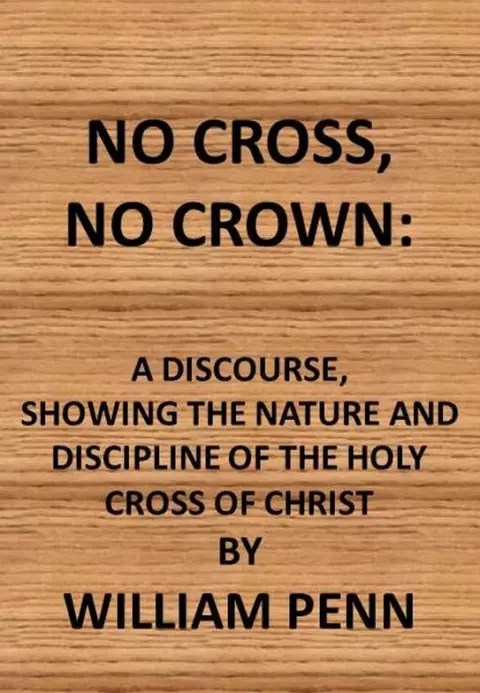
THE CLASSIC COLLECTION · 1682
"No Cross, No Crown: A Discourse Shewing the Nature and Discipline of the Holy Cross of Christ" by William Penn is a religious treatise written in the mid-19th century. This work explores the Christian concept of self-denial and emphasizes the necessity of bearing the cross as part of true discipleship. It reflects on the importance of inner transformation and spiritual obedience, contrasting genuine faith with the superficial Christianity prevalent in society. The opening of the discourse establishes the author’s deep concern for the spiritual condition of Christians who neglect the essential tenets of their faith. Penn calls upon his readers to introspectively examine their lives, discussing the consequences of living in sin and the indifference towards personal commitment to Christ. He emphasizes that embracing the cross—a symbol of suffering and self-denial—is the only path to achieving true salvation and the eternal crown promised by God. Highly reflective and earnest, the beginning of the treatise sets the stage for an exploration of the struggle between worldly desires and the spiritual journey towards righteousness.
Introduction adapted from the source catalogue; source summaries may be automatically generated.
Free to read · English · 121,105 words · No account needed
MAKE TIME FOR A GOOD BOOK
On by default. Untick to stop anonymous reading totals. Each page counts after 10 seconds in view. How this works.
Anonymous counting is on unless you have switched it off.
VI. Now those who, notwithstanding what I have urged, will yet proceed; what is it but that they have so involved themselves and their affections in them, that it is hardly possible to reform them; and that for all their many protestations against their fondness to such fopperies, they really love them more than Christ and his cross. Such cannot seek the good of others, who do so little respect their own. For, after a serious consideration, what vanity, pride, idleness, expense of time and estates have been and yet are! How many persons debauched from their first sobriety, and women from their natural sweetness and innocency to loose, airy, wanton, and many times more enormous practices! How many plentiful estates have been overrun by numerous debts, chastity ensnared by accursed lustful intrigues; youthful health overtaken by the hasty seizure of unnatural distempers, and the remaining days of such spent upon a rack of their vice's procuring, and so made slaves to the unmerciful but necessary effects of their own inordinate pleasures! in which agony they vow the greatest temperance, but are no sooner out of it, than in their vice again. (Lam. iv. 5; Job, xxi. 13, 14; Psalm lv. 23; xxxvii. 10; Eccl. viii. 12; Psalm xxxvii. 1, 2; Prov. ii. 22.)
VII. That these things are the case, and almost innumerable more, I am persuaded no ingenuous person of any experience will deny: how then, upon a serious reflection, any that pretend conscience or the fear of God Almighty, can longer continue in the garb, livery, and conversation of those whose whole life tends to little else than what I have repeated, much less join with them in their abominable excess, I leave to the just principle in themselves to judge. (Jer. xvi. 5-9.) No, surely! this is not to obey the voice of God, who in all ages did loudly cry to all, Come out of--of what?--the ways, fashions, converse, and spirit of Babylon. (Isa. iii. 13-16; Jer. l. 8; xv. 6, 7; Amos, vi. 3-7.) What is that? The great city of all these vain, foolish, wanton, superfluous, and wicked practices, against which the Scriptures denounce most dreadful judgments; ascribing all the intemperance of men and women to the cup of wickedness she hath given them to drink; whose are the things indifferent, if they must be so. And for witness, John in his revelation says in her description: How much she hath glorified herself, and lived deliciously, so much torment and sorrow give her. And the kings of the earth, who have lived deliciously with her, shall bewail her and lament her; and the merchants of the earth shall weep and mourn over her; for no man buyeth her merchandise any more; the merchandise of gold, and silver, and precious stones, and of pearls, and fine linen, and purple, and silk, and scarlet, and thyine-wood, and all manner of vessels of ivory, and all manner of vessels of most precious wood, and of brass, and iron, and marble; and cinnamon, and odours, and ointments, and frankincense, and wine, and oil, and fine flour, and wheat, and beasts, and sheep, and horses, and chariots, and slaves, and souls of men. (Rev. xviii. 7, 9, 11-13.) Behold the character and judgment of luxury: and though I know it hath a further signification than what is literal, yet there is enough to show the pomp, plenty, fulness, idleness, ease, wantonness, vanity, lust, and excess of luxury that reign in her. But at the terrible day, who will go to her exchange any more? Who to her plays? Who will follow her fashions then? And who shall traffic in her delicate inventions? Not one; for she shall be judged. No plea shall excuse or rescue her from the wrath of the Judge; for strong is the Lord, who will perform it. (Rev. xviii. 8.) If these reasonable pleas will not prevail, yet however I shall caution such in the repetition of part of Babylon's miserable doom: mind, my friends, more heavenly things, hasten to obey that righteous principle which would exercise and delight you in that which is eternal; or else with Babylon, the mother of lust and vanity, the fruits that your souls lust after shall depart from you, and all things which are dainty and goodly shall depart from you and you shall find them NO MORE: O Dives! No more. (Rev. xviii. 14.) Lay your treasures, therefore, up in heaven, O ye inhabitants of the earth, where nothing can break through to harm them; but where time shall shortly be swallowed up of eternity. (Luke, xii. 33, 34.)
Your reading position is saved on this browser. Take it to another device with a library code. Reading pages adapt to text, rather than matching a printed edition.
BEHIND THE BOOK
This eBook is for the use of anyone anywhere in the United States and most other parts of the world at no cost and with almost no restrictions whatsoever. You may copy it, give it away or re-use it under the terms of the Project Gutenberg License included with this eBook or online at www.gutenberg.org. If you are not located in the United States, you will have to check the laws of the country where you are located before using this eBook. Read the source licence.
The original source file, including credits and licence, is retained by this library. Request an original-format copy at no charge. Please include the book title and Project Gutenberg identifier #44895.
KEEP YOUR CURIOSITY GOING

David Patterson (Spirit) Hatch

David Patterson (Spirit) Hatch

David Patterson (Spirit) Hatch

Edwin Abbott Abbott

Richard Watson
T. G. (Theophilus Gould) Steward