THE CLASSIC COLLECTION✦A Brief Account of the Rise and Progress of the People Called QuakersCLASSIC FREE BOOKS
A Brief Account of the Rise and Progress of the People Called Quakers
William Penn
THE CLASSIC COLLECTION · 1682
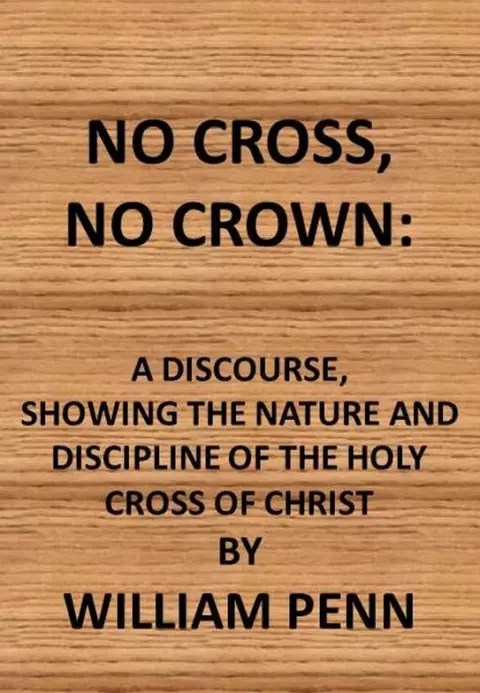
"No Cross, No Crown: A Discourse Shewing the Nature and Discipline of the Holy Cross of Christ" by William Penn is a religious treatise written in the mid-19th century. This work explores the Christian concept of self-denial and emphasizes the necessity of bearing the cross as part of true discipleship. It reflects on the importance of inner transformation and spiritual obedience, contrasting genuine faith with the superficial Christianity prevalent in society. The opening of the discourse establishes the author’s deep concern for the spiritual condition of Christians who neglect the essential tenets of their faith. Penn calls upon his readers to introspectively examine their lives, discussing the consequences of living in sin and the indifference towards personal commitment to Christ. He emphasizes that embracing the cross—a symbol of suffering and self-denial—is the only path to achieving true salvation and the eternal crown promised by God. Highly reflective and earnest, the beginning of the treatise sets the stage for an exploration of the struggle between worldly desires and the spiritual journey towards righteousness.
Introduction adapted from the source catalogue; source summaries may be automatically generated.
Free to read · English · 121,105 words · No account needed
MAKE TIME FOR A GOOD BOOK
On by default. Untick to stop anonymous reading totals. Each page counts after 10 seconds in view. How this works.
Anonymous counting is on unless you have switched it off.
IX. But lastly, the grand indisposition of mind in people to solid, serious, and heavenly meditations, by the almost continual, as well as pleasant rumination in their minds, of those various adventures they have been entertained with, which in the more youthful can never miss to inflame and animate their boiling and airy constitutions. (Job, xxxv. 13.) And in the rest of the common recreations of balls, masques, treats, cards, dice, &c. there are the like opportunities to promote the like evils. And yet further; how many quarrels, animosities, nay, murders too, as well as expense of estate and precious time, have been the immediate consequences of the like practices! In short, these were the ways of the Gentiles that knew not God, but never the practice of them that feared Him: (Eph. iv. 17-25:) nay, the more noble among the heathens themselves, namely, Anaxagoras, Socrates, Plato, Antisthenes, Heraclitus, Zeno, Aristides, Cato, Tully, Epictetus, Seneca, &c. have left their disgust to these things upon record, as odious and destructive, not only of the honour of the immortal God, but of all good order and government; as leading into looseness, idleness, ignorance, and effeminacy, the great cankers and bane of all states and empires. And the pretended innocency of these things steals away their minds from that which is better, into the love of them; nay, it gives them confidence to plead for them, and by no means will they think the contrary. But why? because it is a liberty that feeds the flesh and gratifies the lustful eye and palate of poor mortality: wherefore they think it a laudable condition to be no better than the beast, that eats and drinks but what his nature doth require; although the number is very small of such, so very exorbitant are men and women grown in this present age: for either they do believe their actions are to be ruled by their own will; or else at best, that not to be stained with the vilest wickedness is matter of great boasting: and indeed it is so in a time when nothing is too wicked to be done. But certainly, it is a sign of universal impiety in a land, when not to be guilty of the sins the very heathens loathe, is to be virtuous, yes, and Christian too, and that to no small degree of reputation: a dismal symptom to a country! But is it not to be greatly blinded, that those we call infidels should detest those practices as infamous which people that call themselves Christians, cannot or will not see to be such, but gild them over with the fair titles of ornaments, decency, recreation, and the like? Well, my friends, if there were no God, no heaven, no hell, no holy examples, no Jesus Christ, in cross, doctrine, and life, to be conformed unto; yet would charity to the poor, help to the needy, peace amongst neighbours, visits to the sick, care of the widow and fatherless, with the rest of those temporal good offices already repeated, be a nobler employment, and much more worthy of your expense and pains. Nor indeed is it to be conceived, that the way to glory is smoothed with such a variety of carnal pleasures; for then conviction, a wounded spirit, a broken heart, a regenerate mind; (Prov. xviii. 14; Psalm li. 17; Matt. v. 4; Luke, vi. 25; Rom. ii. 7; Psalm xl. 8; Rom. vii. 22; Heb. xi. 13-16; Rom. i. 25-30;) in a word, immortality, would prove as mere fictions as some make them, and others therefore think them: no, these practices are for ever to be extinguished and expelled all Christian society. For I affirm, that to one who internally knows God, and hath a sense of his blessed presence, all such recreations are death; yea, more dangerously evil, and more apt to steal away the mind from the heavenly exercise, than grosser impieties. For they are so big they are plainly seen; so dirty, they are easily detected: which education and common temperance, as well as constitution in many, teach them to abhor: and if they should be committed, they carry with them a proportionable conviction. But these pretended innocents, these supposed harmless satisfactions, (Job, i. 4,) are more surprising, more destructive: for as they easily gain an admission by the senses, so the more they pretend to innocency the more they secure the minds of people in the common use of their evil consequences, that with a mighty confidence they can plead for them.
Your reading position is saved on this browser. Take it to another device with a library code. Reading pages adapt to text, rather than matching a printed edition.
BEHIND THE BOOK
This eBook is for the use of anyone anywhere in the United States and most other parts of the world at no cost and with almost no restrictions whatsoever. You may copy it, give it away or re-use it under the terms of the Project Gutenberg License included with this eBook or online at www.gutenberg.org. If you are not located in the United States, you will have to check the laws of the country where you are located before using this eBook. Read the source licence.
The original source file, including credits and licence, is retained by this library. Request an original-format copy at no charge. Please include the book title and Project Gutenberg identifier #44895.
KEEP YOUR CURIOSITY GOING

David Patterson (Spirit) Hatch

David Patterson (Spirit) Hatch

David Patterson (Spirit) Hatch

Edwin Abbott Abbott

Richard Watson
T. G. (Theophilus Gould) Steward