THE CLASSIC COLLECTION✦A Brief Account of the Rise and Progress of the People Called QuakersCLASSIC FREE BOOKS
A Brief Account of the Rise and Progress of the People Called Quakers
William Penn
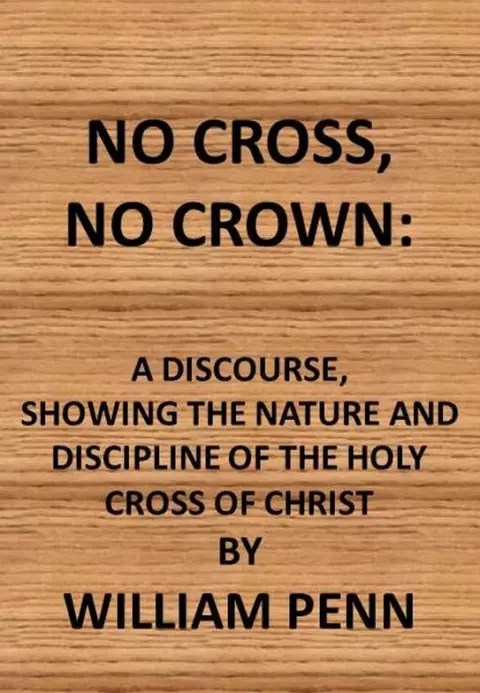
THE CLASSIC COLLECTION · 1682
"No Cross, No Crown: A Discourse Shewing the Nature and Discipline of the Holy Cross of Christ" by William Penn is a religious treatise written in the mid-19th century. This work explores the Christian concept of self-denial and emphasizes the necessity of bearing the cross as part of true discipleship. It reflects on the importance of inner transformation and spiritual obedience, contrasting genuine faith with the superficial Christianity prevalent in society. The opening of the discourse establishes the author’s deep concern for the spiritual condition of Christians who neglect the essential tenets of their faith. Penn calls upon his readers to introspectively examine their lives, discussing the consequences of living in sin and the indifference towards personal commitment to Christ. He emphasizes that embracing the cross—a symbol of suffering and self-denial—is the only path to achieving true salvation and the eternal crown promised by God. Highly reflective and earnest, the beginning of the treatise sets the stage for an exploration of the struggle between worldly desires and the spiritual journey towards righteousness.
Introduction adapted from the source catalogue; source summaries may be automatically generated.
Free to read · English · 121,105 words · No account needed
MAKE TIME FOR A GOOD BOOK
On by default. Untick to stop anonymous reading totals. Each page counts after 10 seconds in view. How this works.
Anonymous counting is on unless you have switched it off.
IV. The second instance is that of Naboth's vineyard: (1 Kings, xxi.:) it was coveted by Ahab and Jezebel: that, which led them to such an unlawful desire, found means to accomplish it. Naboth must die, for he would not sell it. To do it they accuse the innocent man of blasphemy, and find two knights of the post, sons of Belial, to evidence against him. Thus, in the name of God, and in show of pure zeal to his glory, Naboth must die; and accordingly was stoned to death. The news of which coming to Jezebel, she bid Ahab arise and take possession, for Naboth was dead. But God followed both of them with his fierce vengeance. "In the place where the dogs licked the blood of Naboth," said Elijah, in the name of the Lord, "shall dogs lick thy blood, even thine; and I will bring evil upon thee, and take away thy posterity;" and of Jezebel, his wife and partner in his covetousness and murder, he adds, "The dogs shall eat her flesh by the walls of Jezreel." Here is the infamy and punishment due to this part of covetousness. Let this deter those that desire unlawful things, the rights of others: for God that is just, will certainly repay such with interest in the end. But perhaps these are few; either that they do not, or dare not show it, because the law will bite if they do. But the next part hath company enough, that will yet exclaim against the iniquity of this part of covetousness; and by their seeming abhorrence of it, would excuse themselves of all guilt in the rest: let us consider that.
V. The next, and most common part of covetousness is the unlawful desire of lawful things; especially of riches. Money is lawful, but the love of it is the root of all evil. So riches are lawful, but they that pursue them, fall into divers temptations, snares, and lusts; He calls them uncertain, to show their folly and danger, that set their hearts upon them. Covetousness is hateful to God; he hath denounced great judgments upon those that are guilty of it. God charged it on Israel of old, as one of the reasons of his judgments; "For the iniquity of his covetousness," saith God, "was I wroth and smote him." (Isai. lvii. 17.) In another place, "Every one is given to covetousness, and from the prophet to the priest, every one dealeth falsely;" (Jer. vi. 13;) "therefore will I give their wives unto others, and their fields to them that shall inherit them." (Ibid. viii. 10.) In another place God complained thus: "But thine eyes and thine heart are not but for thy covetousness." (Chap. xxii. 17.) By Ezekiel, God renews and repeats his complaint against their covetousness: "And they come to thee as the people cometh, and sit before thee as my people: they hear thy words, but will not do them; with their mouths they show much love, but their heart goeth after their covetousness." (Ezek. xxxiii. 31.) Therefore God, in the choice of magistrates, made it part of their qualification, to hate covetousness; foreseeing the mischief that would follow to that society or government where covetous men were in power; that self would bias them, and they would seek their own ends at the cost of the public. David desired, that his heart might not incline to covetousness, but to the testimonies of his God. (Psalm cxix. 36.) And the wise man expressly tells us, that "he that hateth covetousness shall prolong his days:" (Prov. xxviii. 16:) making a curse to follow it. And it is by Luke charged upon the Pharisees as a mark of their wickedness: and Christ, in that evangelist, bids his followers "Take heed and beware of covetousness:" (Luke, xii. 15:) and he giveth a reason for it that carrieth a most excellent instruction in it; for, saith he, "a man's life consisteth not in the abundance of the things which he possesseth:" (Mark, vii. 21, 22:) but he goeth further; he joins covetousness with adultery, murder, and blasphemy. No wonder then if the apostle Paul is so liberal in his censure of this evil: he placeth it with all unrighteousness, to the Romans; to the Ephesians he writeth the like, adding, "Let not covetousness be so much as named among you:" (Rom. i. 29; Eph. v. 3:) and bids the Colossians mortify their members; (Col. iii. 5;) and names several sins, as fornication, uncleanness, and such like, but ends with covetousness: which, saith he, is idolatry. And we know there is not a greater offence against God: nay, this very apostle calls "the love of money the root of all evil;" "which," said he, "whilst some have coveted after, they have erred from the faith, and pierced themselves through with many sorrows. For they that will be rich, fall into temptation, and a snare, and many foolish and hurtful lusts. O man of God," saith he to his beloved friend Timothy, "flee these things, and follow after righteousness, faith, patience, and meekness," (1 Tim. vi. 9-11.)
Your reading position is saved on this browser. Take it to another device with a library code. Reading pages adapt to text, rather than matching a printed edition.
BEHIND THE BOOK
This eBook is for the use of anyone anywhere in the United States and most other parts of the world at no cost and with almost no restrictions whatsoever. You may copy it, give it away or re-use it under the terms of the Project Gutenberg License included with this eBook or online at www.gutenberg.org. If you are not located in the United States, you will have to check the laws of the country where you are located before using this eBook. Read the source licence.
The original source file, including credits and licence, is retained by this library. Request an original-format copy at no charge. Please include the book title and Project Gutenberg identifier #44895.
KEEP YOUR CURIOSITY GOING

David Patterson (Spirit) Hatch

David Patterson (Spirit) Hatch

David Patterson (Spirit) Hatch

Edwin Abbott Abbott

Richard Watson
T. G. (Theophilus Gould) Steward