THE CLASSIC COLLECTION✦A Brief Account of the Rise and Progress of the People Called QuakersCLASSIC FREE BOOKS
A Brief Account of the Rise and Progress of the People Called Quakers
William Penn
THE CLASSIC COLLECTION · 1682
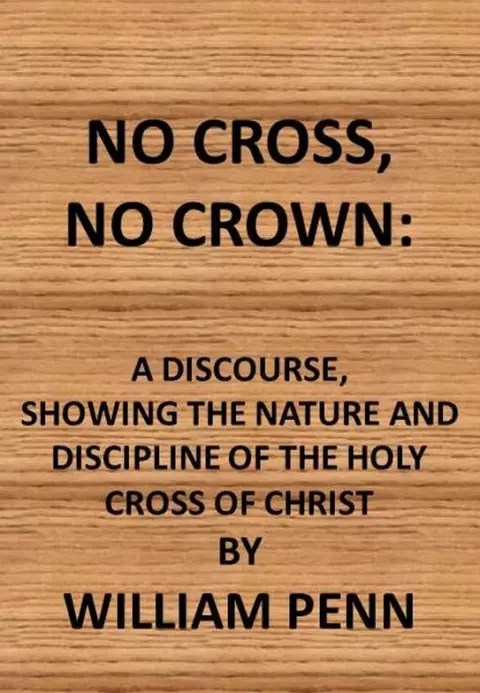
"No Cross, No Crown: A Discourse Shewing the Nature and Discipline of the Holy Cross of Christ" by William Penn is a religious treatise written in the mid-19th century. This work explores the Christian concept of self-denial and emphasizes the necessity of bearing the cross as part of true discipleship. It reflects on the importance of inner transformation and spiritual obedience, contrasting genuine faith with the superficial Christianity prevalent in society. The opening of the discourse establishes the author’s deep concern for the spiritual condition of Christians who neglect the essential tenets of their faith. Penn calls upon his readers to introspectively examine their lives, discussing the consequences of living in sin and the indifference towards personal commitment to Christ. He emphasizes that embracing the cross—a symbol of suffering and self-denial—is the only path to achieving true salvation and the eternal crown promised by God. Highly reflective and earnest, the beginning of the treatise sets the stage for an exploration of the struggle between worldly desires and the spiritual journey towards righteousness.
Introduction adapted from the source catalogue; source summaries may be automatically generated.
Free to read · English · 121,105 words · No account needed
MAKE TIME FOR A GOOD BOOK
On by default. Untick to stop anonymous reading totals. Each page counts after 10 seconds in view. How this works.
Anonymous counting is on unless you have switched it off.
IX. But our last reason is of most weight with me, and because argumentum ad hominem, it is most heavy with our despisers, which is this: it should not therefore be urged upon us, because it is a most extravagant piece of pride in a mortal man to require or expect from his fellow-creature a more civil speech or grateful language, than he is wont to give to the immortal God and his Creator in all his worship to him. Art thou, O man, greater than he that made thee? Canst thou approach the God of thy breath and great Judge of thy life with thou and thee, and when thou risest off thy knees, scorn a Christian for giving to thee, poor mushroom of the earth, no better language than thou hast given to God but just before? An arrogancy not to be easily equalled! But again, it has either too much or too little respect; if too much, do not reproach and be angry, but gravely and humbly refuse it; if too little, why dost thou show to God no more? O whither is man gone! To what a pitch does he soar! He would be used more civilly by us than he uses God; which is to have us make more than a God of him: but he shall want worshippers of us, as well as he wants the divinity in himself that deserves to be worshipped. Certain we are, that the Spirit of God seeks not these respects, much less pleads for them, or would be wroth with any that conscientiously refuse to give them. But that this vain generation is guilty of using them, to gratify a vain mind, is too palpable. What capping, what cringing, what scraping, what vain, unmeant words, most hyperbolical expressions, compliments, gross flatteries, and plain lies, under the name of civilities, are men and women guilty of in conversation! Ah! my friends! whence fetch you these examples? What part of all the writings of the holy men of God warrants these things? But, to come nearer to your own profession, is Christ your example herein, whose name you pretend to bear; or those saints of old that lived in desolate places, of whom the world was not worthy: (Heb. xi. 38:) or do you think you follow the practice of those Christians that, in obedience to their Master's life and doctrine, forsook the respect of persons, and relinquished the fashions, honour, and glory of this transitory world; whose qualifications lay not in external gestures, respects, and compliments, but in a meek and quiet spirit, (1 Pet. iii. 4,) adorned with temperance, virtue, modesty, gravity, patience, and brotherly kindness; which were the tokens of true honour, and only badges of respect and nobility in those Christian times? O no. But is it not to expose ourselves both to your contempt and fury, that we imitate them, and not you? And tell us, pray, are not romances, plays, masks, gaming, fiddlers, &c. the entertainments that most delight you? Had you the spirit of Christianity indeed, could you consume your most precious little time in so many unnecessary visits, games, and pastimes; in your vain compliments, courtships, feigned stories, flatteries, and fruitless novelties, and what not; invented and used to your diversion, to make you easy in your forgetfulness of God: which never was the Christian way of living, but entertainment of the heathens that knew not God? Oh! were you truly touched with a sense of your sins, and in any measure born again; did you take up the cross of Jesus and live under it, these, which so much please your wanton and sensual nature, would find no place with you. This is not seeking the things that are above, (Col. iii. 1,) to have the heart thus set on things that are below; nor working out your own salvation with fear and trembling, to spend your days in vanity. This is not crying with Elihu, "I know not to give flattering titles to men; for in so doing my Maker would soon take me away." This is not to deny self, and lay up a more hidden and enduring substance, an eternal inheritance in the heavens, that will not pass away. Well, my friends, whatever you think, your plea of custom will find no place at God's tribunal: the light of Christ in your own hearts will overrule it; and this Spirit, against which we testify, shall then appear to be what we say it is. Say not I am serious about slight things; but beware you of levity in serious things.
Your reading position is saved on this browser. Take it to another device with a library code. Reading pages adapt to text, rather than matching a printed edition.
BEHIND THE BOOK
This eBook is for the use of anyone anywhere in the United States and most other parts of the world at no cost and with almost no restrictions whatsoever. You may copy it, give it away or re-use it under the terms of the Project Gutenberg License included with this eBook or online at www.gutenberg.org. If you are not located in the United States, you will have to check the laws of the country where you are located before using this eBook. Read the source licence.
The original source file, including credits and licence, is retained by this library. Request an original-format copy at no charge. Please include the book title and Project Gutenberg identifier #44895.
KEEP YOUR CURIOSITY GOING

David Patterson (Spirit) Hatch

David Patterson (Spirit) Hatch

David Patterson (Spirit) Hatch

Edwin Abbott Abbott

Richard Watson
T. G. (Theophilus Gould) Steward