THE CLASSIC COLLECTION✦Types of News WritingCLASSIC FREE BOOKS
Types of News Writing
Willard Grosvenor Bleyer
THE CLASSIC COLLECTION · 1913
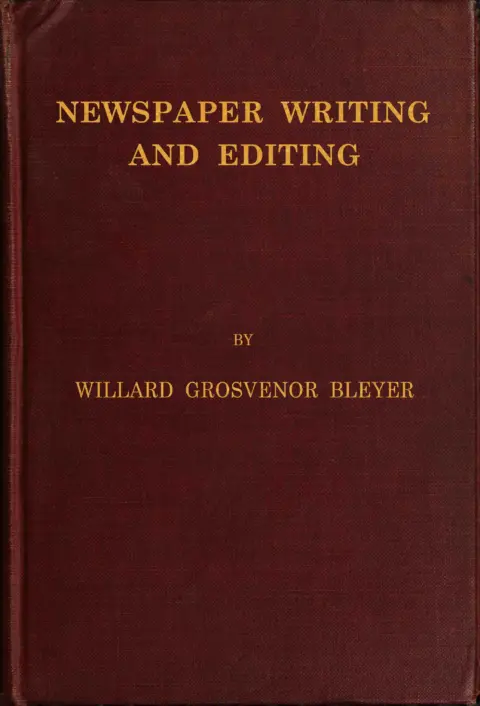
"Newspaper Writing and Editing" by Willard Grosvenor Bleyer is a practical handbook on journalism written in the early 20th century. This text serves as a guide for students of journalism and aspiring writers to understand and practice the essential principles of newspaper writing and editing. The book covers various aspects of the newspaper production process, from gathering news to editing and presenting it effectively. The opening of the book sets the stage for its instructional content, emphasizing the author's experience in teaching journalism and the need for a comprehensive textbook to guide students in practical newspaper work. Bleyer discusses the importance of having organized learning resources that provide clear examples and analyses of current practices in journalism. He introduces the book's structure and its intended audience, making it clear that both students and interested individuals can benefit from the outlined principles and techniques involved in writing and editing for newspapers.
Introduction adapted from the source catalogue; source summaries may be automatically generated.
Free to read · English · 108,582 words · No account needed
MAKE TIME FOR A GOOD BOOK
On by default. Untick to stop anonymous reading totals. Each page counts after 10 seconds in view. How this works.
Anonymous counting is on unless you have switched it off.
| To rescue his money, which he hoped| |would raise him from the rank of| |workman to that of merchant, Woo Wing| |Lee, Chinese laundryman, 3031 Nicollet| |Avenue, ran back into his burning| |laundry today and was so badly burned| |that physicians say he cannot live. |
=Fire Stories.= After the lead has been completed, the main part of the story remains to be written. The structure of the body of the story offers no particular difficulties in arrangement as the incidents usually follow each other in the order of time. In the account of a fire, it is usual, after the lead, to give the facts concerning the discovery of the fire, the sounding of the alarm, the arrival of the fire department, the progress of the fire, and the different incidents, with little or no variation from chronological order.
How a fire story is arranged is shown in the following example:
| By sliding down a swaying extension| |ladder through fire and smoke, with an| |unconscious woman in his arms, Fireman| |Daniel Walter rescued her from death in| |a fire that early this morning swept| |through a five-story apartment house at| |122 West Thirty-ninth Street, and caused| |a loss of $15,000. Mrs. Mary Owen, the| |woman saved, is in a serious condition| |as a result of inhaling smoke, but at| |the Harlem Hospital it was said that she| |would probably recover. | | | | When the firemen on Truck 30 reached| |the burning building, they saw Mrs.| |Owen leaning out of a front window on| |the fifth floor, screaming for help and| |apparently preparing to jump to the| |street. | | | | “Don’t jump,” shouted the firemen.| |“We’ll be up there in a minute.” | | | | She stood motionless in the window with| |the smoke pouring out around her when| |the big eighty-foot extension ladder| |began to rise slowly in response to| |vigorous cranking. While the ladder was| |swaying like a pendulum as it ascended,| |Fireman Walter and Driver Frank Lawson| |began to climb up. | | | | “Hold on just a second longer,” shouted| |Lawson as he saw that Mrs. Owen was| |again leaning forward as if about to| |jump. | | | | When he reached the top of the ladder a| |moment later, Mrs. Owen swayed and fell| |back into the room. At the same instant| |flames burst out of the windows on the| |third floor and swept through the| |ladder. | | | | “You go down,” called Walter to Driver| |Lawson below him on the ladder. “I’ll| |get her and slide for it. Be at the| |bottom to catch us.” | | | | Lawson slid back through the flames,| |and Walter climbed into the window.| |Mrs. Owen was lying unconscious on the| |floor with her dress ablaze. Walter beat| |out the flames and then wrapped his| |coat around her to protect her from the| |sparks and embers that were swirling| |through the window. | | | | Laying the unconscious woman on the| |window-sill, Walter climbed out on the| |ladder. Then he reached over and took| |Mrs. Owen, placing her across his arms.| |Seeing that a slow descent through the| |flames bursting out of the windows on| |the floors below meant certain death,| |Walter wrapped his legs around the sides| |of the ladder and took hold of both| |sides with his hands, balancing Mrs.| |Owen across his arms. | | | | “Catch us down there,” he shouted and| |started to slide down the ladder through| |the flames and smoke, as though it had| |been greased. | | | | For a few seconds he was hidden from| |view; then he reappeared with his| |clothes ablaze but with his burden still| |safe across his arms. Firemen caught him| |as he reached the sidewalk, and took| |Mrs. Owen who was still unconscious. | | | | It was all the police reserves could do| |to keep the crowd from breaking through| |the fire lines to congratulate Walter| |and carry him off on their shoulders.| |They cheered again and again as he| |was hurried into the Harlem Hospital| |ambulance. His hands and face were| |scorched, but after his burns had been| |dressed at the hospital he gamily| |returned to his quarters in the fire| |station. | | | | Mrs. Owen was the only occupant of the| |house who did not succeed in reaching| |the fire escapes in the rear of the| |apartment and thus getting out safely. | | | | The fire started in the basement,| |evidently from an overheated furnace,| |and shooting up through the air shafts,| |spread into the apartments on the third,| |fourth, and fifth floors. As most of| |the tenants left the doors of their| |apartments open when they fled, the| |draught swept the fire through floor| |after floor. The interior of the whole| |five floors was destroyed. Three alarms| |were turned in and the fire was not| |under control until 10 o’clock. |
Your reading position is saved on this browser. Take it to another device with a library code. Reading pages adapt to text, rather than matching a printed edition.
Willard Grosvenor Bleyer
Willard Grosvenor Bleyer
BEHIND THE BOOK
This eBook is for the use of anyone anywhere in the United States and most other parts of the world at no cost and with almost no restrictions whatsoever. You may copy it, give it away or re-use it under the terms of the Project Gutenberg License included with this eBook or online at www.gutenberg.org. If you are not located in the United States, you will have to check the laws of the country where you are located before using this eBook. Read the source licence.
The original source file, including credits and licence, is retained by this library. Request an original-format copy at no charge. Please include the book title and Project Gutenberg identifier #65884.
KEEP YOUR CURIOSITY GOING

Charles G. (Charles Griffith) Ross
Hannah Webster Foster

Emily Lawless
Edwin Hamlin Carr

Charles De Lano Hine
Andrew Ure