THE CLASSIC COLLECTION✦My diaries, being a personal narrative of events 1888-1914, Part 2 (1900-1914)CLASSIC FREE BOOKS
My diaries, being a personal narrative of events 1888-1914, Part 2 (1900-1914)
Wilfrid Scawen Blunt
THE CLASSIC COLLECTION · 1876
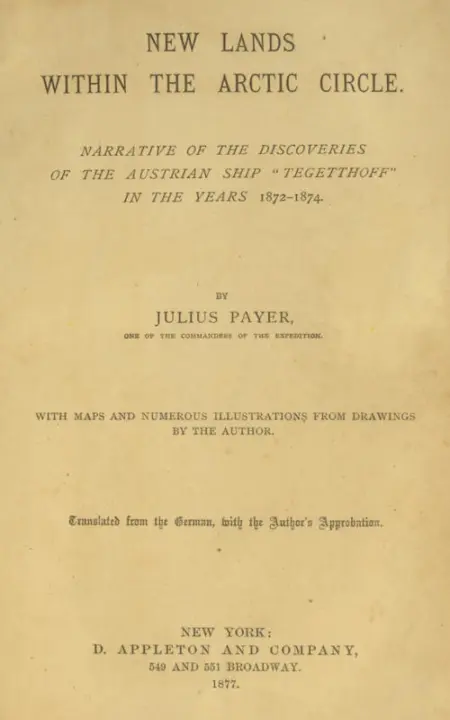
"New Lands Within the Arctic Circle" by Julius Payer is a historical account written in the late 19th century. The narrative chronicles the daring finds and hardships faced during the Austrian ship "Tegetthoff's" expedition from 1872 to 1874 as it navigated uncharted territories within the Arctic. The author provides insights into the crew's experiences, scientific observations, and the formidable natural challenges they encountered, presenting a detailed picture of Arctic exploration. The opening of the narrative establishes the context and significance of the expedition, emphasizing the roles of key figures such as Lieutenant Weyprecht and Dr. Kepes. Payer reflects on the dynamics of leadership and teamwork while setting the stage for the harrowing adventures that lie ahead. The narrative alludes to their struggle against the ice, the challenges of navigation, and the aim of discovering new lands, particularly focusing on the hardships endured during the harsh Arctic winters. These early pages lay the groundwork for the epic and often perilous journey that will unfold, inviting the reader to join in an era of exploration filled with excitement and scientific discovery.
Introduction adapted from the source catalogue; source summaries may be automatically generated.
Free to read · English · 133,616 words · No account needed
MAKE TIME FOR A GOOD BOOK
On by default. Untick to stop anonymous reading totals. Each page counts after 10 seconds in view. How this works.
Anonymous counting is on unless you have switched it off.
10. During the summer Orel took soundings of the depth of the sea, which he was prevented from continuing in the winter by the frost. These show its shallowness on the north of Novaya Zemlya, especially towards Franz-Josef Land. A bank, over which we drifted in the summer of 1873, and which we explored with a drag-net, was the principal source of the collection of marine fauna, which we shall speak of in a later chapter. These soundings also enabled Orel to prove the small increase of the temperature of the sea at any considerable depth. He used in his experiments the maximum and minimum thermometer of Casella. The specimens we collected showed, that the bottom of the sea consists of layers of mud and shells. The soundings are exhibited in the following table:—
+----------------+-------+
| Time. |Metres.|
+----------------+-------+
| July 20 1872 | 400 |
| ” 28 ” | 115 |
| ” 31 ” | 250 |
| Aug. 3 ” | 130 |
| ” 4 ” | 80 |
| ” 22 ” | 36 |
| ” 30 ” | 170 |
| Sept. 16 ” | 100 |
| ” 25 ” | 90 |
| ” 29 ” | 85 |
| ” 30 ” | 190 |
| Oct. 2 ” | 170 |
| ” 9 ” | 450 |
| Nov. 14 ” | 345 |
| Jan. 28 1873 | 510 |
| Mar. 27 ” | 450 |
| April 28 ” | 350 |
| May 17 ” | 230 |
| ” 18 ” | 187 |
| ” 19 ” | 172 |
| ” 20 ” | 163 |
| ” 21 ” | 138 |
| ” 22 ” | 186 |
| ” 23 ” | 162 |
| ” 25 ” | 177 |
| ” 25 ” | 182 |
| ” 26 ” | 186 |
| ” 27 ” | 249 |
| ” 28 ” | 251 |
| ” 29 ” | 254 |
| ” 30 ” | 253 |
| ” 31 ” | 256 |
| June 1 ” | 238 |
| ” 2 ” | 210 |
| ” 3 ” | 183 |
| ” 4 ” | 207 |
| ” 5 ” | 200 |
| ” 6 ” | 198 |
| ” 7 ” | 190 |
| ” 8 ” | 215 |
| ” 9 ” | 231 |
| ” 10 ” | 203 |
| ” 11 ” | 240 |
| ” 12 ” | 218 |
| ” 13 ” | 211 |
| ” 14 ” | 235 |
| ” 15 ” | 161 |
| ” 16 ” | 184 |
| ” 17 ” | 222 |
| ” 18 ” | 200 |
| ” 19 ” | 186 |
| ” 20 ” | 220 |
| ” 21 ” | 195 |
| ” 22 ” | 200 |
| ” 23 ” | 169 |
| ” 24 ” | 178 |
| ” 25 ” | 195 |
| ” 26 ” | 220 |
| ” 27 ” | 227 |
| ” 28 ” | 233 |
| ” 29 ” | 240 |
| ” 30 ” | 240 |
| July 1 ” | 240 |
| ” 3 ” | 245 |
| ” 4 ” | 250 |
| ” 5 ” | 235 |
| ” 6 ” | 235 |
| ” 7 ” | 274 |
| ” 8 ” | 266 |
| ” 9 ” | 250 |
| ” 10 ” | 250 |
| ” 11 ” | 236 |
| ” 12 ” | 265 |
| ” 13 ” | 247 |
| ” 14 ” | 215 |
| ” 15 ” | 195 |
| ” 16 ” | 184 |
| ” 17 ” | 200 |
| ” 18 ” | 240 |
| ” 19 ” | 232 |
| ” 20 ” | 231 |
| ” 21 ” | 231 |
| ” 22 ” | 226 |
| ” 23 ” | 198 |
| ” 24 ” | 205 |
| ” 25 ” | 216 |
| ” 26 ” | 218 |
| ” 27 ” | 218 |
| ” 28 ” | 236 |
| ” 29 ” | 260 |
| ” 30 ” | 236 |
| ” 31 ” | 234 |
| Aug. 1 ” | 225 |
| ” 2 ” | 219 |
| ” 3 ” | 173 |
| ” 4 ” | 188 |
| ” 5 ” | 210 |
| ” 6 ” | 107 |
| ” 7 ” | 216 |
| ” 8 ” | 184 |
| ” 9 ” | 244 |
| ” 10 ” | 225 |
| ” 11 ” | 209 |
| ” 12 ” | 214 |
| ” 13 ” | 189 |
| ” 14 ” | 177 |
| ” 15 ” | 170 |
| ” 16 ” | 170 |
| ” 17 ” | 174 |
| ” 18 ” | 148 |
| ” 19 ” | 152 |
| ” 20 ” | 138 |
| ” 21 ” | 130 |
| ” 22 ” | 131 |
| ” 23 ” | 128 |
| ” 24 ” | 145 |
| ” 25 ” | 140 |
| ” 26 ” | 185 |
| ” 27 ” | 219 |
| ” 28 ” | 180 |
| ” 29 ” | 132 |
| ” 30 ” | 211 |
| ” 31 ” | 197 |
| Sept. 1 ” | 260 |
| ” 2 ” | 142 |
| ” 3 ” | 212 |
| ” 4 ” | 215 |
| ” 5 ” | 178 |
| ” 6 ” | 188 |
| ” 7 ” | 204 |
| ” 8 ” | 250 |
| ” 9 ” | 240 |
| ” 10 ” | 218 |
| ” 11 ” | 168 |
| ” 12 ” | 127 |
| ” 13 ” | 132 |
| ” 14 ” | 137 |
| ” 15 ” | 111 |
| ” 16 ” | 134 |
| ” 17 ” | 178 |
| ” 18 ” | 175 |
| ” 19 ” | 275 |
| ” 20 ” | 300 |
| ” 21 ” | 220 |
| ” 22 ” | 188 |
| ” 24 ” | 237 |
| ” 25 ” | 325 |
| Oct. 28 ” | 165 |
| ” 31 ” | 210 |
+----------------+-------+
Your reading position is saved on this browser. Take it to another device with a library code. Reading pages adapt to text, rather than matching a printed edition.
BEHIND THE BOOK
This eBook is for the use of anyone anywhere in the United States and most other parts of the world at no cost and with almost no restrictions whatsoever. You may copy it, give it away or re-use it under the terms of the Project Gutenberg License included with this eBook or online at www.gutenberg.org. If you are not located in the United States, you will have to check the laws of the country where you are located before using this eBook. Read the source licence.
The original source file, including credits and licence, is retained by this library. Request an original-format copy at no charge. Please include the book title and Project Gutenberg identifier #60258.
KEEP YOUR CURIOSITY GOING
Wilfrid Scawen Blunt
Wilfrid Scawen Blunt

E. W. (Edgar Watson) Howe
Cécile Tormay

Moritz Busch
John L. Ransom