THE CLASSIC COLLECTION✦My diaries, being a personal narrative of events 1888-1914, Part 2 (1900-1914)CLASSIC FREE BOOKS
My diaries, being a personal narrative of events 1888-1914, Part 2 (1900-1914)
Wilfrid Scawen Blunt
THE CLASSIC COLLECTION · 1876
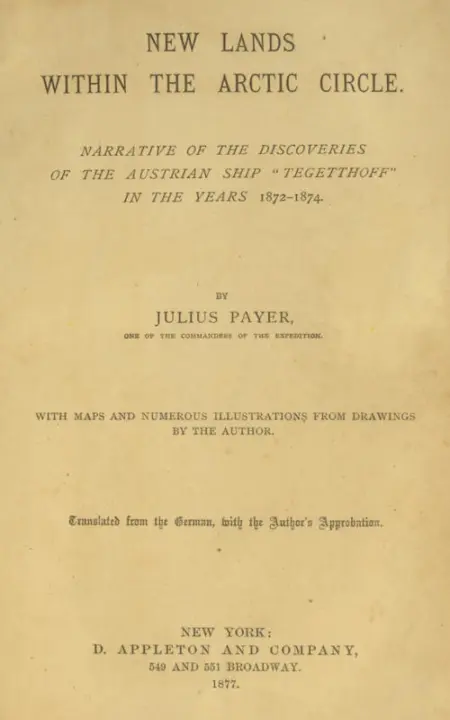
"New Lands Within the Arctic Circle" by Julius Payer is a historical account written in the late 19th century. The narrative chronicles the daring finds and hardships faced during the Austrian ship "Tegetthoff's" expedition from 1872 to 1874 as it navigated uncharted territories within the Arctic. The author provides insights into the crew's experiences, scientific observations, and the formidable natural challenges they encountered, presenting a detailed picture of Arctic exploration. The opening of the narrative establishes the context and significance of the expedition, emphasizing the roles of key figures such as Lieutenant Weyprecht and Dr. Kepes. Payer reflects on the dynamics of leadership and teamwork while setting the stage for the harrowing adventures that lie ahead. The narrative alludes to their struggle against the ice, the challenges of navigation, and the aim of discovering new lands, particularly focusing on the hardships endured during the harsh Arctic winters. These early pages lay the groundwork for the epic and often perilous journey that will unfold, inviting the reader to join in an era of exploration filled with excitement and scientific discovery.
Introduction adapted from the source catalogue; source summaries may be automatically generated.
Free to read · English · 133,616 words · No account needed
MAKE TIME FOR A GOOD BOOK
On by default. Untick to stop anonymous reading totals. Each page counts after 10 seconds in view. How this works.
Anonymous counting is on unless you have switched it off.
7. August 18—the birthday of his Majesty our Emperor,—the ship was dressed with flags, the only form left to us of expressing our loyalty. Our dinner was as sumptuous as the circumstances permitted, though fasting would have been more appropriate, as the third day after this was the anniversary of that sad and gloomy day on which we were inclosed in the ice. In order to visit an iceberg which lay to the north-west of us, we ventured beyond our floe for the first time, and passed over a fissure to some drifting ice-floes which lay in the way. A seal lying on the ice was immediately attacked by our dogs, but succeeded after many efforts in reaching its hole. From the top of the iceberg, which was about sixty feet high, we discovered that the few openings in the ice were not navigable “leads,” but isolated holes utterly unconnected, and therefore useless for navigation.
8. We had continually drifted, since the beginning of February, first to the north-west and then to the north, with few modifications; at that date, we had reached our greatest East Longitude, and winds appeared as before to be the main cause of this drifting. At the end of that month there was a succession of calms, and we lay almost motionless in latitude 79°, and longitude 71°. The subjoined table shows our change of place in the following months.
+------------------+-----------+------------+ | Time. | Latitude. | Longitude. | | | ° ′ | ° ′ | +------------------+-----------+------------+ | March 3 1873 | 79 13 | 69 32 | | ” 9 ” | 79 19 | 68 28 | | ” 14 ” | 79 20 | 68 28 | | ” 20 ” | 79 33 | 68 52 | | ” 25 ” | 79 23 | 67 17 | | ” 27 ” | 79 15 | 67 29 | | ” 29 ” | 79 14 | 67 35 | | April 2 ” | 79 5 | 66 49 | | ” 3 ” | 79 5 | 66 42 | | ” 7 ” | 79 4 | — | | ” 10 ” | 79 12 | 68 1 | | ” 12 ” | 79 19 | 67 43 | | ” 13 ” | 79 20 | 67 40 | | ” 15 ” | 79 14 | 67 0 | | ” 19 ” | 79 18 | 65 51 | | ” 20 ” | 79 19 | 65 37 | | ” 27 ” | 79 13·5 | 64 37·0 | | ” 28 ” | 79 12·2 | 64 41·8 | | May 1 ” | 79 15·8 | 64 58·8 | | ” 2 ” | 79 17·1 | 65 3·9 | | ” 6 ” | 79 16·0 | 65 0·5 | | ” 10 ” | 79 20·4 | 65 41·9 | | ” 11 ” | 79 20·2 | 65 32·4 | | ” 13 ” | 79 19·7 | 65 15·8 | | ” 14 ” | 79 19·8 | 64 45·6 | | ” 16 ” | 79 15·5 | 63 39·0 | | ” 17 ” | 79 13·1 | 63 21·7 | | ” 22 ” | 79 9·2 | 62 3·5 | | ” 29 ” | 79 2·4 | 62 55·5 | | ” 30 ” | 79 2·5 | 62 54·2 | | ” 31 ” | 79 2·5 | 62 53·9 | | June 1 ” | 79 2·4 | 62 43·2 | | ” 3 ” | 79 0·4 | 62 29·7 | | ” 5 ” | 79 1·3 | 62 24·8 | | ” 6 ” | 79 1·1 | 62 20·2 | | ” 9 ” | 79 5·4 | 61 31·4 | | ” 10 ” | 79 5·3 | 61 23·6 | | ” 11 ” | 79 4·3 | 61 21·3 | | ” 18 ” | 79 6·6 | 61 5·2 | | ” 20 ” | 79 8·6 | 61 2·8 | | ” 22 ” | 79 9·2 | 60 54·9 | | ” 24 ” | 79 8·4 | 60 31·8 | | ” 25 ” | 79 11·2 | 60 14·6 | | ” 26 ” | 79 13·3 | 59 55·3 | | ” 27 ” | 79 13·7 | 59 46·0 | | ” 28 ” | 79 15·5 | 59 35·4 | | July 3 ” | 79 15·2 | 59 14·8 | | ” 4 ” | 79 14·8 | 59 13·3 | | ” 8 ” | 79 15·2 | 59 5·8 | | ” 10 ” | 79 13·2 | 59 9·0 | | ” 15 ” | 79 9·8 | 59 52·6 | | ” 18 ” | 79 7·3 | 59 50·4 | | ” 19 ” | 79 7·6 | 59 35·1 | | ” 20 ” | 79 8·7 | 59 33·6 | | ” 21 ” | 79 9·2 | 59 33·1 | | ” 22 ” | 79 9·0 | 59 34·1 | | ” 23 ” | 79 6·6 | 59 34·2 | | ” 24 ” | 79 7·1 | 59 29·5 | | ” 25 ” | 79 6·6 | 59 27·3 | | ” 31 ” | 78 58·5 | 60 25·5 | | August 1 ” | 78 56·9 | 60 40·6 | | ” 4 ” | 79 0·4 | 61 6·2 | | ” 13 ” | 79 25·4 | 61 6·6 | | ” 14 ” | 79 24·5 | 61 16·3 | | ” 16 ” | 79 27·8 | 61 7·6 | | ” 19 ” | 79 29·1 | 61 31·0 | | ” 21 ” | 79 31·3 | 61 44·8 | | ” 30 ” | 79 43·0 | 60 23·7 | | ” 31 ” | 79 42·5 | 60 5·6 | | Sept. 2 ” | 79 40·2 | 60 32·9 | | ” 5 ” | 79 41·3 | 60 12·5 | | ” 8 ” | 79 34·2 | 59 47·3 | | ” 9 ” | 79 33·6 | 59 45·9 | | ” 10 ” | 79 32·2 | 59 53·1 | | ” 16 ” | 79 45·6 | 61 30·5 | | ” 23 ” | 79 49·6 | 61 58·1 | | ” 30 ” | 79 58·3 | 60 41·1 | | Oct. 16 ” | 79 54·6 | 60 34·7 | | ” 19 ” | 79 53·9 | 60 40·6 | | ” 23 ” | 79 44·5 | 60 7·9 | | ” 26 ” | 79 44·3 | 59 17·1 | | ” 27 ” | 79 44·0 | 59 14·1 | | ” 28 ” | 79 43·8 | 59 6·6 | | ” 29 ” | 79 44·8 | 59 9·8 | | ” 30 ” | 79 49·0 | 58 59·9 | | ” 31 ” | 79 50·6 | 58 53·7 | | Ship in Land ice | 79 51·1 | 58 56·0 | +------------------+-----------+------------+
9. The meteorological observations of the expedition, and the course of the Tegetthoff have been ably analysed by Vice-Admiral Baron von Wüllersdorf-Urbair in the Mittheilungen of the Imperial Academy of Sciences of Vienna, and while I refer the curious reader to these reports for a fuller discussion of these questions, I subjoin the most important paragraphs of the Admiral’s report which concern the course of the Tegetthoff:—
“Under ordinary circumstances a ship drifts on with the floe; is imprisoned, and necessarily obeys the force of the wind and the sea-currents. Its course, consequently, corresponds to the combined effect of these forces. But, inasmuch as the Tegetthoff was not in the free sea, but was driven along for the greater part of the time in close pack-ice, the ship not only obeyed the general movement of the ice, which was dependent on the direction of the winds and currents of the sea, but was also influenced by its vicinity to coasts and by the greater or lesser accumulation of ice.
Your reading position is saved on this browser. Take it to another device with a library code. Reading pages adapt to text, rather than matching a printed edition.
BEHIND THE BOOK
This eBook is for the use of anyone anywhere in the United States and most other parts of the world at no cost and with almost no restrictions whatsoever. You may copy it, give it away or re-use it under the terms of the Project Gutenberg License included with this eBook or online at www.gutenberg.org. If you are not located in the United States, you will have to check the laws of the country where you are located before using this eBook. Read the source licence.
The original source file, including credits and licence, is retained by this library. Request an original-format copy at no charge. Please include the book title and Project Gutenberg identifier #60258.
KEEP YOUR CURIOSITY GOING
Wilfrid Scawen Blunt
Wilfrid Scawen Blunt

E. W. (Edgar Watson) Howe
Cécile Tormay

Moritz Busch
John L. Ransom