
Neka, the boy conjuror
Edward Stratemeyer
THE CLASSIC COLLECTION · 1901
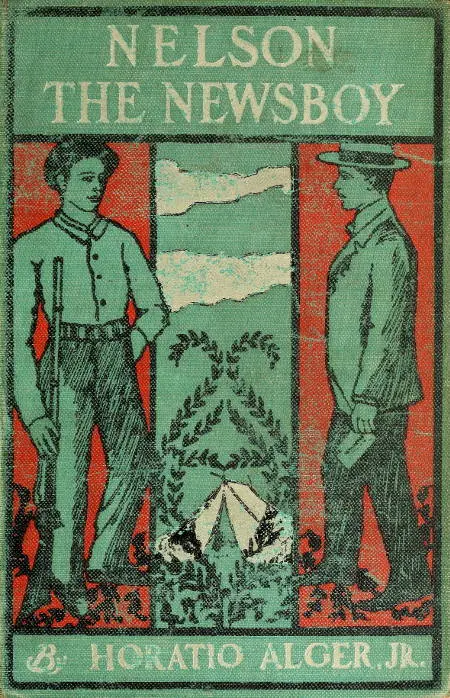
"Nelson the Newsboy; Or, Afloat in New York" by Horatio Alger, Jr. is a novel written in the early 20th century. This work follows the journey of a young boy named Nelson, who, of unknown parentage, navigates the challenging streets of New York City. Starting his life as a newsboy, he is faced with temptations and hardships, yet he strives to maintain his integrity and eventually aspires for a better life. At the start of the book, we are introduced to Nelson, a fifteen-year-old newsboy struggling to make a living in New York's bustling environment. He faces challenges from other street kids and contemplates questions about his identity, raised by his mysterious upbringing under the care of Sam Pepper, a morally questionable character. An unexpected encounter with a wealthy gentleman saves the man from being run over and earns Nelson a surprising two dollars, a significant amount for him. However, this small victory is countered when he is later robbed of his savings by a bully named Billy Darnley. As Nelson grapples with these events and his desire to learn more about his past, he stands at the precipice of a larger adventure in the vibrant yet perilous world of New York City.
Introduction adapted from the source catalogue; source summaries may be automatically generated.
Free to read · English · 49,747 words · No account needed
MAKE TIME FOR A GOOD BOOK
On by default. Untick to stop anonymous reading totals. Each page counts after 10 seconds in view. How this works.
Anonymous counting is on unless you have switched it off.
"Gertrude, you are making a great mistake," said Homer Bulson, after a pause broken only by the sobbing of the girl.
"Please don't speak to me, Homer," she answered. "I have heard enough
for one day."
"You have no right to blacken my character," he said with assumed
dignity.
"Uncle Mark forced me to speak the truth."
"It was not the truth. But let that pass. Why didn't you tell him you
would marry me?"
"Because I don't want to marry you."
"But you might let him think that you----"
"I am above practicing a deception upon him, Homer."
"Oh, you aren't a saint!" he sneered. "I know why you are so loving to him--you thought to get all of his money. Now you are trying to blacken my character, so that you may get all of it, anyway. But the game won't work."
"I told him what I did simply to let him know why I didn't care to marry
you, Cousin Homer."
"And why are you so opposed to me?"
"I do not like your ways. Isn't that enough? As for Uncle Mark's money, I trust he will live a long time to enjoy it himself."
"Uncle Mark can live but a short while longer. Anybody can see that. He
is exceedingly feeble."
"You seem to wish his death," replied Gertrude sharply.
"I? No, indeed; I hope he does live. Haven't I done what I could for him--giving him wines and the like? And he has the best of doctors--on my recommendation."
"I don't think the wine you gave him is doing any good. He seems to become weaker after it, instead of stronger."
"Bosh! If he hadn't the wine, he would collapse utterly."
At this the girl merely shrugged her shoulders.
This was not the first time that Homer Bulson and herself had quarreled over the care their uncle should have. To the girl the retired merchant seemed to grow unexpectedly weak in spite of all she could do. The doctor, too, was baffled, and said he had never come across such a strange case before.
"If you won't marry me, you shall not turn Uncle Mark against me," went on Bulson sternly. "If you try it, you will repent it as long as you live."
So speaking, he strode from the room and made after Mark Horton, who had gone to his private apartment on the second floor.
He found the retired merchant resting in an easy-chair by the window,
his head bowed low.
"Cheer up, uncle," he said, placing his hand on the other's shoulder. "Let me pour you a glass of wine."
Your reading position is saved on this browser. Take it to another device with a library code. Reading pages adapt to text, rather than matching a printed edition.
Edward Stratemeyer

Edward Stratemeyer
Edward Stratemeyer

Edward Stratemeyer
BEHIND THE BOOK
This eBook is for the use of anyone anywhere in the United States and most other parts of the world at no cost and with almost no restrictions whatsoever. You may copy it, give it away or re-use it under the terms of the Project Gutenberg License included with this eBook or online at www.gutenberg.org. If you are not located in the United States, you will have to check the laws of the country where you are located before using this eBook. Read the source licence.
The original source file, including credits and licence, is retained by this library. Request an original-format copy at no charge. Please include the book title and Project Gutenberg identifier #54389.
KEEP YOUR CURIOSITY GOING
Coulson Kernahan

Maurice Baring
Frances Wright
Cécile Tormay

Frederic Jesup Stimson

W. H. P. (William Henry Pope) Jarvis