THE CLASSIC COLLECTION✦A dead man’s diaryCLASSIC FREE BOOKS
A dead man’s diary
Coulson Kernahan
THE CLASSIC COLLECTION · 1912
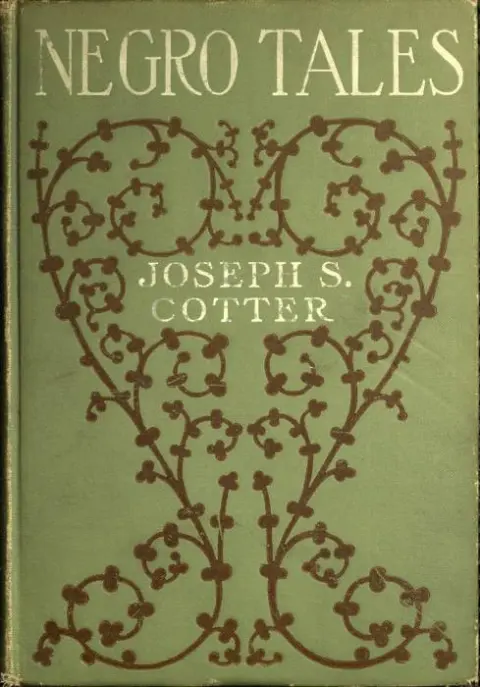
"Negro Tales" by Joseph S. Cotter is a collection of short stories written in the early 20th century. The work explores themes of life, struggle, and the complexity of human relationships within the African American experience, often through the lens of humor and tragedy. The opening narratives introduce a variety of characters dealing with their circumstances, highlighting social issues and the interplay between personal flaws and societal expectations. At the start of the collection, the first story, "Caleb," sets a somber and critical tone by depicting a family dynamic marred by conflict and tragedy. As the conversation turns dark between Caleb and his parents, his father's unexpected death unfolds dramatically, leaving his mother to grapple with grief and questions about responsibility. The narrative quickly escalates, revealing Caleb's morally ambiguous character, deep disdain for others’ judgments, and tendency towards self-serving attitudes that lead to further disintegration of familial bonds. Meanwhile, subsequent snippets hint at other characters facing similar dilemmas, establishing a framework for the exploration of themes like poverty, betrayal, and the search for dignity amidst life's adversities.
Introduction adapted from the source catalogue; source summaries may be automatically generated.
Free to read · English · 28,318 words · No account needed
MAKE TIME FOR A GOOD BOOK
On by default. Untick to stop anonymous reading totals. Each page counts after 10 seconds in view. How this works.
Anonymous counting is on unless you have switched it off.
Agnes, in a rage at this interruption, turned and threw the rolling-pin at the washerwoman, but she was at a safe distance.
"Tesney, Agnes said that she would explain this whole affair to you."
"Missus Wakely, you has knowed ole Agnes er long, long time, an' jes' as sho' as you an' me is gwine ter de same heaben, jes' so sho' I wus gwine ter tell dis chile de whole truth, but she kep' on makin' de lookin'-glass talk erbout her face an' her haih dat I jes' thought I'd fling out er little hint an' lay low."
"I knew your father, Tesney; and, as Agnes says, he was a negro."
"I reckons you'll beliebe now," shouted Agnes. "De white folks done said
so."
"Heah is yo' rollin'-pin," said the washerwoman, as she paused at the
window on her return.
"Hand it heah," demanded Agnes.
"I will when you is ob er sweet temper," answered the washerwoman.
"Please to explain about my father and the ring."
"Your father, Tesney," Mrs. Wakely went on, "was reared in Mr. Bankner's family. He married a woman whom none of us, save Agnes, ever knew. Shortly after the death of your mother, he killed a man in self-defense. Mr. Bankner's people, knowing the circumstances, furnished your father money with which to escape. Mr. Bankner, a few weeks before he gave me the ring, saw your father and told him of you. Your father bought the ring, had the inscription put in it, and intended to bring it to you himself. However, at the request of Mr. Bankner he had returned to the scene of the killing for trial, and was mobbed. Mr. Bankner secured the ring before his death, and gave it to me for you. Now, as we are to leave for the West within a year, Mr. Bankner would like to have you serve in his family. He holds himself somewhat responsible for your father's death, and would like to help you. I would have told you this before, but Agnes asked me to leave it to her."
Mrs. Wakely now left the room, giving Agnes a stern look on her way out.
"Aunt Agnes," sobbed Tesney, "I have been deceived as to my father, and
maybe as to my mother."
"Has you bin deceibed in me too, chile?"
"Yes."
"Den ma'ry George, an' be deceibed in him."
"It cannot be, Aunt Agnes."
"Now I'll say de res' ob dat speech I tol' you erbout. You may ma'ry George yit. Mr. Bankner may heah from dis. He shall heah from it. Do you think he'd ever let you stay in his house den?"
Tesney left the room in silence.
Your reading position is saved on this browser. Take it to another device with a library code. Reading pages adapt to text, rather than matching a printed edition.
BEHIND THE BOOK
This eBook is for the use of anyone anywhere in the United States and most other parts of the world at no cost and with almost no restrictions whatsoever. You may copy it, give it away or re-use it under the terms of the Project Gutenberg License included with this eBook or online at www.gutenberg.org. If you are not located in the United States, you will have to check the laws of the country where you are located before using this eBook. Read the source licence.
The original source file, including credits and licence, is retained by this library. Request an original-format copy at no charge. Please include the book title and Project Gutenberg identifier #41590.
KEEP YOUR CURIOSITY GOING
Coulson Kernahan

Maurice Baring
Frances Wright
Cécile Tormay

Frederic Jesup Stimson

W. H. P. (William Henry Pope) Jarvis