THE CLASSIC COLLECTION✦A dead man’s diaryCLASSIC FREE BOOKS
A dead man’s diary
Coulson Kernahan
THE CLASSIC COLLECTION · 1912
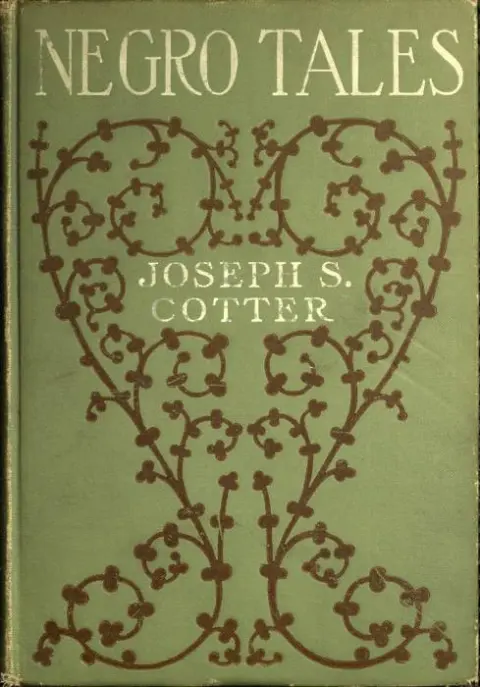
"Negro Tales" by Joseph S. Cotter is a collection of short stories written in the early 20th century. The work explores themes of life, struggle, and the complexity of human relationships within the African American experience, often through the lens of humor and tragedy. The opening narratives introduce a variety of characters dealing with their circumstances, highlighting social issues and the interplay between personal flaws and societal expectations. At the start of the collection, the first story, "Caleb," sets a somber and critical tone by depicting a family dynamic marred by conflict and tragedy. As the conversation turns dark between Caleb and his parents, his father's unexpected death unfolds dramatically, leaving his mother to grapple with grief and questions about responsibility. The narrative quickly escalates, revealing Caleb's morally ambiguous character, deep disdain for others’ judgments, and tendency towards self-serving attitudes that lead to further disintegration of familial bonds. Meanwhile, subsequent snippets hint at other characters facing similar dilemmas, establishing a framework for the exploration of themes like poverty, betrayal, and the search for dignity amidst life's adversities.
Introduction adapted from the source catalogue; source summaries may be automatically generated.
Free to read · English · 28,318 words · No account needed
MAKE TIME FOR A GOOD BOOK
On by default. Untick to stop anonymous reading totals. Each page counts after 10 seconds in view. How this works.
Anonymous counting is on unless you have switched it off.
"Now, I'se gwine ter make you er speech, you ha'f-white nigger. You thinks bekase yo' face ain't whut you calls raal black, an' bekase yo' haih ain't smack-dab ter yo' haid, an' bekase---- Oh, Tesney, honey chile, don't cry dat way. Aunt Agnes wus jes' er foolin'. I takes it all back. Let me kiss you all ober de face. Dere now. I knows dat you's in good humor. You sees, chile, how Aunt Agnes kin hurt yo' feelin's. You better be George's wife den hab yo' feelin's hurt all de time."
"It cannot be, Aunt Agnes. Don't ask me any more."
"Now, I'll say de res' ob my speech. It'll not be er speech ob wuds, nuther. It'll be one ob acts. It'll hit you hard. It'll make you 'shamed ob yo-self. It'll dribe yo' friends ter turn dey backs erpon you. It'll put you out ob doors. It'll make you say: 'I'se er fool--er fool.' It'll hit you hard--hard."
Agnes stopped to breathe. Mrs. Wakely entered the kitchen. Tesney was
looking at the ring.
"Tesney," said Agnes, "yo' mother wus er ooman nearly white, an' yo'
father wus er nigger man."
"My father!" gasped Tesney. "I have always learned that my father
was----"
"Yo' father wus whut I tells you, chile."
"What have you always told me?"
"Listen! I tells you de facts. I tells you de facts."
"Aunt Agnes!" screamed Tesney.
"Tesney," said Mrs. Wakely; "that information seems to trouble you."
"Ha! ha! De chile! Ha! ha!" Agnes stopped to hold her sides.
"Why, Agnes, what is the matter?" asked Mrs. Wakely.
"Ha! ha! De chile thinks de man whut gibed you dat ring fur her is her
father."
"Do you, Tesney?" asked Mrs. Wakely sharply.
Tesney put the ring on her finger and remained silent.
"Speak, Tesney! The matter is serious," demanded Mrs. Wakely.
"I do," answered Tesney. "Did not Mr. Bankner give you the ring for me?"
"He did."
"Did you not say that the ring was sent to me by my father?"
"Your father sent it to you; but another brought it to me."
"Is you sma't 'nough ter see de differunce between de sendin' an' de bringin' ob er thing, chile?"
Tesney looked at Mrs. Wakely and nodded.
"Have you not deceived yourself?"
"I have in part. Aunt Agnes, here----"
"De chile lies! De chile lies! Mrs. Wakely, de chile----!"
"Be quiet, Agnes," demanded Mrs. Wakely. "You are too fat to become eloquent with ease and safety."
"She better be," said the washerwoman, who happened to stop at the window a few seconds. "All de coffins erbout heah is fur heabenly-sized people."
Your reading position is saved on this browser. Take it to another device with a library code. Reading pages adapt to text, rather than matching a printed edition.
BEHIND THE BOOK
This eBook is for the use of anyone anywhere in the United States and most other parts of the world at no cost and with almost no restrictions whatsoever. You may copy it, give it away or re-use it under the terms of the Project Gutenberg License included with this eBook or online at www.gutenberg.org. If you are not located in the United States, you will have to check the laws of the country where you are located before using this eBook. Read the source licence.
The original source file, including credits and licence, is retained by this library. Request an original-format copy at no charge. Please include the book title and Project Gutenberg identifier #41590.
KEEP YOUR CURIOSITY GOING
Coulson Kernahan

Maurice Baring
Frances Wright
Cécile Tormay

Frederic Jesup Stimson

W. H. P. (William Henry Pope) Jarvis