THE CLASSIC COLLECTION✦A dead man’s diaryCLASSIC FREE BOOKS
A dead man’s diary
Coulson Kernahan
THE CLASSIC COLLECTION · 1912
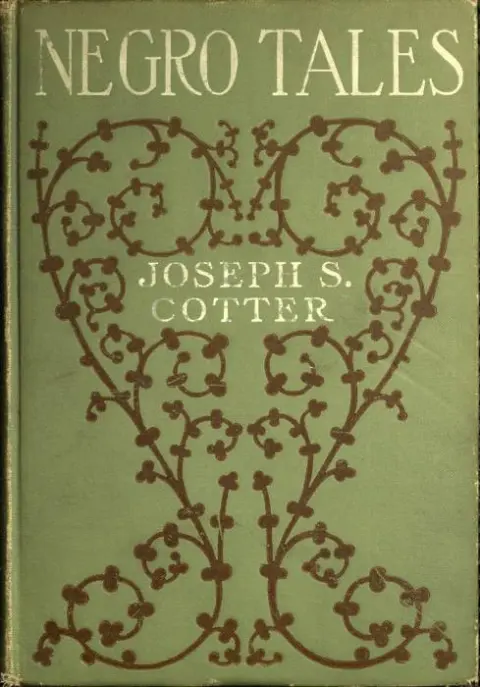
"Negro Tales" by Joseph S. Cotter is a collection of short stories written in the early 20th century. The work explores themes of life, struggle, and the complexity of human relationships within the African American experience, often through the lens of humor and tragedy. The opening narratives introduce a variety of characters dealing with their circumstances, highlighting social issues and the interplay between personal flaws and societal expectations. At the start of the collection, the first story, "Caleb," sets a somber and critical tone by depicting a family dynamic marred by conflict and tragedy. As the conversation turns dark between Caleb and his parents, his father's unexpected death unfolds dramatically, leaving his mother to grapple with grief and questions about responsibility. The narrative quickly escalates, revealing Caleb's morally ambiguous character, deep disdain for others’ judgments, and tendency towards self-serving attitudes that lead to further disintegration of familial bonds. Meanwhile, subsequent snippets hint at other characters facing similar dilemmas, establishing a framework for the exploration of themes like poverty, betrayal, and the search for dignity amidst life's adversities.
Introduction adapted from the source catalogue; source summaries may be automatically generated.
Free to read · English · 28,318 words · No account needed
MAKE TIME FOR A GOOD BOOK
On by default. Untick to stop anonymous reading totals. Each page counts after 10 seconds in view. How this works.
Anonymous counting is on unless you have switched it off.
"My mother and father were married, madam."
"Your mother and her husband were married."
"Madam, I came in the interest of your child's education."
"You are a liar from the roots of your hair to your toe-nails. You came to pry into my private life and to take note of my mental stock. You may proceed, sir."
"I haven't time to stay."
"You have a sufficient supply with which to go."
"If you were a lady, I would say prate on."
"If you were a merchant, I would say speak tersely, weigh justly, and keep ever in mind a marble monument.
"If you were a poet I would say tear out and fling to the crowd as much of your heart as you would have the crowd return. If you were a philosopher I would say weaken not your philosophy with wit, nor weigh down your wit with philosophy. Philosophy and wit are good neighbors, but indifferent twins. Since you are a fool, I will simply say all remedies have failed, and you are happy and safe in your ancient calling."
Professor Brandon pulled his mustache a few seconds. He then said: "For your peace of mind, I will go."
Rodney entered with a pitcher of water, and Mary with a big black
bottle.
"Have water, professor?" asked Rodney. Here Mary pretended to drink from the bottle. The professor took the pitcher and poured some of the water into the glass into which the ladies had spat some time before. He held it at some distance from him and said: "Woman's tedious, but pure water is wholesome."
"Professor!" roared Rodney's mother.
"You are just and polite, at last," calmly observed he.
"What's in the glass, sir? Examine the glass."
"That is best done in the dish-water."
The professor was about to drink it when he saw the spittle.
"You did this, boy?"
"I was holding Mary's doll, professor," gasped Rodney.
"Was it you, girl?"
"I was holding Rodney's cat and your big black bottle, professor," slyly
replied Mary.
"You, madam?"
"Be calm, professor. That is the compliments of your fine ladies, without whom schoolteaching would be unbearable."
"They spat into this glass?"
"No, professor," retorted Mary. "Rodney said they puked into it."
"They had a mighty big stomach full of corn, anyway," put in Rodney.
The professor dropped the glass and stepped out of the door, seemingly very uneasy about the stomach.
"Professor," called Rodney's mother.
He stopped and grunted.
"Your attitude is undignified, sir."
He started to answer, but his mouth was too full. Rodney's mother walked to the door backwards and closed it.
"You did that, Mary," said Rodney.
"How?" retorted Mary.
Your reading position is saved on this browser. Take it to another device with a library code. Reading pages adapt to text, rather than matching a printed edition.
BEHIND THE BOOK
This eBook is for the use of anyone anywhere in the United States and most other parts of the world at no cost and with almost no restrictions whatsoever. You may copy it, give it away or re-use it under the terms of the Project Gutenberg License included with this eBook or online at www.gutenberg.org. If you are not located in the United States, you will have to check the laws of the country where you are located before using this eBook. Read the source licence.
The original source file, including credits and licence, is retained by this library. Request an original-format copy at no charge. Please include the book title and Project Gutenberg identifier #41590.
KEEP YOUR CURIOSITY GOING
Coulson Kernahan

Maurice Baring
Frances Wright
Cécile Tormay

Frederic Jesup Stimson

W. H. P. (William Henry Pope) Jarvis