THE CLASSIC COLLECTION✦A dead man’s diaryCLASSIC FREE BOOKS
A dead man’s diary
Coulson Kernahan
THE CLASSIC COLLECTION · 1912
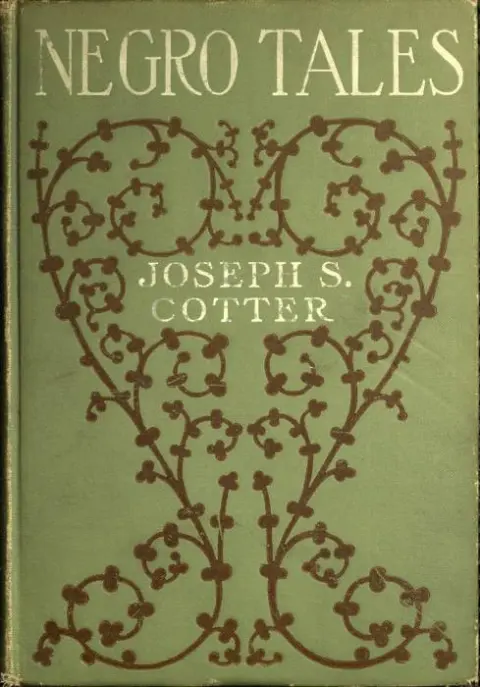
"Negro Tales" by Joseph S. Cotter is a collection of short stories written in the early 20th century. The work explores themes of life, struggle, and the complexity of human relationships within the African American experience, often through the lens of humor and tragedy. The opening narratives introduce a variety of characters dealing with their circumstances, highlighting social issues and the interplay between personal flaws and societal expectations. At the start of the collection, the first story, "Caleb," sets a somber and critical tone by depicting a family dynamic marred by conflict and tragedy. As the conversation turns dark between Caleb and his parents, his father's unexpected death unfolds dramatically, leaving his mother to grapple with grief and questions about responsibility. The narrative quickly escalates, revealing Caleb's morally ambiguous character, deep disdain for others’ judgments, and tendency towards self-serving attitudes that lead to further disintegration of familial bonds. Meanwhile, subsequent snippets hint at other characters facing similar dilemmas, establishing a framework for the exploration of themes like poverty, betrayal, and the search for dignity amidst life's adversities.
Introduction adapted from the source catalogue; source summaries may be automatically generated.
Free to read · English · 28,318 words · No account needed
MAKE TIME FOR A GOOD BOOK
On by default. Untick to stop anonymous reading totals. Each page counts after 10 seconds in view. How this works.
Anonymous counting is on unless you have switched it off.
"Let's see," said Rodney, as he ran to the door and peeped. Mary
followed and stood behind him.
"Ha! ha! let it flow right along," came from without.
Rodney held up his cat for a bottle and made a gurgling sound. Mary held up her doll and imitated him.
The professor now parted from the ladies and approached Rodney's home. As he walked into the room Rodney and Mary sat upon the floor and exchanged the cat and doll.
"I am Professor Brandon," said he, pulling his mustache.
Rodney went through the motion of pulling his, and Mary pulled the
cat's.
"'Tis delightful to meet ladies," said he.
Rodney's mother nodded.
"Schoolteaching would be unbearable were it not for meeting ladies."
"Must you have the big black bottle every time?" asked Mary.
Here Rodney held up the doll and made a drinking noise.
"These young ones need curbing," said the professor.
"So do appetites, sir," replied Rodney's mother.
"I am a schoolteacher, madam," roared he.
"I am a washerwoman, sir," was her reply.
"Very well, I'll give you a job. What can you wash?"
"Shirts."
"What else?"
"Drawers."
"What else?"
"Socks."
"What else?"
"Diapers, sir."
"You are brutally plain, madam."
"You are devilishly inconsiderate and inquisitive, sir."
Both children emphasized the remark by beating upon the floor.
"To my business," said the professor. "This boy should be at school.
Where is his father?"
"I ask you the same question, sir."
"Madam, that leads me to suspect."
"What does 'suspect' mean, professor?" asked Mary.
"It means--the Latin of it is--let's see----"
The professor stopped to pull his mustache.
"It means to dream out something and swear it's true," spoke up Rodney's
mother.
"Madam, I want to talk to you about this boy's schooling. Have you any
drinking water?"
"No. Rodney, a bucket of water."
"A bucket of water, Rodney. Go fast and return slowly," put in the
professor.
Rodney started briskly, but Mary held him back and looked saucily at the
professor.
"Let's bring back the bottle," laughed she, as both ran out.
"First, madam, I am a professor. I hold a diploma from a college."
"You carry it with you?"
"Sometimes."
"You have shown it to leading white men?"
"Yes."
"Well, many a good-meaning white man has been deceived by a college diploma in the hands of a negro."
"You presume too far on your limited knowledge."
"You travel too far on your flimsy diploma."
"Secondly, madam, I would elevate the morals of the race."
"Very good, sir. How?"
"I would begin by cutting off from society every illegitimate negro
child."
"You would, in so doing, train your thumb and finger to pinch your own
nose."
Your reading position is saved on this browser. Take it to another device with a library code. Reading pages adapt to text, rather than matching a printed edition.
BEHIND THE BOOK
This eBook is for the use of anyone anywhere in the United States and most other parts of the world at no cost and with almost no restrictions whatsoever. You may copy it, give it away or re-use it under the terms of the Project Gutenberg License included with this eBook or online at www.gutenberg.org. If you are not located in the United States, you will have to check the laws of the country where you are located before using this eBook. Read the source licence.
The original source file, including credits and licence, is retained by this library. Request an original-format copy at no charge. Please include the book title and Project Gutenberg identifier #41590.
KEEP YOUR CURIOSITY GOING
Coulson Kernahan

Maurice Baring
Frances Wright
Cécile Tormay

Frederic Jesup Stimson

W. H. P. (William Henry Pope) Jarvis