THE CLASSIC COLLECTION✦An outlaw’s diary: the CommuneCLASSIC FREE BOOKS
An outlaw’s diary: the Commune
Cécile Tormay
THE CLASSIC COLLECTION · 1898
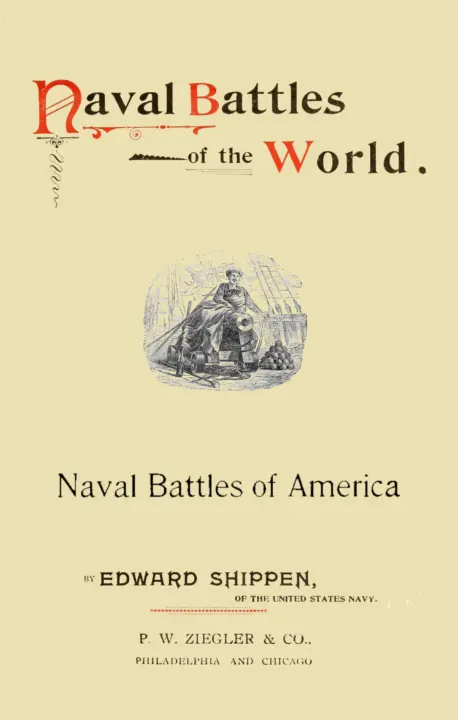
"Naval Battles of the World" by Edward Shippen is a historical account written in the late 19th century. This work provides a comprehensive examination of significant naval battles throughout history, exploring their causes and consequences. Shippen aims to present these events in an accessible manner, shedding light on the pivotal role of naval power in shaping global affairs. The opening portion of the text lays a foundational understanding of the significance of naval battles, introducing the necessity of a navy for nations with extensive coastlines. It highlights early misconceptions about the sea, emphasizing how ancient civilizations displayed a mix of reverence and fear toward maritime navigation. Shippen discusses the advancements in naval technology and tactics over the centuries, mentioning notable events and figures that shaped naval history. By evoking examples ranging from the ancient Egyptians and Greeks to the Romans and beyond, he sets the stage for a detailed exploration of various decisive conflicts at sea.
Introduction adapted from the source catalogue; source summaries may be automatically generated.
Free to read · English · 255,960 words · No account needed
MAKE TIME FOR A GOOD BOOK
On by default. Untick to stop anonymous reading totals. Each page counts after 10 seconds in view. How this works.
Anonymous counting is on unless you have switched it off.
To the general reader these details of manœuvres, (which precede any great battle, whether on sea or land), may appear tedious, but it is absolutely necessary to a description of this great event, and could not be omitted by any one who tried to give an account of the battle.
At six in the morning the flag-ship Victory had a view of the combined fleet, bearing about east by south, distant, as has been said in the account of the manœuvres of the Franco-Spanish fleet, about ten or twelve miles.
At this time Nelson was about twenty miles from Cape Trafalgar, which
bore east by south.
Soon after this the English fleet, by signal, formed in two columns, in the order of sailing, and bore up to the eastward, under all sail.
This was according to Nelson’s previous orders; to avoid delay and inconvenience of forming line-of-battle in the usual manner.
The near approach of the British fleet rendering an action unavoidable, the French Admiral, at 8.30 in the morning, made signal for his ships to wear together, and form line, in close order, on the port tack.
This brought the port of Cadiz on his lee bow.
It was fully ten in the morning before this manœuvre, involving so many great ships, and such a long line, was completed; and even then, from the light and flawy wind, the line was not very regularly formed.
Accounts differ as to how the ships were disposed in the Allied line.
Lord Collingwood said that the French ships had an unusual arrangement. They formed a crescent, convexing to leeward, “so that, in leading down their centre, I had both their van and rear abaft the beam. Before the fire opened, every alternate ship was about a cable’s length to windward of her second ahead and astern, forming a kind of double line, and appeared, when on their beam, to leave very little interval between them, and this without crowding their ships.”
The French and English accounts and plans of the battle are all rather incompatible with the facts of the action, as developed; and were all, most probably, drawn from memory and influenced by impressions.
Lord Collingwood’s is, probably, the only simple and straightforward
one.
Owing to the lightness of the wind, the English fleet, after bearing up, made very slow progress toward their enemy. These great two and three-deckers were ponderous affairs, and required a strong breeze to move them.
Your reading position is saved on this browser. Take it to another device with a library code. Reading pages adapt to text, rather than matching a printed edition.
BEHIND THE BOOK
This eBook is for the use of anyone anywhere in the United States and most other parts of the world at no cost and with almost no restrictions whatsoever. You may copy it, give it away or re-use it under the terms of the Project Gutenberg License included with this eBook or online at www.gutenberg.org. If you are not located in the United States, you will have to check the laws of the country where you are located before using this eBook. Read the source licence.
The original source file, including credits and licence, is retained by this library. Request an original-format copy at no charge. Please include the book title and Project Gutenberg identifier #73068.
KEEP YOUR CURIOSITY GOING
Cécile Tormay

Moritz Busch
John L. Ransom
Frances Wright
Cécile Tormay

Mabel Potter Daggett