THE CLASSIC COLLECTION✦An outlaw’s diary: the CommuneCLASSIC FREE BOOKS
An outlaw’s diary: the Commune
Cécile Tormay
THE CLASSIC COLLECTION · 1898
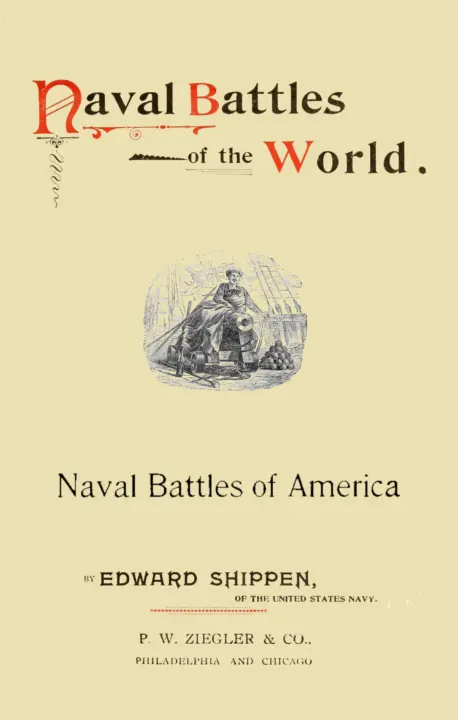
"Naval Battles of the World" by Edward Shippen is a historical account written in the late 19th century. This work provides a comprehensive examination of significant naval battles throughout history, exploring their causes and consequences. Shippen aims to present these events in an accessible manner, shedding light on the pivotal role of naval power in shaping global affairs. The opening portion of the text lays a foundational understanding of the significance of naval battles, introducing the necessity of a navy for nations with extensive coastlines. It highlights early misconceptions about the sea, emphasizing how ancient civilizations displayed a mix of reverence and fear toward maritime navigation. Shippen discusses the advancements in naval technology and tactics over the centuries, mentioning notable events and figures that shaped naval history. By evoking examples ranging from the ancient Egyptians and Greeks to the Romans and beyond, he sets the stage for a detailed exploration of various decisive conflicts at sea.
Introduction adapted from the source catalogue; source summaries may be automatically generated.
Free to read · English · 255,960 words · No account needed
MAKE TIME FOR A GOOD BOOK
On by default. Untick to stop anonymous reading totals. Each page counts after 10 seconds in view. How this works.
Anonymous counting is on unless you have switched it off.
On the 21st, a little before daylight, the French Admiral, abandoning his plan of forming line-of-battle of twenty-one ships (as the enemy were now to windward, and of nearly equal force to himself), ordered the three columns, composed of the twenty-one ships, without regard to priority of rank among them, to form in close line-of-battle, on the starboard tack, upon the leewardmost division of twelve ships, and then to steer southeast. The manœuvre executed, daylight found the two fleets fairly in sight of each other, for the first time. The centre of the Franco-Spanish fleet bearing about east by south of the centre of the British, and distant about ten miles.
The wind was then light, from west-northwest, and a heavy swell setting
in from the westward.
Let us now look at the movements of the British fleet during the period just before the momentous battle now impending.
About half-past nine A. M., on the 19th, while the British fleet was lying to, fifty miles west-southwest from Cadiz, the line-of-battle ships which formed the cordon of communication between the fleet and the reconnoitring frigates, inshore, repeated the signal that the enemy was coming out of port.
Lord Nelson immediately made sail to the southeast with light breezes, mostly from south-southwest. At three P. M. the signal was repeated, that the enemy was at sea.
That afternoon Lord Nelson directed that the fleet should observe the motions of his flag-ship, the Victory, during the night, and that the best sailing ships should stand ahead, and steer for the mouth of the Straits.
On the 20th of October, at daylight, the English found themselves near the entrance of the Straits, but saw nothing of their enemy.
Thereupon the fleet wore, and made sail to the northwest, with a fresh breeze at south-southwest.
At seven A. M., one of the frigates signalled the Allied fleet, bearing north; and by noon the Victory and the English fleet were within twenty-five miles of Cadiz, standing to the west-northwest, on the port tack.
Early in the afternoon they were taken aback, by a breeze from the west-northwest, and at 4 P. M. wore, and again came to, on the port tack, steering north.
It was now telegraphed that the Allied fleet seemed determined to go to the westward, and Lord Nelson replied that he relied on the frigates keeping them in sight during the night. The frigates then signalled “thirty-one sail of the enemy, bearing north-northeast.”
When night fell the British fleet wore, and stood to the southwest, and at 4 A. M. of the 21st wore again, and steered north by east, under easy sail.
Your reading position is saved on this browser. Take it to another device with a library code. Reading pages adapt to text, rather than matching a printed edition.
BEHIND THE BOOK
This eBook is for the use of anyone anywhere in the United States and most other parts of the world at no cost and with almost no restrictions whatsoever. You may copy it, give it away or re-use it under the terms of the Project Gutenberg License included with this eBook or online at www.gutenberg.org. If you are not located in the United States, you will have to check the laws of the country where you are located before using this eBook. Read the source licence.
The original source file, including credits and licence, is retained by this library. Request an original-format copy at no charge. Please include the book title and Project Gutenberg identifier #73068.
KEEP YOUR CURIOSITY GOING
Cécile Tormay

Moritz Busch
John L. Ransom
Frances Wright
Cécile Tormay

Mabel Potter Daggett