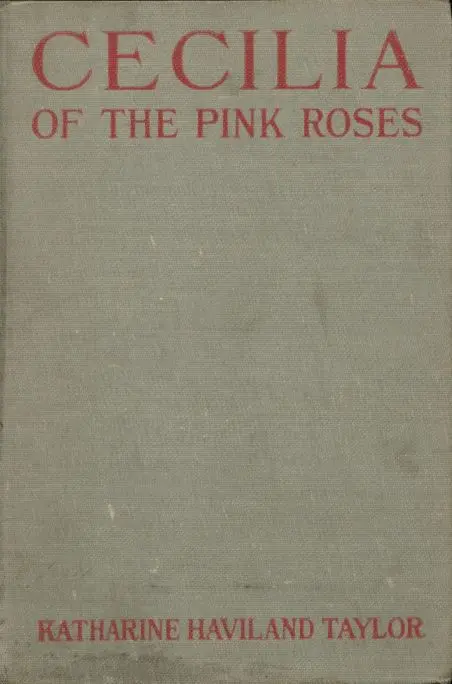
Cecilia of the Pink Roses
Katharine Haviland-Taylor
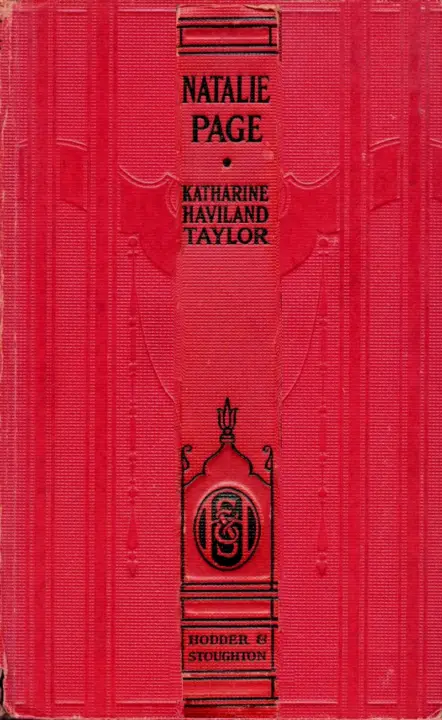
THE CLASSIC COLLECTION · 1921
"Natalie Page" by Katharine Haviland-Taylor is a novel written in the early 20th century. The story follows Natalie Page, a spirited and tomboyish sixteen-year-old girl, as she navigates the complexities of life after moving from her small hometown to live with her relatives in New York City. The narrative explores themes of family, identity, and the struggle between personal desires and societal expectations, particularly for young women during that time. The opening of the story introduces Natalie in a reflective mood as she recalls poignant moments from her childhood, particularly surrounding the loss of her mother. As she transfers to her uncle Frank Randolph's home, it is clear she possesses a free-spirited nature that leads her into trouble, such as when she decides to bicycle down courthouse steps. As the first chapter unfolds, we find her wrestling with impending changes and the pressure of conformity symbolized by her family's expectations for her future. Natalie's internal conflict is compounded by her aunt’s intentions to polish her rough edges and prepare her for a more refined life, setting the stage for the adventures and challenges she will face in her new urban environment.
Introduction adapted from the source catalogue; source summaries may be automatically generated.
Free to read · English · 67,690 words · No account needed
MAKE TIME FOR A GOOD BOOK
On by default. Untick to stop anonymous reading totals. Each page counts after 10 seconds in view. How this works.
Anonymous counting is on unless you have switched it off.
“She did it,” said Evelyn shrilly, as I stepped through the door. “I saw her carrying them. She even had the assurance to smile at me and wave! And as to this”--she waved the note--“that is only what I would expect from a prying, thieving chit who has had no upbringing, and who is suddenly thrown among people of cultivation. I----” She stopped, looked at the empty box, and choked.
Aunt Penelope, who was looking awfully baffled, stooped to pick up one of the stockings that had fallen from the box. “What is this?” she asked in a sort of vacant tone, and the question, and all that tangled in its answer, evidently enraged Evelyn, for she almost exploded with rage.
“What is it?” she echoed. “What is it! Ask her!” She pointed at me. “Ever since she came,” she went on, “I have been bothered. Amy never thought of doing a thing until she appeared. Amy was always----”
But she stopped, for at that moment Amy came in and diverted the talk.
“Do you know anything about this, Amy?” asked Aunt Penelope.
Amy looked at the box and then at me. “No,” she answered.
“Why should she?” asked Evelyn. “I told you I saw the violets. I suppose she took them to Mr. Kempwood; she’s insane about him. . . . Silly little thing! . . . I hope you will make it understood, mother, that if another thing like this happens she will be shipped to her backwoods town--to stay.”
“I didn’t do it,” I said, but my voice shook, and even to myself it did not sound convincing.
“Didn’t do it!” said Evelyn, and she laughed unpleasantly.
“Where did you get the violets?” asked Aunt Penelope.
I told her, and I looked at Amy, but her face was hard, and she answered none of the appeal I sent her for help. And at that moment I began to hate her for a cheat.
“She has helped herself to my bracelet too,” Evelyn accused. “For two days it was gone, and when it came back there was a dent in it.”
“I didn’t,” I whispered. “I honestly didn’t.” But no one believed me.
“Have you any ideas about who made off with the violets?” asked aunt. “Who took the bracelet?”
I said I had. And she asked who it was, and I said I’d rather not tell. Then there was a deep, unpleasant silence, and during this everyone looked at me.
“We will have to have a very serious talk,” Aunt Penelope said to me. “I think, Natalie, you have allowed yourself to forget what you owe us, the debt our hospitality has laid on you.”
Your reading position is saved on this browser. Take it to another device with a library code. Reading pages adapt to text, rather than matching a printed edition.
Katharine Haviland-Taylor
BEHIND THE BOOK
This eBook is for the use of anyone anywhere in the United States and most other parts of the world at no cost and with almost no restrictions whatsoever. You may copy it, give it away or re-use it under the terms of the Project Gutenberg License included with this eBook or online at www.gutenberg.org. If you are not located in the United States, you will have to check the laws of the country where you are located before using this eBook. Read the source licence.
The original source file, including credits and licence, is retained by this library. Request an original-format copy at no charge. Please include the book title and Project Gutenberg identifier #59902.
KEEP YOUR CURIOSITY GOING
Coulson Kernahan

Maurice Baring
Frances Wright
Cécile Tormay

Frederic Jesup Stimson

W. H. P. (William Henry Pope) Jarvis