THE CLASSIC COLLECTION✦An outlaw’s diary: the CommuneCLASSIC FREE BOOKS
An outlaw’s diary: the Commune
Cécile Tormay
THE CLASSIC COLLECTION · 1904
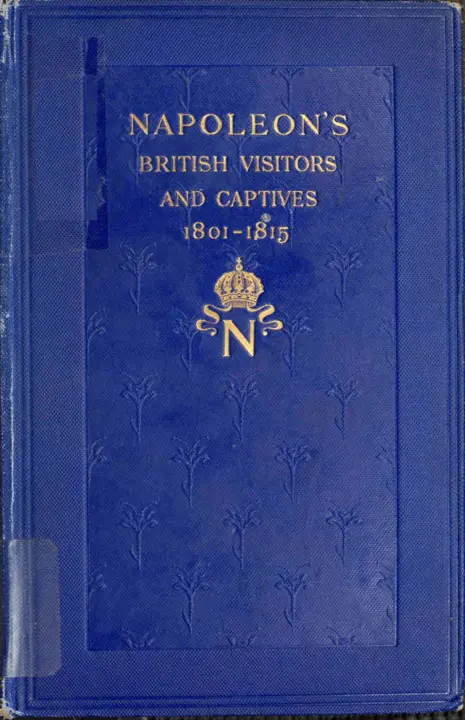
"Napoleon's British Visitors and Captives, 1801-1815" by John Goldworth Alger is a historical account written in the early 20th century. The book explores the interactions and experiences of British visitors and captives in France during the tumultuous period of Napoleon's rise and reign. Alger delves into the social dynamics, political undertones, and personal stories that emerged as Englishmen navigated their relationships with French citizens amid shifting allegiances and changing circumstances. The opening of the work sets the stage for a comprehensive examination of the vast impact of the French Revolution, highlighting the notable dislocation of individuals across Europe, particularly among the French nobility and other political figures. Alger outlines how the Peace of Amiens in 1802 marked a significant uptick in British travel to France after a decade of hostilities, with numerous English visitors eager to witness the transformative atmosphere of post-revolutionary France. The introductory chapter establishes a backdrop of historical context, emphasizing the social and political exchanges that occurred not only between British visitors and French society but also amidst the hardships faced by those who found themselves unexpectedly detained under Napoleon's regime.
Introduction adapted from the source catalogue; source summaries may be automatically generated.
Free to read · English · 89,397 words · No account needed
MAKE TIME FOR A GOOD BOOK
On by default. Untick to stop anonymous reading totals. Each page counts after 10 seconds in view. How this works.
Anonymous counting is on unless you have switched it off.
Viscounts--Annesley (Viscountess), Barrington, Castlemaine, Falkland, Gosford, Maynard (Viscountess), Monck, Strangford.
Barons--Blayney, Boringdon, *Bradford, *Cahir, Carington (Baroness), Cloncurry, Coleraine, Crofton (Baroness), Grantham, *Holland, Hutchinson, Longford, *Montfort, Northwick, *Say and Sele, Stawell, *Whitworth.
Eldest sons or other successors of Peers--General George Abercromby (son of Baroness Abercromby), William Annesley (Earl of Annesley), Archibald Acheson (Viscount Gosford), Viscount Althorp (Earl Spencer), Lord Charles Beaulieu (Earl of Beaulieu), Viscount Boyle (Earl of Glasgow), Viscount Brooke (Earl of Warwick), Lord John Campbell (Duke of Argyll), John Somers Cocks (Lord Somers), Earl of Dalkeith (Duke of Buccleuch), John De Blaquiere (Lord De Blaquiere), Augustus Dillon (Viscount Dillon), Marquis of Douglas (Duke of Hamilton), Lord Duncannon (Earl of Bessborough), Sampson Eardley (Lord Eardley), Francis Henry Egerton (Earl of Bridgewater), Viscount Fincastle (Earl of Dunmore), Admiral Garlies (Earl of Galloway), Lord Gustavus Hamilton (Viscount Boyne), Viscount Hinchingbrook (Earl of Sandwich), John Hely Hutchinson (Earl of Donoughmore), Charles Kinnaird (Lord Kinnaird), Edward Lascelles (predeceased the Earl of Harewood), Viscount Loftus (Marquis of Ely), Lord Lovaine (Earl of Beverley), Viscount Maitland (Earl of Lauderdale), Viscount Mathew (Earl of Landaff), Colonel W. J. Molesworth (Viscount Molesworth), Viscount Morpeth (Earl of Carlisle), Viscount Ossulston (Earl of Tankerville), Charles Pelham (Lord Yarborough), Viscount Petersham[308] (Earl of Harrington), Lord Henry Petty (Marquis of Lansdowne), Dudley Ryder (Viscount Sandon, afterwards Earl of Harrowby), St. Andrew St. John (Lord St. John), John Scott (predeceased the Earl of Eldon), Admiral Tollemache (Countess of Dysart), John Hampden Trevor (Viscount Hampden), Charles Tufton (Earl of Thanet), Colonel John Vesey (Viscount de Vesci), John Charles Villiers (Earl of Clarendon) and Earl of Yarmouth (Marquis of Hertford). Several of these have been mentioned among actual or prospective M.P.’s. There was also Lady Ancrum, daughter-in-law of the Marquis of Lothian.
C (see p. 300)
I have been favoured by the Hon. Rollo Russell with a copy, and permission to publish it, of the letter addressed in 1868 by his father, Earl Russell, to the eminent Belgian statesman, M. Van de Weyer. A few copies were then printed for private distribution.
PEMBROKE LODGE: Nov. 28, 1868.
You wish to have some account of my visit to the First Napoleon
at Elba.
It is long since I paid that visit, and I can give you only
glimmering recollections.
I was at Florence in December 1814, with my father and his
family.
I wished very much to see Napoleon; some of my friends had been
to Elba; a cousin of mine by marriage, Mr. Whitmore, was going
there.
I was told that the season was bad, and that I should do well to put off my journey till the spring. But I determined to go then.
Your reading position is saved on this browser. Take it to another device with a library code. Reading pages adapt to text, rather than matching a printed edition.
BEHIND THE BOOK
This eBook is for the use of anyone anywhere in the United States and most other parts of the world at no cost and with almost no restrictions whatsoever. You may copy it, give it away or re-use it under the terms of the Project Gutenberg License included with this eBook or online at www.gutenberg.org. If you are not located in the United States, you will have to check the laws of the country where you are located before using this eBook. Read the source licence.
The original source file, including credits and licence, is retained by this library. Request an original-format copy at no charge. Please include the book title and Project Gutenberg identifier #70408.
KEEP YOUR CURIOSITY GOING
Cécile Tormay

Moritz Busch
John L. Ransom
Frances Wright
Cécile Tormay

Mabel Potter Daggett