THE CLASSIC COLLECTION✦An outlaw’s diary: the CommuneCLASSIC FREE BOOKS
An outlaw’s diary: the Commune
Cécile Tormay
THE CLASSIC COLLECTION · 1904
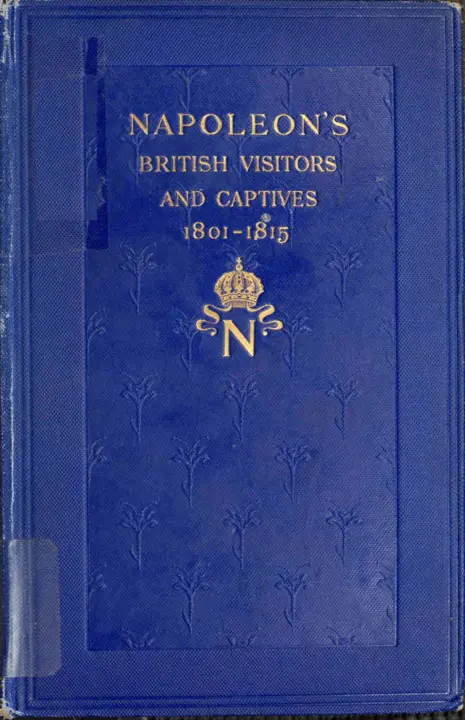
"Napoleon's British Visitors and Captives, 1801-1815" by John Goldworth Alger is a historical account written in the early 20th century. The book explores the interactions and experiences of British visitors and captives in France during the tumultuous period of Napoleon's rise and reign. Alger delves into the social dynamics, political undertones, and personal stories that emerged as Englishmen navigated their relationships with French citizens amid shifting allegiances and changing circumstances. The opening of the work sets the stage for a comprehensive examination of the vast impact of the French Revolution, highlighting the notable dislocation of individuals across Europe, particularly among the French nobility and other political figures. Alger outlines how the Peace of Amiens in 1802 marked a significant uptick in British travel to France after a decade of hostilities, with numerous English visitors eager to witness the transformative atmosphere of post-revolutionary France. The introductory chapter establishes a backdrop of historical context, emphasizing the social and political exchanges that occurred not only between British visitors and French society but also amidst the hardships faced by those who found themselves unexpectedly detained under Napoleon's regime.
Introduction adapted from the source catalogue; source summaries may be automatically generated.
Free to read · English · 89,397 words · No account needed
MAKE TIME FOR A GOOD BOOK
On by default. Untick to stop anonymous reading totals. Each page counts after 10 seconds in view. How this works.
Anonymous counting is on unless you have switched it off.
The failure of the Mackenzie negotiations must have been a terrible disappointment for captives who had already waited nine years and a half. As late as 1812 there was so little prospect of deliverance that a prisoner at Briançon amused himself by scratching a sun-dial on a slate, appending to the motto ‘Rule Britannia’ imprecations against Napoleon.[264] In April 1813, twenty-five chests of Bibles and Testaments had been sent by a flag of truce, apparently by the Bible Society, to Morlaix for distribution among the captives. They were detained at the custom-house pending a decision, and we do not hear the result,[265] but in any case the books could scarcely have reached their intended recipients.
Yet although nobody foresaw the end of the war, Napoleon seems to have shown a little more leniency, while England in 1813 sent back 8000 invalided prisoners, and agreed, moreover, to occasional exchanges even of soldiers for civilians. Thus in 1812 she offered to exchange a French captain for the banker Boyd, but this offer must have been declined, for in 1814 Boyd pleaded the loss of the sight of one eye as ground for repeating it.[266] Release must soon have ensued without the necessity of an exchange. In December 1813, fourteen English doctors were exchanged for French prisoners, and we may hope that these included Moir, Armstrong, Watt, Campbell, Hogarth, and Jones, whose volunteer services to the French wounded had been notified to Napoleon by General Clarke, as a hint for their release.[267]
The allies having entered France on the north-east and Wellington on the south, the Verdun, Arras, and other captives were removed further inland. Napoleon, writing on the 11th January 1814 to Clarke, said, ‘I suppose you have removed the English from Verdun’; but it was not till the following day that the first detachment started for Blois. Prisoners with means provided their own vehicles or horses, but others, mostly captains and officers of merchantmen, seem to have been marched on foot. Most of them, Lord Blayney[268] says, were accompanied by French mistresses who had acquired a surprising mastery of English sailors’ oaths. A second detachment set out next day. This sudden removal had caused consternation, for though many had been captured during the war, many others had been at Verdun ever since 1803, and had got to feel at home there. Those, moreover, just under sixty when originally detained, were getting into years and disinclined to stir. Logically, of course, they should have been released on reaching that age, but logic was not to be looked for from Napoleon. Tradesmen and house-owners, moreover, had given numerous prisoners credit, yet the latter, if out of funds, had perforce to leave their creditors in the lurch. They could not wait for remittances, the order for departure in three days being imperative. Some, indeed, borrowed money of friends, but when the Verdun shopkeepers collected at the gate to make a last demand for their dues, some of the prisoners who could have paid coolly showed their purses to their creditors and then returned them to their pockets, sarcastically remarking that the Cossacks would discharge the debt. Five Arras captives made their way to the coast in lieu of going south, but finding no boat gave themselves up. Two others succeeded in their purpose. On the way to Blois, the younger child of Tuckey fell ill and died. On reaching their supposed destination, the prisoners were ordered on to Guéret. That town on the 11th of March 1814 had no less than 1064 English prisoners. Tidings of Wellington’s advance naturally created restlessness among them. Sixty-four escaped from the convent at Périgueux, to which they had been consigned, although the officers had some days before, lest they should head a rising, been transferred to Cahors. A hundred and one escaped in a body from Angoulême, and as many more, under a negro named Louis, conspired to follow suit, but were detected in time. The gendarmerie captain recommended their removal to spots more out of reach of the English army.[269] There had, moreover, been escapes on the way south. In February seven men, ordered from Arras to Tours, gave their convoy the slip, but were arrested in a barn near St. Valéry. Five other fugitives were apprehended near Montreuil. A Frenchman at Dunkirk was arrested for offering to facilitate escapes.
Your reading position is saved on this browser. Take it to another device with a library code. Reading pages adapt to text, rather than matching a printed edition.
BEHIND THE BOOK
This eBook is for the use of anyone anywhere in the United States and most other parts of the world at no cost and with almost no restrictions whatsoever. You may copy it, give it away or re-use it under the terms of the Project Gutenberg License included with this eBook or online at www.gutenberg.org. If you are not located in the United States, you will have to check the laws of the country where you are located before using this eBook. Read the source licence.
The original source file, including credits and licence, is retained by this library. Request an original-format copy at no charge. Please include the book title and Project Gutenberg identifier #70408.
KEEP YOUR CURIOSITY GOING
Cécile Tormay

Moritz Busch
John L. Ransom
Frances Wright
Cécile Tormay

Mabel Potter Daggett