THE CLASSIC COLLECTION✦An outlaw’s diary: the CommuneCLASSIC FREE BOOKS
An outlaw’s diary: the Commune
Cécile Tormay
THE CLASSIC COLLECTION · 1877
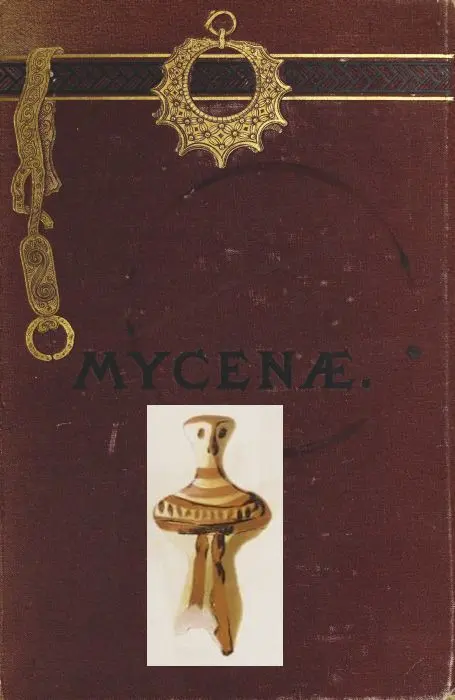
"Mycenæ: A Narrative of Researches and Discoveries at Mycenæ and Tiryns" by Dr. Henry Schliemann is an archaeological account written in the late 19th century. The work documents Schliemann's excavations and findings in the ancient sites of Mycenæ and Tiryns, exploring the connections between these archaeological discoveries and the narratives found in Homeric texts. The book is likely to appeal to readers interested in archaeology, classical studies, and the historical significance of ancient Greek civilization. The opening of the text sets the stage for an in-depth exploration of Mycenæ’s archaeology, revealing the riches and historical context surrounding the site. In this initial portion, readers are introduced to Schliemann’s motivations for conducting the excavations, which stem from a desire to uncover the truth behind ancient Greek mythology and history. The preface by W.E. Gladstone emphasizes the importance of Schliemann's discoveries, hinting at the potential connections between the archaeological findings and the Homeric epics. As Schliemann presents his early observations, he lays the groundwork for a narrative that will intertwine scientific inquiry with classical literature, inviting the audience to engage with both the artifacts and the stories of the past.
Introduction adapted from the source catalogue; source summaries may be automatically generated.
Free to read · English · 123,175 words · No account needed
MAKE TIME FOR A GOOD BOOK
On by default. Untick to stop anonymous reading totals. Each page counts after 10 seconds in view. How this works.
Anonymous counting is on unless you have switched it off.
"The basis of a semi-column of greenish marble with wreathed stripes in relief; further, the fragment of a half round column with a zigzag decoration; stone tables, the one of greenish, the other of lustrous red colour, a third of white marble, all with a relief ornamentation in the form of muscles, fans or spiral lines, which are distinguished by sharply and neatly chiselled outlines; finally, a red marble slab, which Gell found in a neighbouring chapel."
[93] In the background is the second peak of Mount Eubœa, 2000 feet high, which rises immediately south of the Acropolis of Mycenæ.
[94] II. 18. See the Sketch Map on p. 1.
[97] Κηϕισός. II. 15, 5; the lesser streams are not
shown on the Sketch Map, p. 1.
[98] The accuracy of this name is confirmed by Pausanias, II.
17, § 2.
[99] Il. II. 287, III. 75 and 258, VI. 152, IX. 246, XV. 30, and XIX. 329. Comp. Horat. Carm. I. 7, 8, 9:--
"Plurimus in Junonis honorem
Aptum dicet equis Argos, ditesque Mycenas."
[101] Meteorol. i. 14.
[102] Soph. Electra, 4.
[103] Paus. II. 15, 5; comp. Plato, Timæus.
[104] Comp. Æschyl. Suppl. 250.
[105] Od. III. 263:--"μυχῷ ῎Αργεος
ἱπποβότοιο."
[106] See the large Plate II. and Plan B of the Acropolis.
[107] See Émile Burnouf, 'La Ville et l'Acropole d'Athènes.'
[108] A good view of this wonderful wall is seen in the background of Plate VI., which represents the Ichnography of the tombs discovered in the Acropolis. (See Chap. V.)
[109] See Plan B., Plate III., and Nos. 21, 22 (p. 34)
[110] Soph. Electra, 1374.
[111] Schol. Eurip. Orest. 5; Apollod. iii. 5, 6; Soph.
Antig. 818.
[112] Agam. 1259: λέοντος εὐγενοῖς
ἀπουσίᾳ.
[113] Agam. 1258.
[114] For an account of the discovery of the ground plan of the Lions' Gate and its enormous threshold, see Chapter V.
[115] See Plan C, and the cut No. 23.
[116] To ῎Αργιον ὄρος. De Fluv. 18, 7.
[117] Troad. 1088, τείχη λάïνα
κυκλώπια οὐράνια.
[118] Electra, 1158, κυκλώπεια οὐράνια
τείχη.
[119] VIII. p. 377.
[120] Iliad, I. 29-31:
τὴν δ' ἐγὼ οὺ λύσω πρίν μιν καὶ
γῆρας ἔπεισιν
ἡμετέρῳ ἐνὶ οἴκῳ, ἐν ῎Αργεï, τηλίθι
πάτρης,
ἱστὸν ἐποιχομένην καὶ ἐμον λέχος
ἀντιόωσαν.
[121] Iliad, II. 108: πολλῇσιν νήσοισι καὶ ῎Αργεï παντὶ ἀνάσσειν.
[122] Iphigenia in Aulide, 152: κυκλώπων
θυμέλαι.
[123] Ibid. 265: Μυκῆναι κυκλωπίαι.
[124] Ibid. 1500-1501:
καλεῖς πόλισμα Περσέως,
Κυκλωπίων πόνον χερῶν;
[125] Iphig. Taur. 845:
κυκλωπίδες ἑστίαι, ὦ πάτρις,
Μυκήνα φίλα.
[126] Electra, 710:
πετρίνοις τ᾽ ἐπιστὰς
κάρυξ ιάχει βάθροις,
αγοράν, ἀγοράν, Μυκηναῖοι
στείχετε μακαρίων ὸψόμενοι τυράννων
φάσματα, δείματα.
[127] Iphigenia in Aulide, 1498-1499:
ἰὼ γᾶ μᾶτερ ὦ Πελασγία, Μυκηναῖαί τ᾽ ἐμαί θεράπναι.
[128] Orestes, 1246-1247:
Μυκηνίδες ὦ φίλαι,
τὰ πρῶτα κατὰ Πελασγὸν ἑδος
᾽Αργείων.
[129] Hercules Furens, 974-944:
πρὸς τὰς Μυκήνας εἶμι λάζυσθαι χρεὼν μοχλοὺς δικελλας θ᾽, ὡς τὰ κυκλώπων βάθρα φοίνικι κανόνι καὶ τύκοις ἡρμοσμένα στρεπτῷ σιδήρῳ συντριαινώσω πόλιν.
[130] See Plate II.
[131] Epistul. Mor. 66, 26.
[132] See Plan D.
[133] See No. 16, p. 23.
[134] All these Treasuries are indicated on Plan D.
[135] See Plate IV., "Treasury of Atreus."
[136] Thus we read in Homer (Od. VII. 84-87):
῞Ὡστε γὰρ ἠελίου αἴγλη πέλεν ἠὲ
σελήνης,
Δῶμα καθ᾽ ὑψερεφὲς μεγαλήτορος
᾿Αλκινόοιο,
Χάλκεοι μὲν γὰρ τοῖχοι ἐρηρέδατ᾿
ἔνθα καὶ ἔνθα,
᾽Ες μυχὸν ἐξ οὐδοῦ· περὶ δὲ θριγκὸς
κυάνοιο.
"Like the sun or the moon beam in bright splendour, so beamed the high palace of the magnanimous Alcinoüs; for the brazen walls extended from the threshold of the gate to the innermost part of the building; their entablature was of blue steel."
Further the palaces of the immortal gods on Olympus must have been thought to be also ornamented with brazen plates, because Homer says (Iliad, I. 426): Διὸς ποτὶ χαλκοβατὲς δῶ, "To the brazen house of Jove."
We also read in Pausanias (II. 23):
Your reading position is saved on this browser. Take it to another device with a library code. Reading pages adapt to text, rather than matching a printed edition.
BEHIND THE BOOK
This eBook is for the use of anyone anywhere in the United States and most other parts of the world at no cost and with almost no restrictions whatsoever. You may copy it, give it away or re-use it under the terms of the Project Gutenberg License included with this eBook or online at www.gutenberg.org. If you are not located in the United States, you will have to check the laws of the country where you are located before using this eBook. Read the source licence.
The original source file, including credits and licence, is retained by this library. Request an original-format copy at no charge. Please include the book title and Project Gutenberg identifier #56940.
KEEP YOUR CURIOSITY GOING
Cécile Tormay

Moritz Busch
John L. Ransom
Frances Wright
Cécile Tormay

Mabel Potter Daggett