THE CLASSIC COLLECTION✦An outlaw’s diary: the CommuneCLASSIC FREE BOOKS
An outlaw’s diary: the Commune
Cécile Tormay
THE CLASSIC COLLECTION · 1877
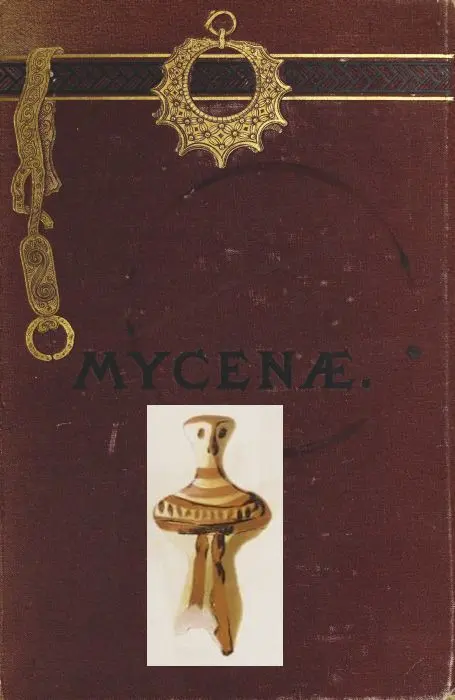
"Mycenæ: A Narrative of Researches and Discoveries at Mycenæ and Tiryns" by Dr. Henry Schliemann is an archaeological account written in the late 19th century. The work documents Schliemann's excavations and findings in the ancient sites of Mycenæ and Tiryns, exploring the connections between these archaeological discoveries and the narratives found in Homeric texts. The book is likely to appeal to readers interested in archaeology, classical studies, and the historical significance of ancient Greek civilization. The opening of the text sets the stage for an in-depth exploration of Mycenæ’s archaeology, revealing the riches and historical context surrounding the site. In this initial portion, readers are introduced to Schliemann’s motivations for conducting the excavations, which stem from a desire to uncover the truth behind ancient Greek mythology and history. The preface by W.E. Gladstone emphasizes the importance of Schliemann's discoveries, hinting at the potential connections between the archaeological findings and the Homeric epics. As Schliemann presents his early observations, he lays the groundwork for a narrative that will intertwine scientific inquiry with classical literature, inviting the audience to engage with both the artifacts and the stories of the past.
Introduction adapted from the source catalogue; source summaries may be automatically generated.
Free to read · English · 123,175 words · No account needed
MAKE TIME FOR A GOOD BOOK
On by default. Untick to stop anonymous reading totals. Each page counts after 10 seconds in view. How this works.
Anonymous counting is on unless you have switched it off.
Portions of the sheet metal were heated to redness in a current of hydrogen, whereby they acquired a coppery colour and lustre. The water evolved in this process was found to contain both copper and chlorine, thus indicating the existence of oxychloride of copper in the incrusting matter, a portion of the subchloride of copper (cuprous chloride) having escaped decomposition by the hydrogen. A piece of the metal, free from incrustation, was boiled in a flask containing hydrochloric acid and perchloride of iron, and the vapour evolved was passed into a refrigerating vessel, when a liquid was obtained in which arsenic was found in considerable quantity. This process was used for the quantitative determination of the arsenic as ammoniacal arseniate of magnesia, and the result was confirmed by several repetitions. The metal taken for analysis was that which had been heated in hydrogen as stated above. The analysis was made in the laboratory of the Royal School of Mines by Mr. W. F. Ward.
Copper 98·47
Tin 0·09
Lead 0·16
Bismuth traces
Silver 0·013
Iron 0·03
Nickel 0·19
Arsenic 0·83
------
99·783
------
[410] See 'Troy and its Remains,' p. 361.
Achilles and Hector, intaglio on gold, 175.
Acropolis;
citadel of Tiryns, 6;
of Mycenæ, 28, 29.
Ægisthus, murder of Atreus by, 54;
murder of Agamemnon by, 54;
death of, 55;
buried without the wall, 60.
Aëropé, wife of Atreus, legend of, 53.
Agamemnon, son of Atreus, 48;
sepulchre of, 48;
murdered by Ægisthus and Clytemnestra, 54;
his expedition to Troy, 58;
his supremacy in the Argolid and Peloponnesus, 58.
---- and his companions, tombs of, 334-337;
their ignominious burial, 345-347.
(Comp. SEPULCHRES.)
Agora of Mycenæ, 39, 338-341;
slabs forming its enclosure and bench, 124, 125;
circular form of the Greek Agora, 125, 126;
Royal Tombs in the Agora at Megara and Cyrene, 126-7;
Homer's description of the heroic Agora, 338;
of that of Troy, 339;
and of the Phæacians, 339;
age of the Agora at Mycenæ, later than the Five Sepulchres
within it, 340;
no building within its sacred enclosure, 341.
Alabaster:
button of, 144;
hand, 209;
model of a scarf, 242;
three-handled vase of, 246;
sword-knobs of, 219, 281, 282;
fragments of vases, 257, 308;
goblet of, 317.
Amber, beads of, 203, 245.
----, found in Italy and Sicily, 204;
mention of, by Homer, ibid.
Amethyst, lentoid gem of, 202.
᾽Αμφικύπελλον (see Δέπας).
Analysis of Mycenean metals, 367-376;
argentiferous gold foil, 368;
sheet gold, 369;
silver vase, 370;
bronze sword and vase-handle, 372, 375;
copper kettle, 375.
Archers, niches in walls of Tiryns for, 5.
Argion: first name of the mount of the Citadel at Mycenæ, 36.
Argolis, map of, 1.
Argos: road from, to Mycenæ, 24;
plain of, described, 25 f.;
Achæan states of Argos and Mycenæ, 28;
Homer's use of the name, 37.
Arm-bone, with gold ribbon, 302.
Arrow-heads;
of bronze, only in the upper strata, 76, 123;
of obsidian, 4th Sepulchre, 272.
Ashes, of burnt animal matter, 88;
at the foot of tombstones, 92, 93.
Asterion, the plant, 25.
Your reading position is saved on this browser. Take it to another device with a library code. Reading pages adapt to text, rather than matching a printed edition.
BEHIND THE BOOK
This eBook is for the use of anyone anywhere in the United States and most other parts of the world at no cost and with almost no restrictions whatsoever. You may copy it, give it away or re-use it under the terms of the Project Gutenberg License included with this eBook or online at www.gutenberg.org. If you are not located in the United States, you will have to check the laws of the country where you are located before using this eBook. Read the source licence.
The original source file, including credits and licence, is retained by this library. Request an original-format copy at no charge. Please include the book title and Project Gutenberg identifier #56940.
KEEP YOUR CURIOSITY GOING
Cécile Tormay

Moritz Busch
John L. Ransom
Frances Wright
Cécile Tormay

Mabel Potter Daggett