THE CLASSIC COLLECTION✦An outlaw’s diary: the CommuneCLASSIC FREE BOOKS
An outlaw’s diary: the Commune
Cécile Tormay
THE CLASSIC COLLECTION · 1877
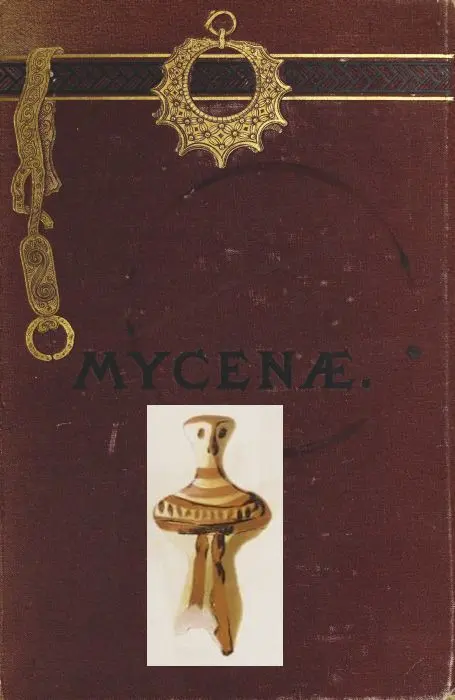
"Mycenæ: A Narrative of Researches and Discoveries at Mycenæ and Tiryns" by Dr. Henry Schliemann is an archaeological account written in the late 19th century. The work documents Schliemann's excavations and findings in the ancient sites of Mycenæ and Tiryns, exploring the connections between these archaeological discoveries and the narratives found in Homeric texts. The book is likely to appeal to readers interested in archaeology, classical studies, and the historical significance of ancient Greek civilization. The opening of the text sets the stage for an in-depth exploration of Mycenæ’s archaeology, revealing the riches and historical context surrounding the site. In this initial portion, readers are introduced to Schliemann’s motivations for conducting the excavations, which stem from a desire to uncover the truth behind ancient Greek mythology and history. The preface by W.E. Gladstone emphasizes the importance of Schliemann's discoveries, hinting at the potential connections between the archaeological findings and the Homeric epics. As Schliemann presents his early observations, he lays the groundwork for a narrative that will intertwine scientific inquiry with classical literature, inviting the audience to engage with both the artifacts and the stories of the past.
Introduction adapted from the source catalogue; source summaries may be automatically generated.
Free to read · English · 123,175 words · No account needed
MAKE TIME FOR A GOOD BOOK
On by default. Untick to stop anonymous reading totals. Each page counts after 10 seconds in view. How this works.
Anonymous counting is on unless you have switched it off.
My learned friend Dr. Karl Blind, in his excellent pamphlet, entitled 'Fire Burial,' cites the Odin Law in Scandinavia, which reads as follows:--"Odin ordained that the dead should be burnt, and that everything that had been theirs should be carried to the pyre. He said that every one should go up to Walhalla with as many riches as would be heaped upon his pyre, and that he should enjoy in Walhalla all those things also which he had hidden away in the earth. The ashes should be thrown into the sea, or be buried deep in the soil; but for illustrious men a mound should be raised as a token of remembrance."
Dr. Blind also gives in the same pamphlet the description of Beowulf's funeral, to prove that it was also the habit with the Anglo-Saxons to burn their dead with treasures:--
"Geatland's men for him then made
A pyre broad, most firmly built,
With helms bedeckt, with war-shields hung,
And armour bright, as he them bade.
In the midst they laid, the sorrowing heroes,
Their mighty ruler, their beloved lord."
Thus we have the proof that in a remote antiquity it was the custom in Babylon, Egypt, Italy, Macedonia, Scandinavia, and Germany, to bury the rich with their treasures, and my excavations have proved that this custom existed also at Mycenæ in the time of the Atridæ.
[367] Described on p. 311. I call particular attention to the
fact that the engraving represents the mask in only one-fifth of its
actual size.
[368] Thucyd. I. 8-10.
[369] Odyss. IV. 530-535, and XI. 409-411.
[370] Æschylus, Agamemnon, 1438; Euripides, Orestes, 26.
[371] Paus. II. 16, § 6.
[372] See 'Troy and its Remains,' pp. 363-372.
[373] Iliad, XVIII. 497-508:--
λαοι δ᾽ εἰν ἀγορῇ ἔσαν ἀθρίοι· ἔνθα
δὲ νεῖκος
ωρώρει· δύο δ᾽ ἄνδρες ἐνείκεον
εἵνεκα ποινῆς
ἀνδρὸς ἀποφθιμένου. Ὁ μὲν
εὔχετο πάντ᾽ ἀποδοὓναι,
δήμῳ πιφαύσκων, ὁ δ᾽ ἀναίνετο μηδὲν
ἑλέσθαι·
ἄμφω δ᾽ ἱέσθην ἐπὶ ἴστορι πεῖραρ
ἑλέσθαι.
λαοὶ δ᾽ ἀμφοτέροισιν ἐπήπυον, ἀμφὶς
ἀρωγοί·
κήρυκες δ᾽ ἄρα λαὸν ερήτυον. =Οἱ δὲ
γέροντες
εἵατ' ἐπὶ ξεστοῖσι λίθοις ἱερῷ ἐνὶ
κύκλῳ,=
σκῆπτρα δὲ κηρύκων ἐν χέρς' ἔχον
ἠεροφώνων·
τοῖσιν ἔπειτ᾽ ἤϊσσον, ἀμοιβηδὶς
δὲ δικαζον.
κεῖτο δ᾽ ἀρ᾽ ἐν μεσσοισι δύω
χρυσοῖο τάλαντα
τῷ δόμεν ὃς μετὰ τοῖσι δίκην
ἰθύντατα εἴποι.
The translation is by Mr. Gladstone, in the Contemporary Review for
February, 1874.
[374] Il. II. 788-9; VII. 345-6; where ἀγορά is the assembly, from which the place of meeting took its name; ἀγορά, from the verb ἀγείρω, "assemble."
[375] Odyss. VIII. 4-7, and 16, 17:--
τοῖσιν δ᾽ ἡγεμόνευ᾽ ἱερὸν μένος
᾽Αλκινόοιο
φαιήκων ἀγορήνδ᾽, ἥ σφιν παρὰ νηυσὶ
τέτυκτο.
ἐλθόντες δὲ καθιζον <g>ἐπὶ ξεστοῖσι
λίθοισι</g>
πλησίον· . . . . . . .
καρπαλίμως δ᾽ ἔμπληντο βροτῶν
ἀγοραι τε καὶ ἕδραι
ἀγρομένων.
[376] Odyss. VI. 266-7:--
ἔνθα δέ τέ σφ᾽ <g>ἀγορή</g>, καλὸν
Ποσιδήϊον ἀμφίς,
<g>ῥυτοῖσιν λάεσσι κατωρυχέεσς᾽
ἀραρυῖα</g>.
[377] Odyss. IX. 112:--τοῖσιν δ᾽ οὔτ᾽ ἀγοραὶ βουληφόροι οὐδὲ θεμίστες, "But they have neither assemblies for council nor laws"--each ruling apart in his own family.
[378] Iphig. Taur. 845; Iphig. Aul. 152 and 1498-1499; Hercul. Furens, 944; Orest. 1246-47; Troad, 1088; Electra, 710-712 and 1158. See Chapter II., pp. 37-38.
[379] Elect. 615: τειχέων μὲν ἐλθων ἐντὸς οὺδὲν ἂν σθένοις.
[380] Orest. 919: ὀλιγάκις ἄστυ κἀγορᾶς
χραίνων κύκλον.
Orest. 871-3:
ὁρω δ᾽ ὄχλον στείιχοντα καὶ
θάσσοντ᾽ ἄκραν
οὗ φασι πρῶτον Δαάναον Αἰγύπτῳ
δίκας
διδόντ᾽ ἀθροῖσαι λαὸν εἰς κοινὰς
ἕδρας.
[382] Chapter III., p. 63.
[383] Paus. III. 19, § 6.
[384] Il. VI. 413-419:--
... οὐδέ μοί ἐστι πατὴρ καὶ πότνια
μήτηρ.
ἤτοι γὰρ πατέρ᾽ ἁμὸν ἀπέκτανε δῖος
᾽Αχιλλεύς,
ἐκ δὲ πόλιν πέρσεν Κιλίκων
εὐναιετάωσαν,
Θήβην ὑψίπυλον· κατὰ δ᾽ ἔκτανεν
᾽Ηετίωνα
οὐδέ μιν ἐξενάριξε· σεβάσσατο γὰρ
τόγε θυμῷ·
ἀλλ᾽ ἄρα μιν κατέκηε σὺν ἔντεσι
δαιδαλέοισιν,
ἠδ᾽ ἐπὶ σῆμ᾽ ἔχεεν.
[385] Odyss. XI. 72-76:--
μή μ᾽ ἄκλαυτον, ἄθαπτον, ἰὼν
ὄπιθεν καταλείπειν
νοσφισθείς, μή τοί τι θεῶν
μήνιμα γένωμαι·
ἀλλά με κακκεῖαι σὺν τεύχεσιν,
ἅσσα μοί ἐστιν,
σῆμα τέ μοι χεῦαι, πολιῆς ἐπὶ
θινὶ θαλάσσης.
"Do not leave me behind, unwept for, unburied, when you go away, lest I should become the cause of the wrath of the gods against thee; but burn me with all the arms which belong to me, and erect over me a mound on the shore of the hoary sea."
[386] Soph. Ajax, 555:--
τὰ δ᾽ ἄλλα τεύχη κοίν᾽ ἐμοὶ
τεθάψεται.
Your reading position is saved on this browser. Take it to another device with a library code. Reading pages adapt to text, rather than matching a printed edition.
BEHIND THE BOOK
This eBook is for the use of anyone anywhere in the United States and most other parts of the world at no cost and with almost no restrictions whatsoever. You may copy it, give it away or re-use it under the terms of the Project Gutenberg License included with this eBook or online at www.gutenberg.org. If you are not located in the United States, you will have to check the laws of the country where you are located before using this eBook. Read the source licence.
The original source file, including credits and licence, is retained by this library. Request an original-format copy at no charge. Please include the book title and Project Gutenberg identifier #56940.
KEEP YOUR CURIOSITY GOING
Cécile Tormay

Moritz Busch
John L. Ransom
Frances Wright
Cécile Tormay

Mabel Potter Daggett