THE CLASSIC COLLECTION✦An outlaw’s diary: the CommuneCLASSIC FREE BOOKS
An outlaw’s diary: the Commune
Cécile Tormay
THE CLASSIC COLLECTION · 1877
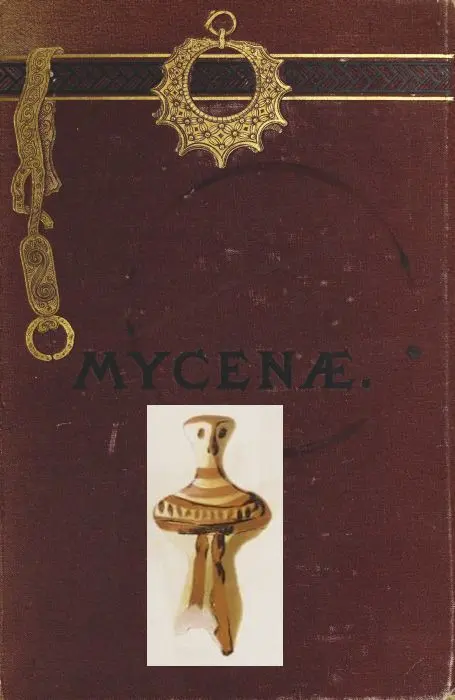
"Mycenæ: A Narrative of Researches and Discoveries at Mycenæ and Tiryns" by Dr. Henry Schliemann is an archaeological account written in the late 19th century. The work documents Schliemann's excavations and findings in the ancient sites of Mycenæ and Tiryns, exploring the connections between these archaeological discoveries and the narratives found in Homeric texts. The book is likely to appeal to readers interested in archaeology, classical studies, and the historical significance of ancient Greek civilization. The opening of the text sets the stage for an in-depth exploration of Mycenæ’s archaeology, revealing the riches and historical context surrounding the site. In this initial portion, readers are introduced to Schliemann’s motivations for conducting the excavations, which stem from a desire to uncover the truth behind ancient Greek mythology and history. The preface by W.E. Gladstone emphasizes the importance of Schliemann's discoveries, hinting at the potential connections between the archaeological findings and the Homeric epics. As Schliemann presents his early observations, he lays the groundwork for a narrative that will intertwine scientific inquiry with classical literature, inviting the audience to engage with both the artifacts and the stories of the past.
Introduction adapted from the source catalogue; source summaries may be automatically generated.
Free to read · English · 123,175 words · No account needed
MAKE TIME FOR A GOOD BOOK
On by default. Untick to stop anonymous reading totals. Each page counts after 10 seconds in view. How this works.
Anonymous counting is on unless you have switched it off.
[326] See the Vignette to Chapter III., p. 52.
[327] See 'Atlas des Antiquités Troyennes,' Plate 21, Nos. 583 and 584. This explains how the nurse Euryclea fastened on the lids of the amphoræ for Telemachus. (Hom. Odyss. ii. 354):--
Δώδεκα δ᾽ ἔμπλησον, καὶ πώμασιν
ἄρσον ἅπαντας.
[328] See 'Troy and its Remains,' pp. 160, 208, 209, 214, 352.
[329] The two remaining buttons have similar patterns.
[330] See the engraving, No. 460, on p. 303.
[331] See, for example, Iliad XIII. 650 and 662.
... ἀμφὶ δέ οἱ κυνέην κεφαλῇφιν εθηκεν, ῥινοῦ ποιητήν· πολέσιν δ᾿ ἔντοσθεν ἱμᾶσιν ἐντέτατο στερεῶς· ἔκτοσθε δὲ λευκοὶ ὀδόντες ἀργιόδοντος ὑὸς θαμέες ἔχον ἔνθα καὶ ἔνθα εὖ καὶ ἐπισταμένως.
"And on his brows a leathern headpiece placed Well wrought within, with numerous straps secured, And on the outside, with wild boar's gleaming tusks Profusely garnished, scattered here and there By skilful hand." LORD DERBY.
[333] These ornaments of horse-trappings vividly remind us of the famous passage in the Iliad IV., 141:
ὡς δ᾿ ὅτε τις τ᾿ ἐλέφαντα γυνὴ φοίνικι μιήνῃ Μῃονὶς ἠὲ Κάειρα παρήïον ἔμμεναι ἵππων· κεῖται δ᾿ ἐν θαλάμω, πολέες τέ μιν ἠρήσαντο ἱππῆες φορέειν· βασιλῆï δὲ κεῖται ἄγαλμα, ἀμφότερον, κόσμος θ᾿ ἵππω, ἐλατῆρί τε κῦδος·
"As when some Carian or Mæonian maid
With crimson dye the ivory stains, designed
To be the cheek-piece of a warrior's steed,
By many a valiant horseman coveted,
As in the house it lies, a monarch's boast,
The horse adorning, and the horseman's pride."
[334] Il. XVIII. 346; Odyss. VIII. 435.
[335] See Edward Freiherr von Sacken, 'Das Grabfeld von
Hallstatt.'
[336] XIII. 13; and XV. 84.
[337] VIII. 290; and IX. 122.
[339] Il. XVIII. 373.
[340] Odyss. VIII. 434; Il. XVIII. 344.
[341] Il. XXIII. 702; XXII. 164 it is called τριπος instead of the usual form τρίπους.
[342] Φάσγανον for σφάγανον, from the root σφαγ. There was also a verb φασγάνω "to kill with the sword:" Hesych. Lex. s. v.
[343] See 'Troy and its Remains,' p. 332, Nos. 267 and 268.
[344] See 'Troy and its Remains,' p. 265.
[345] For an engraving of this sword, after cleaning, see
Appendix D.
[346] See Nos. 84, 88, p. 71.
[347] No. 83, p. 70.
[348] See p. 233.
[349] See my 'Atlas des Antiquités Troyennes,' Pl. 105, No.
2311.
[350] See No. 230, p. 154.
Your reading position is saved on this browser. Take it to another device with a library code. Reading pages adapt to text, rather than matching a printed edition.
BEHIND THE BOOK
This eBook is for the use of anyone anywhere in the United States and most other parts of the world at no cost and with almost no restrictions whatsoever. You may copy it, give it away or re-use it under the terms of the Project Gutenberg License included with this eBook or online at www.gutenberg.org. If you are not located in the United States, you will have to check the laws of the country where you are located before using this eBook. Read the source licence.
The original source file, including credits and licence, is retained by this library. Request an original-format copy at no charge. Please include the book title and Project Gutenberg identifier #56940.
KEEP YOUR CURIOSITY GOING
Cécile Tormay

Moritz Busch
John L. Ransom
Frances Wright
Cécile Tormay

Mabel Potter Daggett